20. AI Warehouse Optimization
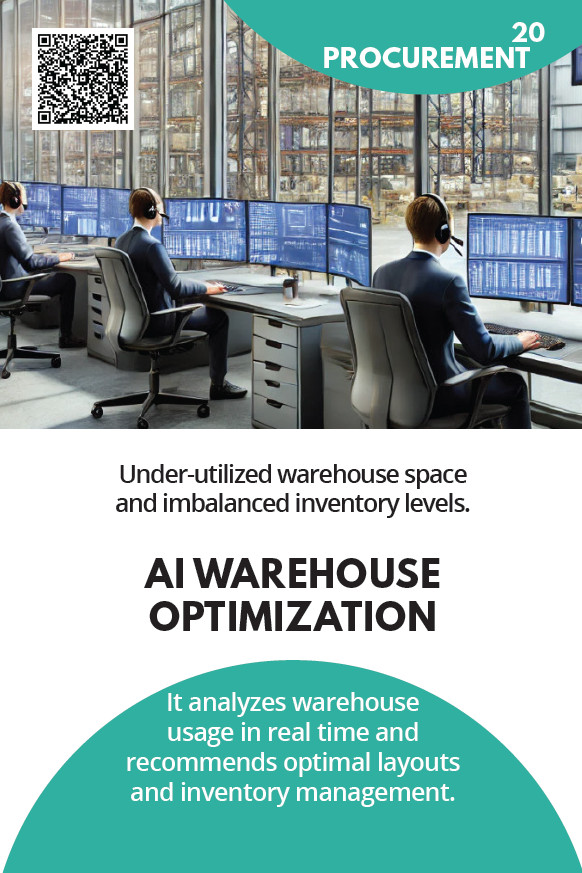
What challenge or problem does this AI solution solve?
Warehouses often suffer from inefficient layout, slow picking, poor space utilization, stock mismatches, unnecessary movement, and delays in internal logistics. Manual planning and fragmented data make it difficult to optimize warehouse flows, reduce errors, and respond quickly to changes in demand and inventory levels. As a result, companies face higher operating costs, slower deliveries, and lower warehouse productivity.
Why does AI solve this problem best?
Traditional warehouse systems mainly register transactions, but they do not continuously analyze movement patterns, predict bottlenecks, or recommend better warehouse organization in real time. AI can process inventory data, order flows, picking behavior, warehouse routes, seasonality, and demand changes to detect inefficiencies and suggest optimal actions. Unlike public AI services, this system is trained on internal operational data, which ensures security, relevance, and practical value in the real warehouse environment.
How does AI solve this challenge or problem?
The AI system analyzes warehouse movements, order frequency, picking sequences, item turnover, stock locations, and available storage capacity. It recommends better product placement, optimal picking routes, improved replenishment logic, and more efficient use of warehouse space. The system can identify congestion points, predict overload, suggest layout changes, and generate dashboards and alerts for faster warehouse decision-making.
What are the concrete benefits for the company?
By implementing this AI assistant, the company achieves:
- Faster picking, replenishment, and warehouse operations.
- Better use of warehouse space and reduced unnecessary movement.
- Lower error rates in stock handling and order fulfillment.
- Higher productivity of warehouse teams.
- Better delivery reliability and lower operational costs.
The company’s procurement team carries out procurement more accurately, easily, quickly, and efficiently.
Required data sets
To create this AI sales assistant, the following data sets are required:
- Warehouse operations: item locations, movements, picking routes, replenishment events, and fulfillment history.
- ERP / inventory: stock levels, item turnover, storage utilization, replenishment points, and internal transfers.
- Orders / sales: order frequency, product combinations, peak periods, and service levels.
- Logistics / equipment: handling times, loading data, equipment availability, and internal transport flows.
- (Optional: IoT sensors, barcode/RFID traces, workforce allocation data, and external demand signals.)
The data is used to train the AI model so it can best adapt to your business.
Elements for ROI calculation – Investment Profitability
CAPEX (investment):
- Development of the AI model for warehouse flow analysis and optimization.
- Integration with ERP, WMS, inventory, and warehouse operation systems.
- Setup of warehouse rules, route logic, and optimization dashboards.
OPEX (costs):
- Model maintenance and retraining with new warehouse data.
- Cloud processing and API costs for optimization calculations.
- Updating warehouse rules, layouts, and operational parameters.
KPI (success indicators):
- Reduction in average picking and handling time.
- Improvement in warehouse space utilization (%).
- Reduction in warehouse errors and misplacements (%).
- Increase in order fulfillment speed and on-time dispatch.
- Reduction in operational cost per warehouse order.
Average ROI for this AI solution
- Return on investment: 60% – 150%
- Time to ROI: 4 – 10 months
- Best for: logistics, retail, wholesale, e-commerce, manufacturing, FMCG, pharmaceuticals, distribution centers, and industrial warehouses
How do you choose and implement the right AI tools?
The first step toward successful implementation of AI solutions tailored to your business
2-day training for preparing the implementation of business AI solutions
Start a successful Digital AI Transformation in our practical consulting workshop, using interactive visual AI cards (50 cards) that simply and intuitively connect your business challenges and operational problems with the appropriate AI solutions.
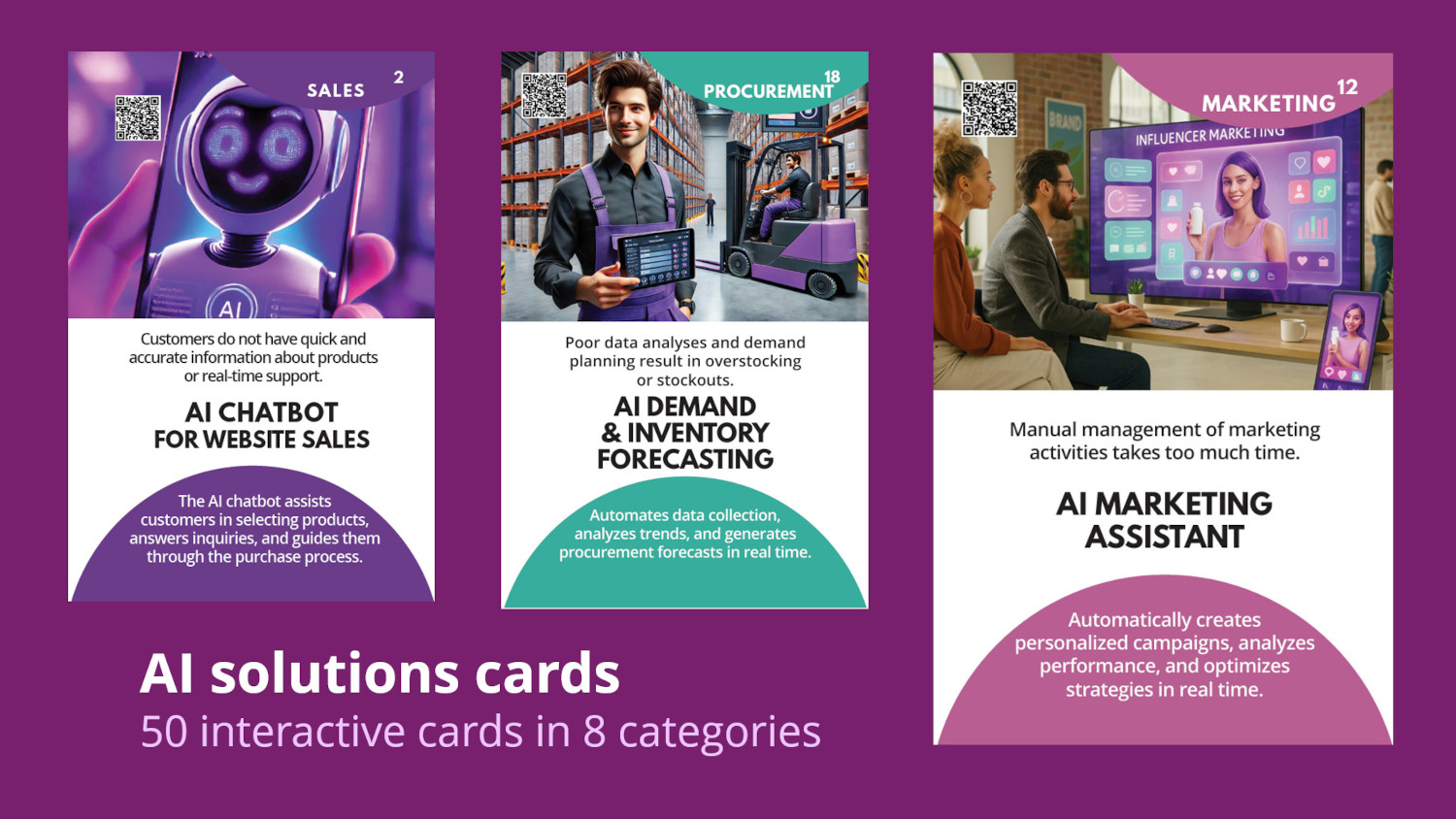
Visual interactive cards with business AI solutions
What do we do in our interactive workshop?
- AI solutions on our cards are not generic tools, but business solutions developed specifically for each company based on data and concrete needs.
- They are trained on your internal data and adapted to specific business processes — sales, procurement, production, or customer support.
- Unlike general online AI tools such as ChatGPT, Claude, or Gemini, these solutions provide full control over data within the company.
See how this workshop helps you make the best possible business decisions?
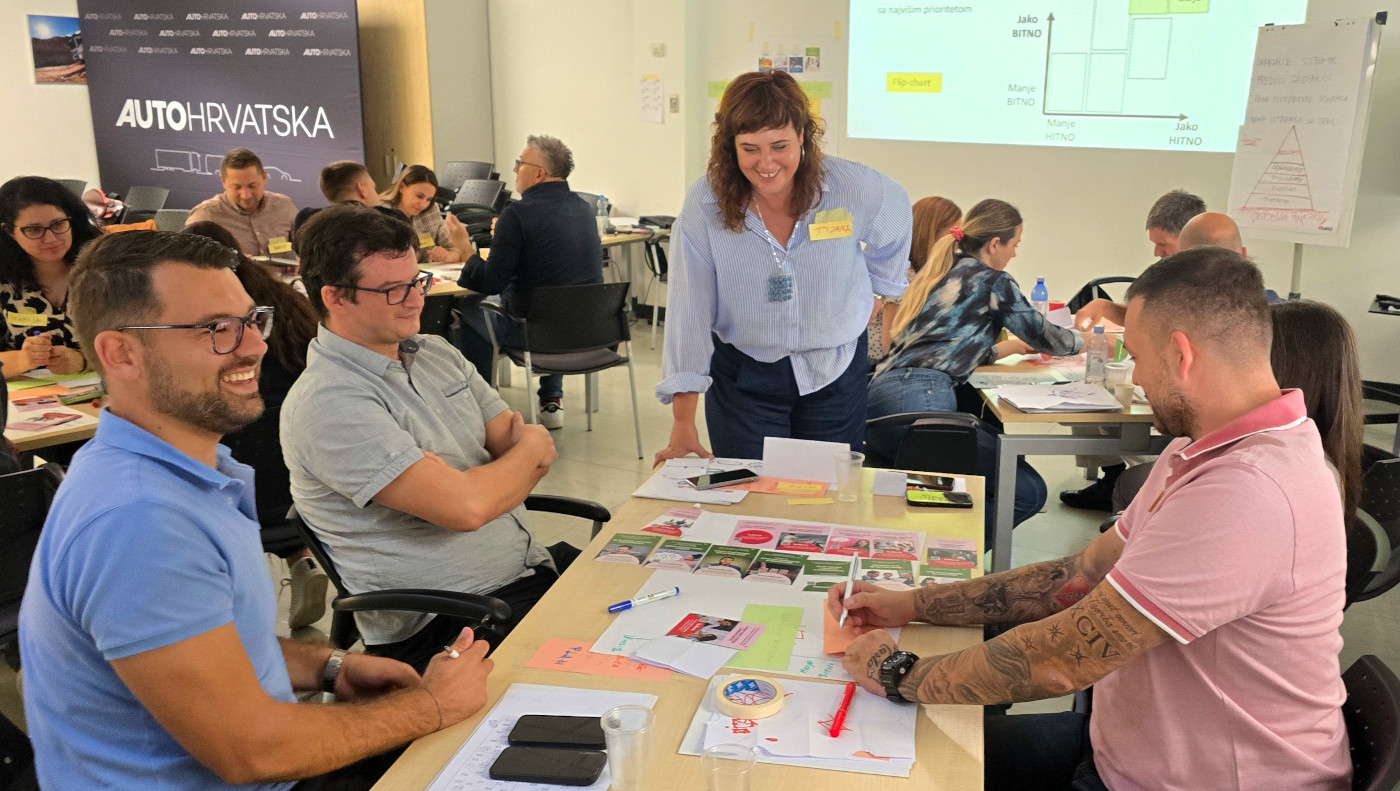
From the interactive workshop in Zagreb
Implement this AI solution
Together with leading AI companies in Serbia, we actively cooperate on the implementation of AI tool projects (business artificial intelligence solutions presented on our visual cards).
We will help you choose the AI solution and provider that best match your needs.