19. AI Supply Chain Optimization
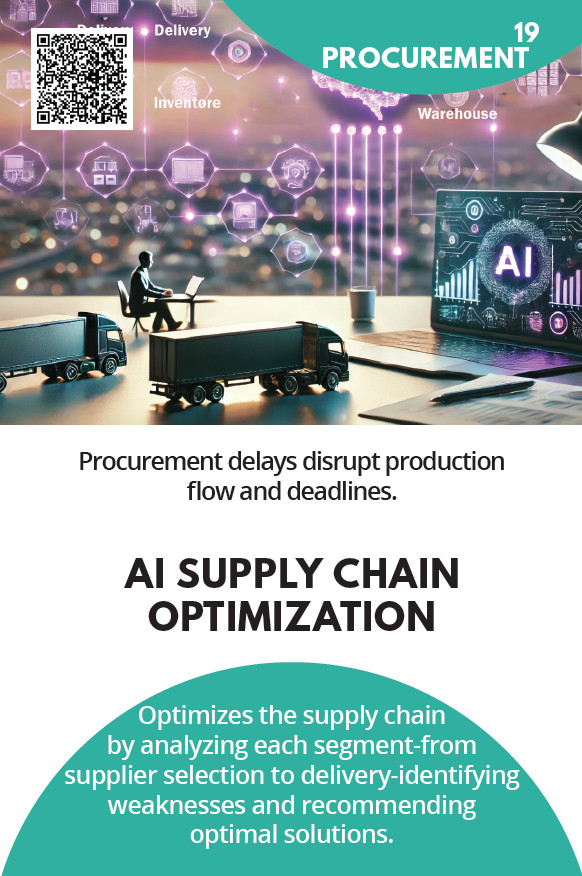
What challenge or problem does this AI solution solve?
Supply chains are often complex, slow to adapt, and vulnerable to disruptions. Companies face delays, inefficient transport routes, poor coordination between suppliers and warehouses, higher logistics costs, and lack of visibility across the full flow of goods. Manual planning and fragmented systems make it hard to react quickly to changes in demand, supplier performance, or operational risk.
Why does AI solve this problem best?
Traditional supply chain systems track data, but they do not deeply analyze changing patterns or proactively optimize decisions across multiple variables at once. AI can process historical and real-time data from procurement, logistics, inventory, supplier performance, and demand signals to detect bottlenecks, predict disruptions, and recommend the best actions. Unlike public AI services, this system is trained on internal business data, which ensures security, relevance, and direct applicability in real operational environments.
How does AI solve this challenge or problem?
The AI system analyzes supplier performance, transport routes, lead times, delivery history, inventory movement, demand forecasts, and operational constraints. It identifies inefficiencies, predicts delays, recommends better supply chain flows, supports route and replenishment optimization, and helps synchronize procurement, warehousing, and distribution. The system can also alert teams to disruptions, suggest alternatives, and generate reports and dashboards for faster decision-making.
What are the concrete benefits for the company?
By implementing this AI assistant, the company achieves:
- Better visibility across the whole supply chain.
- Reduction in delays, bottlenecks, and unnecessary logistics costs.
- Better coordination between suppliers, warehouses, and distribution.
- Faster reaction to disruptions and market changes.
- More reliable deliveries and stronger operational resilience.
The company’s procurement team carries out procurement more accurately, easily, quickly, and efficiently.
Required data sets
To create this AI sales assistant, the following data sets are required:
- Procurement: supplier data, orders, lead times, delivery history, contract terms.
- ERP / logistics: transport records, routes, warehouse movements, shipment statuses, costs.
- Inventory: stock levels, turnover, replenishment points, stock transfers.
- Sales / demand: demand forecasts, sales trends, regional needs, seasonality.
- (Optional: weather, traffic, geopolitical risks, fuel prices, and external disruption signals.)
The data is used to train the AI model so it can best adapt to your business.
Elements for ROI calculation – Investment Profitability
CAPEX (investment):
- Development of the AI model for supply chain analysis and optimization.
- Integration with ERP, logistics, warehouse, and procurement systems.
- Setup of routing logic, alert rules, and supply chain dashboards.
OPEX (costs):
- Model maintenance and retraining with new operational data.
- Cloud processing and API costs for optimization calculations.
- Updating network rules, supplier parameters, and external data sources.
KPI (success indicators):
- Reduction in supply chain disruptions and delay frequency (%).
- Improvement in on-time delivery rate (%).
- Reduction in logistics and transport costs (%).
- Improvement in inventory availability across the supply network.
- Reduction in planning and coordination time across procurement and logistics.
Average ROI for this AI solution
- Return on investment: 60% – 150%
- Time to ROI: 4 – 10 months
- Best for: manufacturing, retail, wholesale, logistics, FMCG, pharmaceuticals, automotive, food industry, and distribution
How do you choose and implement the right AI tools?
The first step toward successful implementation of AI solutions tailored to your business
2-day training for preparing the implementation of business AI solutions
Start a successful Digital AI Transformation in our practical consulting workshop, using interactive visual AI cards (50 cards) that simply and intuitively connect your business challenges and operational problems with the appropriate AI solutions.
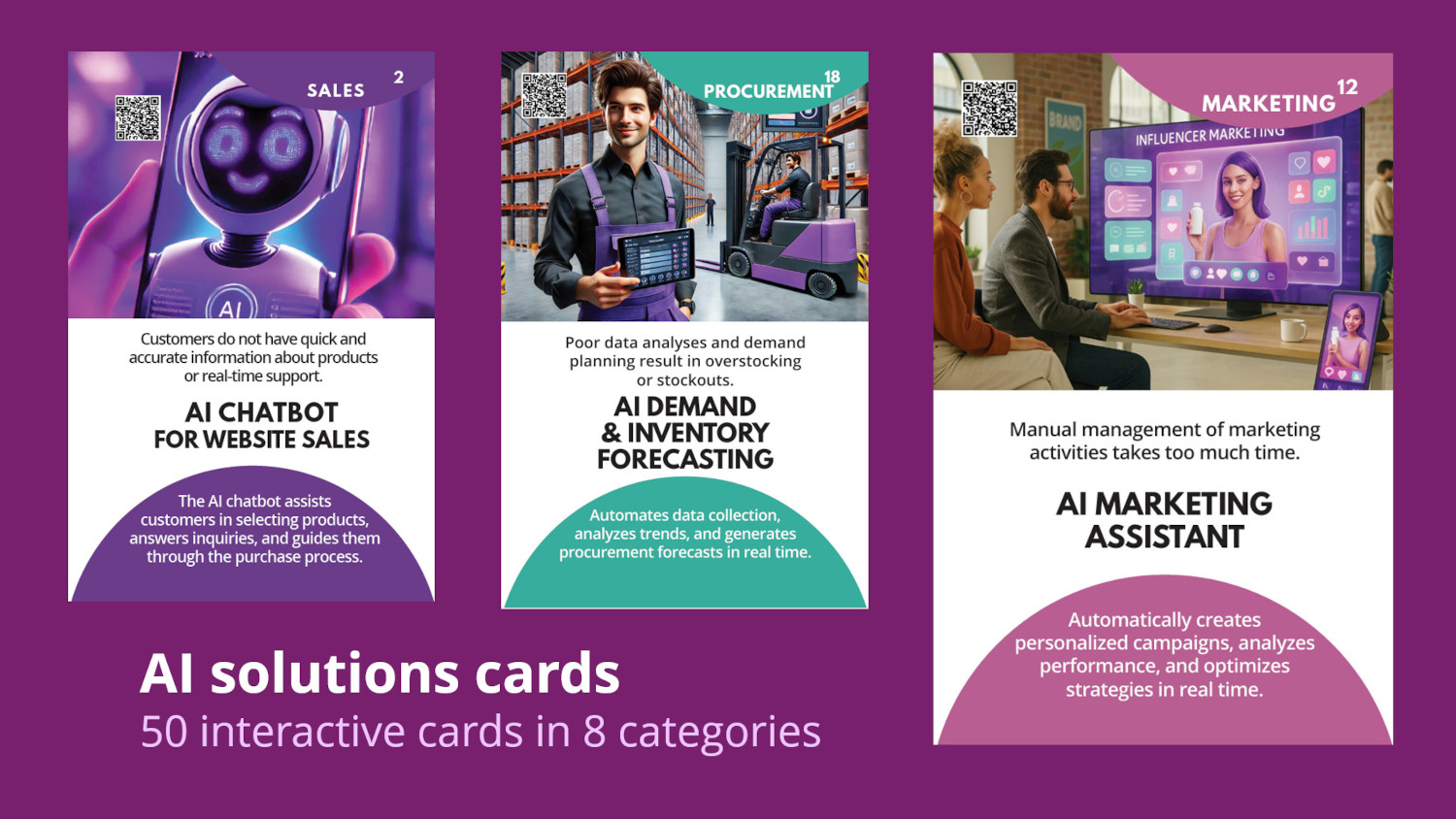
Visual interactive cards with business AI solutions
What do we do in our interactive workshop?
- AI solutions on our cards are not generic tools, but business solutions developed specifically for each company based on data and concrete needs.
- They are trained on your internal data and adapted to specific business processes — sales, procurement, production, or customer support.
- Unlike general online AI tools such as ChatGPT, Claude, or Gemini, these solutions provide full control over data within the company.
See how this workshop helps you make the best possible business decisions?

From the interactive workshop in Banja Luka
Implement this AI solution
Together with leading AI companies in Serbia, we actively cooperate on the implementation of AI tool projects (business artificial intelligence solutions presented on our visual cards).
We will help you choose the AI solution and provider that best match your needs.