Lacking Confidence in Our Decisions – COMMITMENT – 15
When teams don’t fully stand behind decisions, execution slows and responsibility becomes unclear.

Where you’ll notice this in a team
This challenge shows up after decisions are formally made, yet behavior suggests uncertainty, hesitation, or second-guessing. Teams appear aligned on the surface, but commitment is weak underneath.
- After meetings: people say “we’ll see” instead of acting.
- In execution: tasks are delayed while waiting for confirmation.
- In conversations: decisions are revisited repeatedly.
- In accountability: ownership is vague or shared too broadly.
- In tone: people distance themselves from outcomes.
Over time, teams lose momentum and confidence—not because decisions are wrong, but because they are not fully owned.
Why it happens
Lack of confidence in decisions is usually rooted in process and communication, not in people’s abilities.
- Unclear decision criteria: people don’t know why one option was chosen.
- Insufficient debate: concerns were never voiced openly.
- Overconsensus: agreement was forced instead of earned.
- Fear of consequences: mistakes are punished, not learned from.
- Weak decision ownership: no clear decision-maker.
When people feel unheard or unsure, they protect themselves by keeping emotional distance from the decision.
How it affects results
Low decision confidence has a direct and measurable impact on performance.
- slow execution and missed opportunities,
- repeated rework and course corrections,
- low ownership and accountability,
- decision fatigue and frustration,
- reduced trust in leadership and planning.
How to reduce and overcome it
Confident execution does not require perfect decisions—it requires clear commitment.
- Clarify decision rights: define who decides and who contributes.
- Encourage healthy debate: surface concerns before deciding.
- Explain the “why”: communicate the reasoning behind decisions.
- Commit publicly: confirm alignment once the decision is made.
- Separate learning from blame: allow adjustment without fear.
When teams trust the process, they commit more fully—even if the outcome is uncertain.
Practical communication tools
These tools help teams move from hesitant agreement to confident execution.
- Decision framing: clearly state the decision, options considered, and rationale.
- Disagree-and-commit rule: once decided, everyone supports execution.
- Decision recap: summarize who owns what and by when.
- Decision review window: agree when and how decisions can be revisited.
- Learning check-ins: focus on insights, not fault.
Useful links
Improve Your Team Heath and Effectiveness
How can your team overcome hidden obstacles that slow it down?
Take our 3-day Organizational Health Improvement Workshop
- How can you identify specific problems and challenges in teamwork, cooperation, and internal communication among employees?
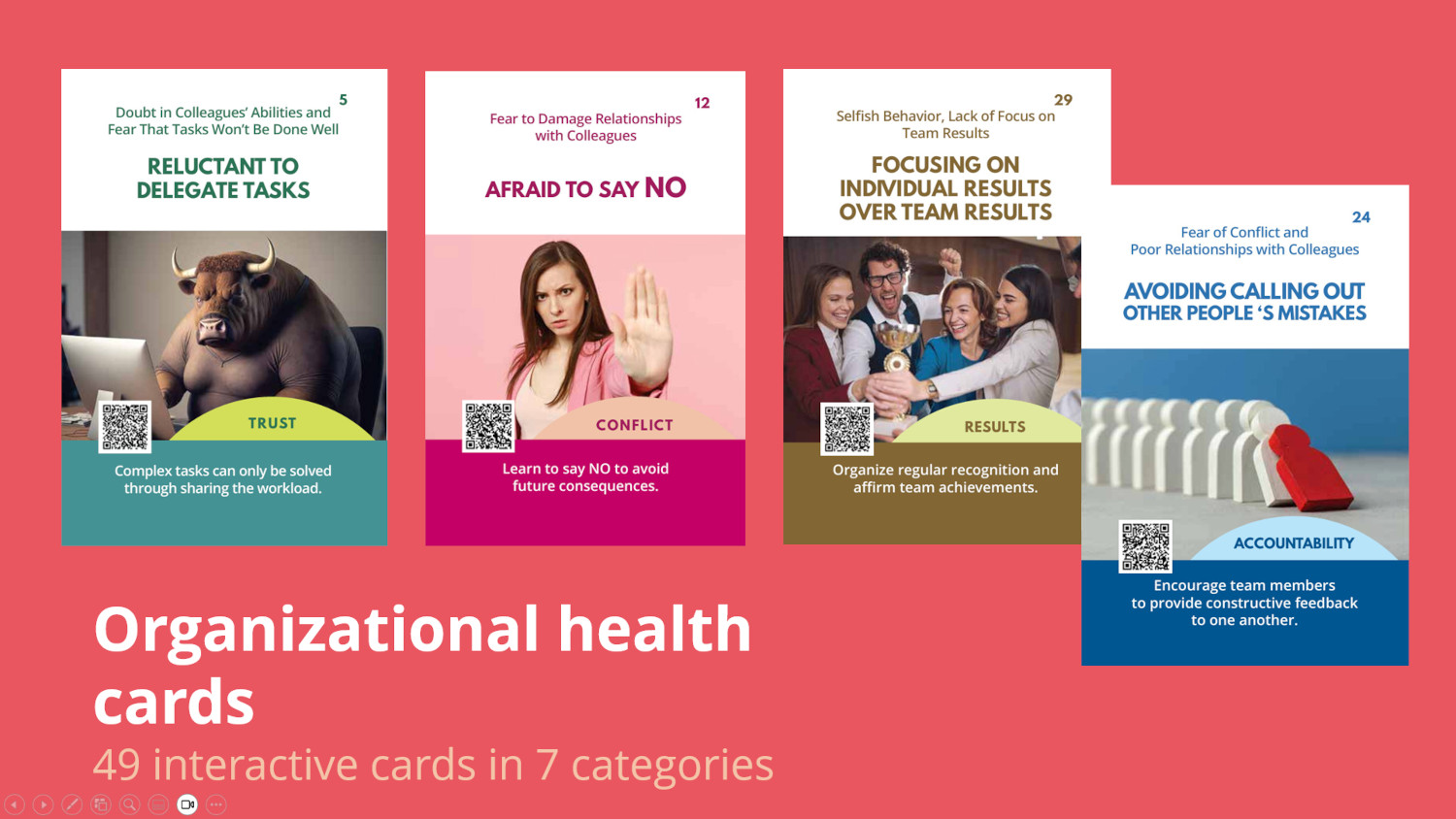
- How can you discover the root causes of these challenges and successfully solve them using our visual interactive “team effectiveness” cards?
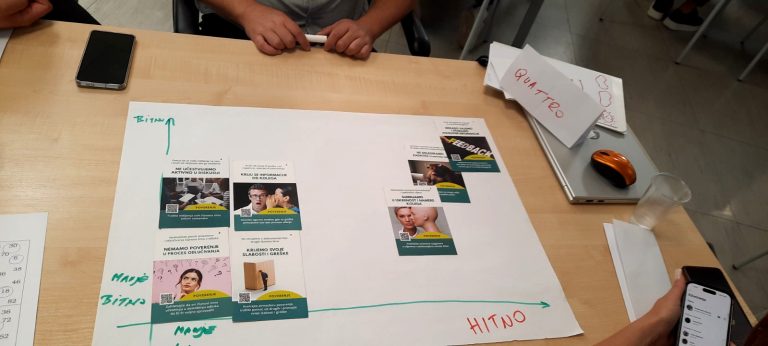
By placing the visual cards on the Urgent–Important matrix, you can quickly and easily set priorities and create an action plan.

From an interactive workshop in Belgrade
Contact us to schedule a meeting
Tel: + 381 65 26 080 26
Email: poslovnaznanja@gmail.com