Splitting Into Factions and Silos – CONFLICT – 13
When teams split into factions, collaboration turns into competition and shared goals fade into “us versus them.”

Where you’ll notice this in a team
This problem becomes visible when people start identifying more with subgroups than with the team as a whole. Collaboration weakens, and informal alliances quietly shape decisions.
- In meetings: people align before meetings and argue as “blocks.”
- In communication: information flows freely within groups but poorly across them.
- In problem-solving: blame is shifted to “the other team” or “them.”
- In decision-making: compromises are political rather than solution-oriented.
- In daily work: collaboration happens only when absolutely necessary.
Over time, loyalty to the subgroup replaces commitment to shared outcomes.
Why it happens
Factions and silos usually don’t appear overnight. They grow slowly as a response to uncertainty, pressure, or unclear leadership.
- Competing goals: teams are measured on different or conflicting objectives.
- Resource pressure: people feel they must protect “their” territory.
- Lack of shared direction: no clear overarching purpose.
- Unresolved conflicts: past tensions were never addressed.
- Leadership gaps: leaders allow divisions to persist or benefit from them.
When trust is low, people seek safety in smaller groups they can control.
How it affects results
Silos significantly reduce organizational effectiveness—even when individual teams perform well.
- duplicated work and inefficiency,
- poor coordination and slow execution,
- decisions driven by politics instead of facts,
- increased frustration and cynicism,
- missed opportunities for synergy.
How to reduce and overcome it
Breaking silos requires intentional effort to rebuild shared identity and mutual responsibility.
- Create shared goals: align teams around outcomes that require cooperation.
- Surface tensions openly: address “us vs. them” dynamics directly.
- Clarify decision rules: reduce political maneuvering.
- Encourage cross-group work: mix teams and perspectives.
- Model unity: leaders must visibly collaborate across boundaries.
Trust grows when teams experience success together—not separately.
Practical communication tools
These tools help teams move from factions to collaboration.
- Shared outcome framing: start discussions with “What are we trying to achieve together?”
- Cross-team retrospectives: reflect jointly on what’s working and what’s not.
- Role-swapping exercises: temporarily view problems from another team’s perspective.
- Joint ownership mapping: clarify where responsibilities overlap.
- Conflict reset conversations: facilitated sessions to address past tensions.
Useful links
Improve Your Team Heath and Effectiveness
How can your team overcome hidden obstacles that slow it down?
Take our 3-day Organizational Health Improvement Workshop
- How can you identify specific problems and challenges in teamwork, cooperation, and internal communication among employees?
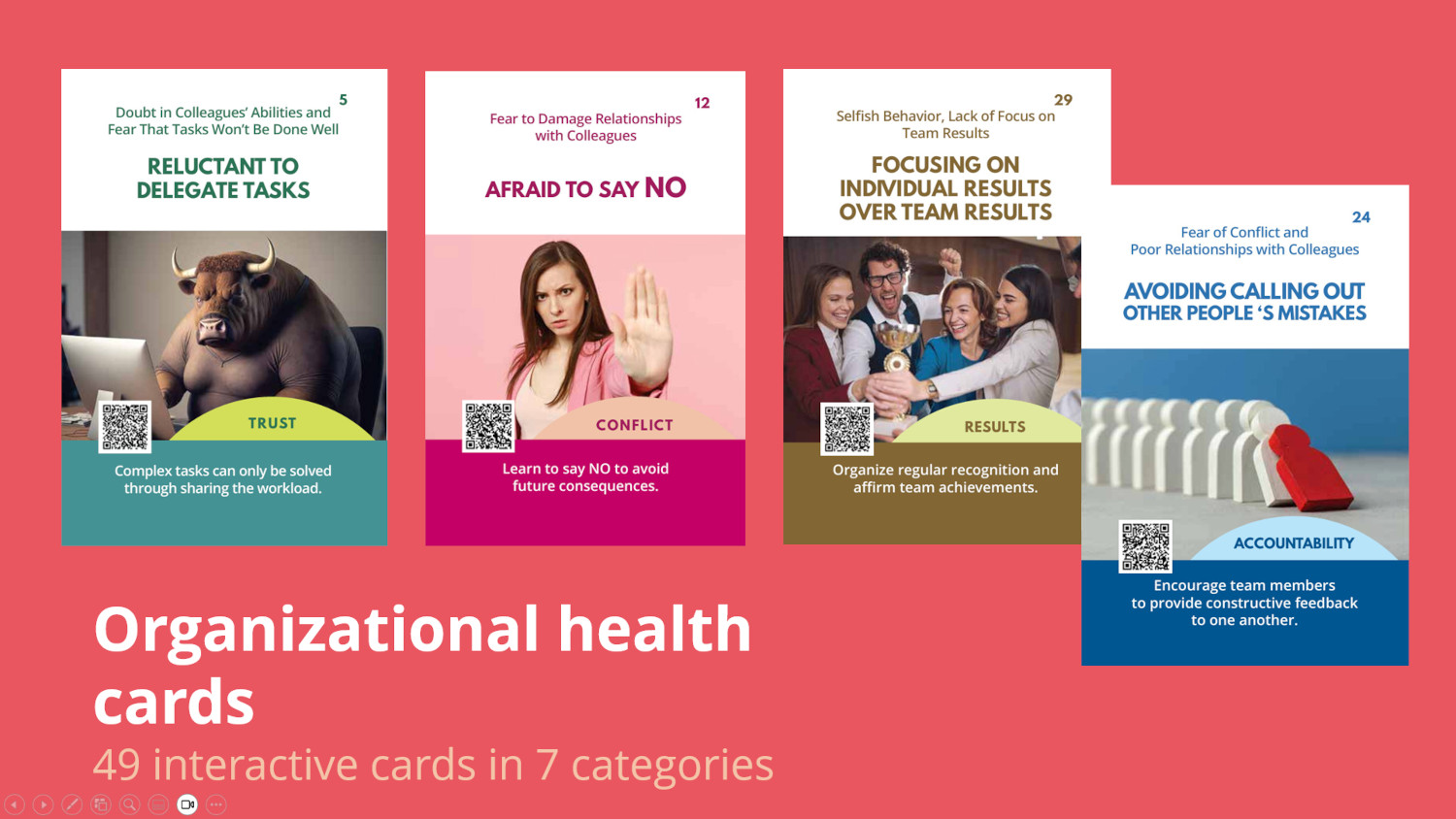
- How can you discover the root causes of these challenges and successfully solve them using our visual interactive “team effectiveness” cards?
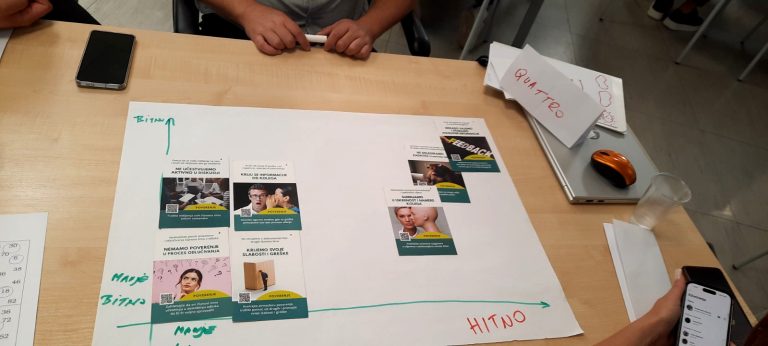
By placing the visual cards on the Urgent–Important matrix, you can quickly and easily set priorities and create an action plan.
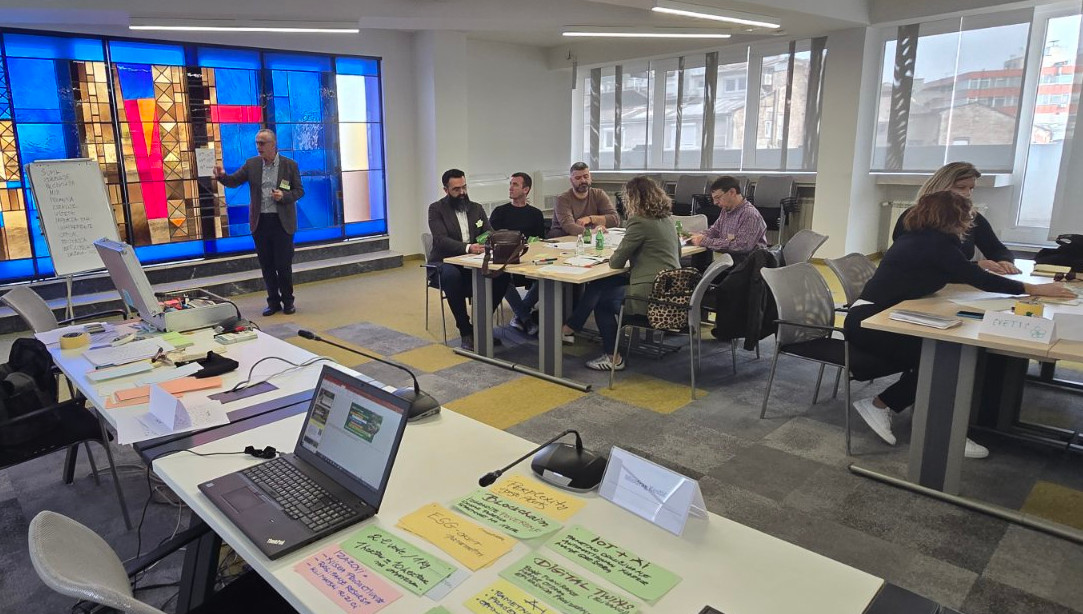
From an interactive workshop in Belgrade
Contact us to schedule a meeting
Tel: + 381 65 26 080 26
Email: poslovnaznanja@gmail.com