Afraid to Say No – CONFLICT – 12
When people are afraid to say no, overload increases, priorities blur, and hidden resentment builds.

Where you’ll notice this in a team
This issue appears when people agree to requests even when they realistically don’t have the time, resources, or clarity to deliver. On the surface, it looks like cooperation—but underneath, it creates stress and quiet frustration.
- In task allocation: the same people keep taking on “just one more thing.”
- In meetings: commitments are made without checking capacity.
- In deadlines: delays appear because work was overpromised.
- In communication: people say yes outwardly but complain privately.
- In wellbeing: stress, exhaustion, and burnout slowly increase.
Over time, this pattern damages trust: promises are not kept, and people feel taken advantage of— even though no one explicitly forced them to agree.
Why it happens
Fear of saying no is rarely about laziness or lack of commitment. It is usually driven by social pressure, power dynamics, and unclear priorities.
- Fear of disappointing others: “I don’t want to look uncooperative.”
- Power imbalance: saying no to managers or senior colleagues feels risky.
- Need for approval: people link self-worth to being helpful.
- Unclear priorities: without clarity, everything feels urgent.
- Cultural norms: saying no is seen as negative or selfish.
When teams don’t talk openly about limits and capacity, “yes” becomes meaningless—and trust erodes quietly.
How it affects results
Teams that struggle to say no often underperform despite working very hard.
- missed deadlines and broken commitments,
- overloaded key people and uneven workload,
- lower quality due to rushing,
- passive resistance and frustration,
- declining trust in plans and promises.
How to reduce and overcome it
Healthy teams treat “no” as a professional boundary, not a personal rejection. The goal is not to refuse work—but to agree realistically.
- Normalize capacity checks: make it acceptable to discuss workload openly.
- Separate people from requests: declining a task is not rejecting the person.
- Offer alternatives: suggest different timing, scope, or support.
- Clarify priorities: align on what truly matters now.
- Model boundaries as leaders: show that saying no can be responsible.
When teams respect limits, commitments become more reliable—and trust grows.
Practical communication tools
These tools help teams say no clearly, calmly, and constructively—without damaging relationships.
- Capacity-first response: “Here’s what I’m currently working on—can we reprioritize?”
- Conditional yes: “I can do this if X is delayed or Y supports.”
- Clear no + reason: “I can’t take this on without risking existing commitments.”
- Priority question: “What should I deprioritize if I say yes?”
- Commitment recap: confirm what was actually agreed to.
Useful links
Improve Your Team Heath and Effectiveness
How can your team overcome hidden obstacles that slow it down?
Take our 3-day Organizational Health Improvement Workshop
- How can you identify specific problems and challenges in teamwork, cooperation, and internal communication among employees?
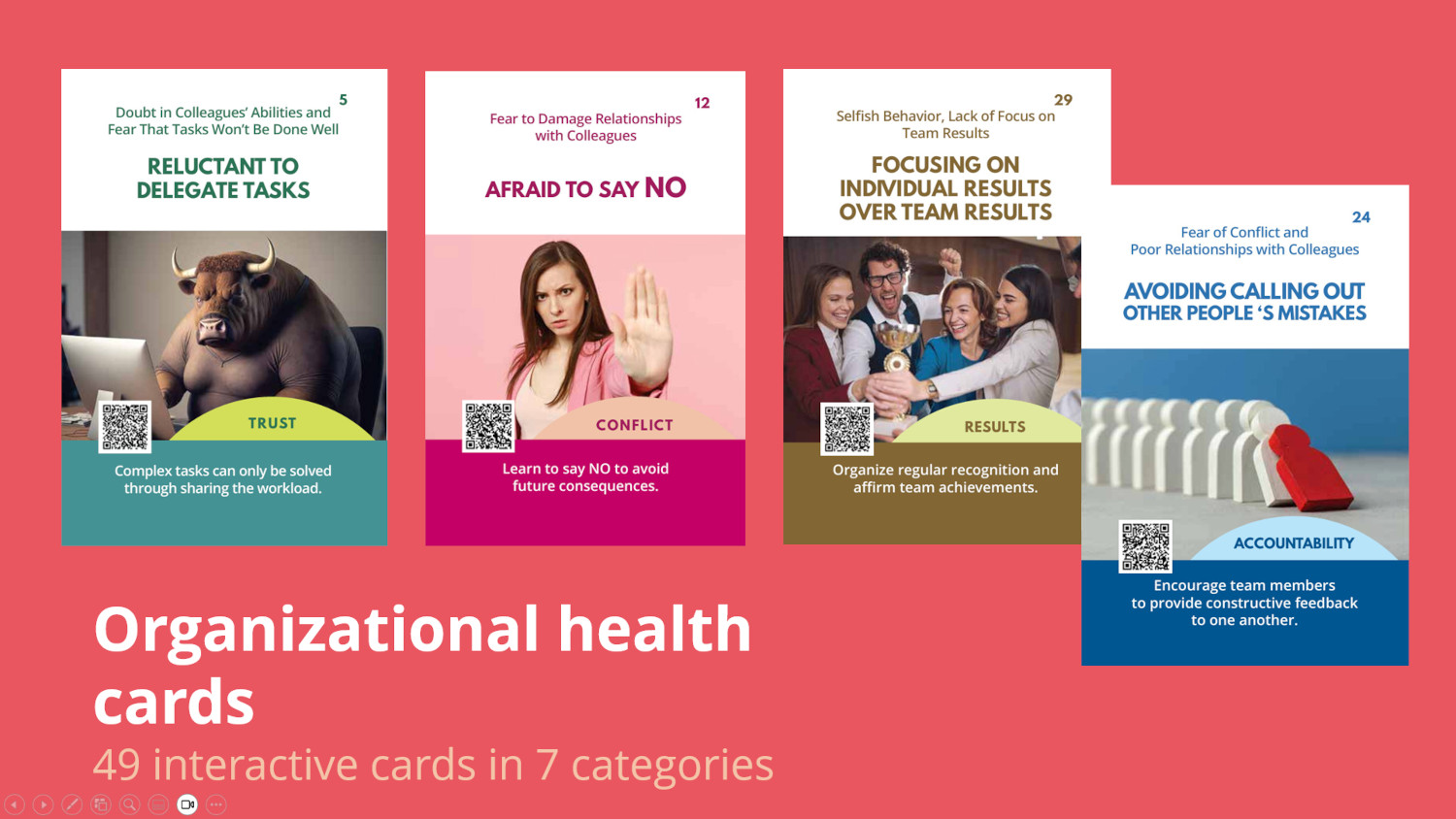
- How can you discover the root causes of these challenges and successfully solve them using our visual interactive “team effectiveness” cards?
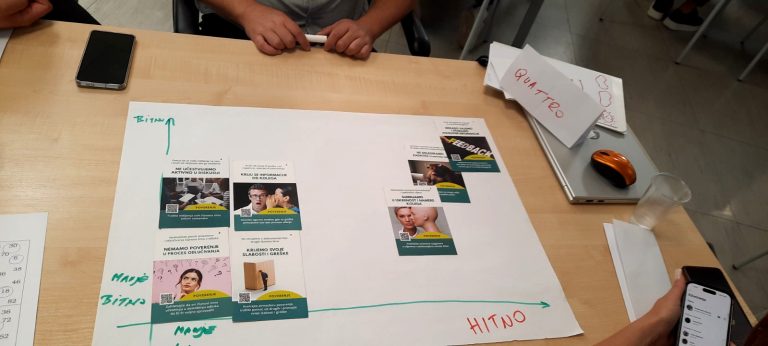
By placing the visual cards on the Urgent–Important matrix, you can quickly and easily set priorities and create an action plan.
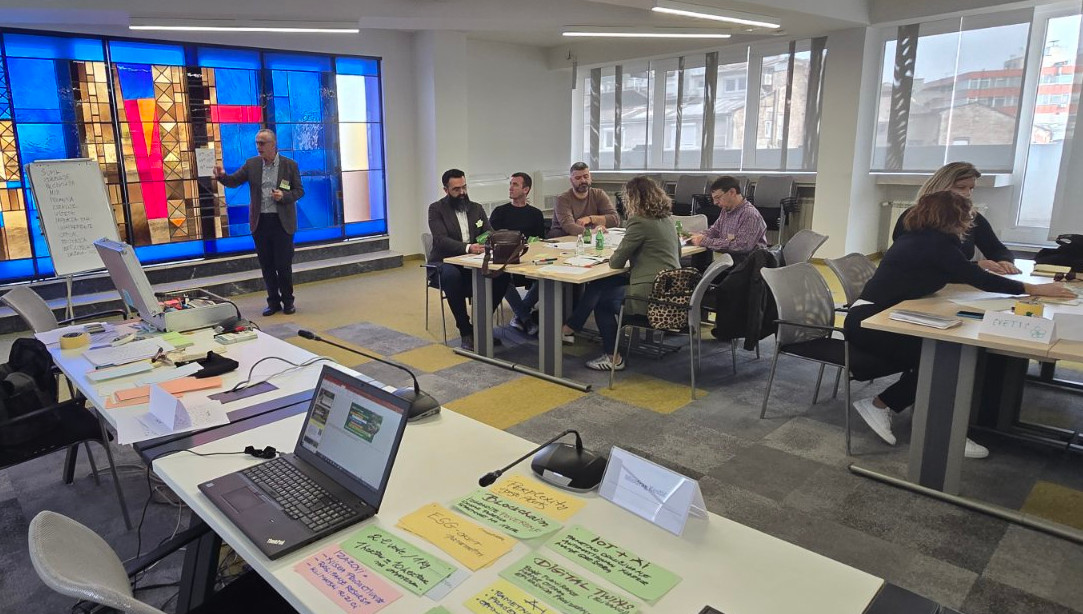
From an interactive workshop in Belgrade
Contact us to schedule a meeting
Tel: + 381 65 26 080 26
Email: poslovnaznanja@gmail.com