Meetings are Lacking Engagement – CONFLICT – 10
When meetings feel passive and unproductive, energy drops and real issues stay unresolved.

Where you’ll notice this in a team
This issue becomes obvious when meetings feel like something to “get through” rather than a space for real thinking, alignment, and decision-making.
- During meetings: cameras off, little interaction, long monologues.
- In discussions: few questions, limited debate, quick agreement.
- In energy levels: people multitask or disengage mentally.
- After meetings: confusion about decisions and next steps.
- Over time: meetings are seen as a waste of time.
Engagement drops not because people don’t care, but because meetings don’t invite participation.
Why it happens
Low engagement is usually a symptom of poor meeting design, not poor motivation.
- No clear purpose: people don’t know why they’re there.
- Too much information sharing: updates replace discussion.
- Dominant voices: a few people talk, others listen.
- Lack of structure: conversations drift without focus.
- No visible outcomes: meetings end without decisions or actions.
When meetings repeat this pattern, disengagement becomes the norm.
How it affects results
Poorly engaged meetings drain time and energy while producing little value.
- slow or unclear decision-making,
- weak alignment across the team,
- repeated discussions on the same topics,
- low ownership of outcomes,
- frustration and disengagement.
How to reduce and overcome it
Engaging meetings are designed deliberately. They balance structure, interaction, and clear outcomes.
- Clarify the purpose: state what must be decided, aligned, or created.
- Limit information sharing: send updates in advance.
- Design interaction: plan moments for discussion and input.
- Manage time actively: keep focus and momentum.
- End with clarity: confirm decisions, owners, and next steps.
Practical communication tools
These tools help turn meetings into working sessions instead of passive updates.
- Meeting objective statement: one clear sentence at the start (“By the end, we will…”).
- Silent thinking: 2–3 minutes of writing before discussion.
- Round-robin input: each participant contributes briefly.
- Decision framing: clearly state what needs to be decided.
- Action recap: end with owners, deadlines, and next steps.
Useful links

Improve Your Team Heath and Effectiveness
How can your team overcome hidden obstacles that slow it down?
Take our 3-day Organizational Health Improvement Workshop
- How can you identify specific problems and challenges in teamwork, cooperation, and internal communication among employees?
- How can you discover the root causes of these challenges and successfully solve them using our visual interactive “team effectiveness” cards?
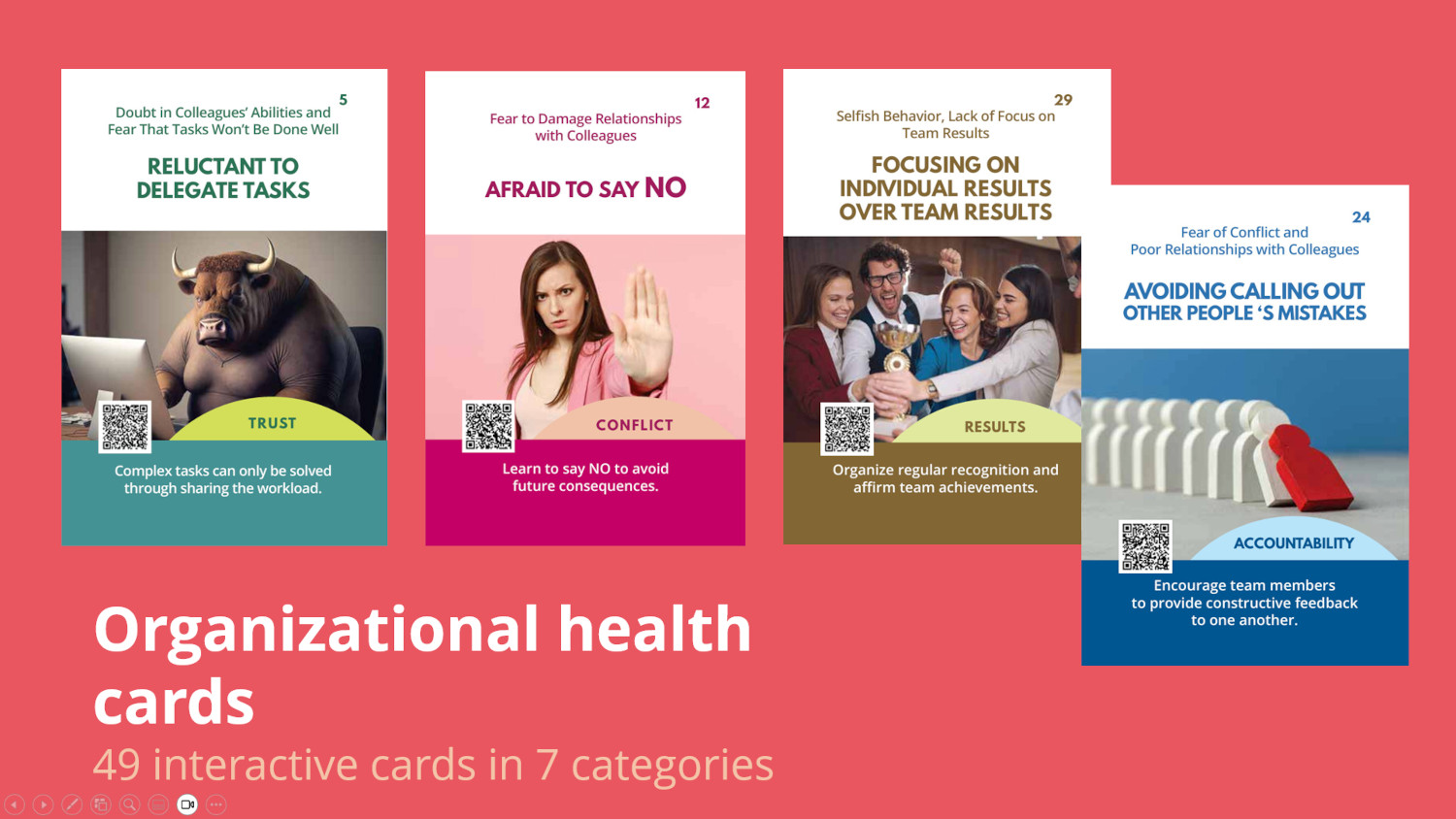
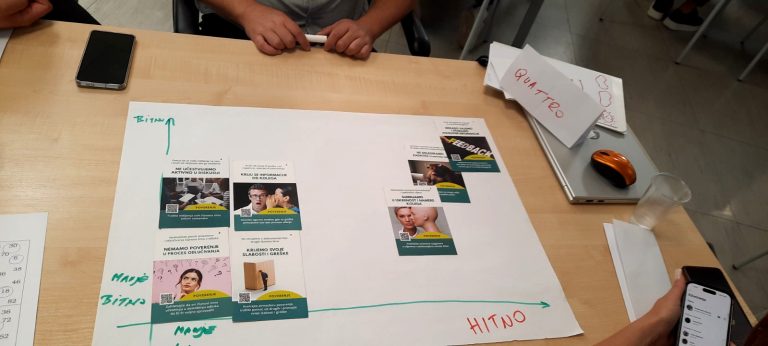
By placing the visual cards on the Urgent–Important matrix, you can quickly and easily set priorities and create an action plan.
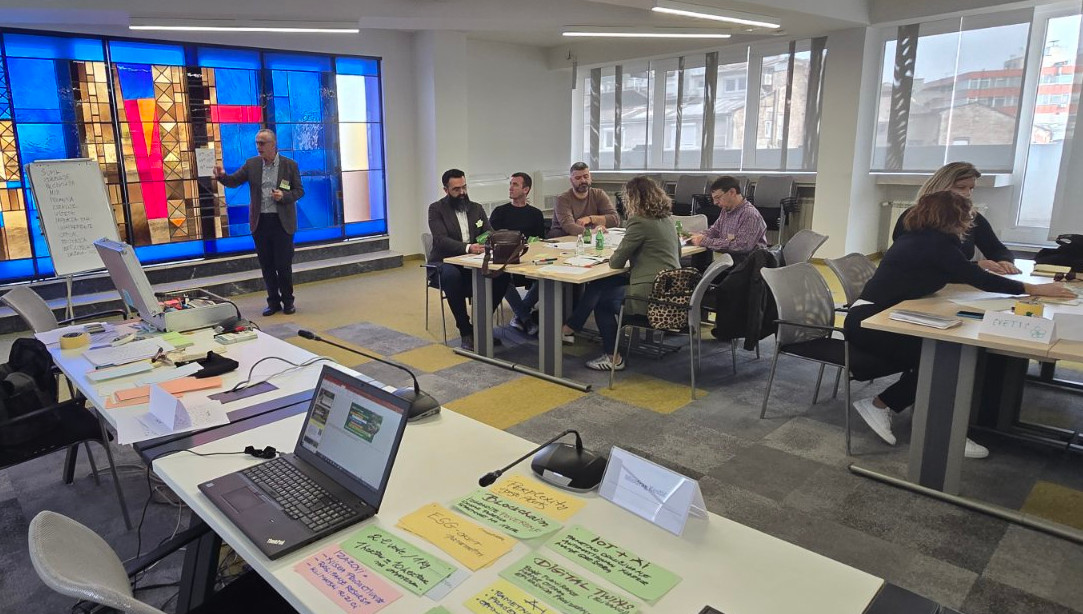
From an interactive workshop in Belgrade
Contact us to schedule a meeting
Tel: + 381 65 26 080 26
Email: poslovnaznanja@gmail.com