23. AI Fraud Detection
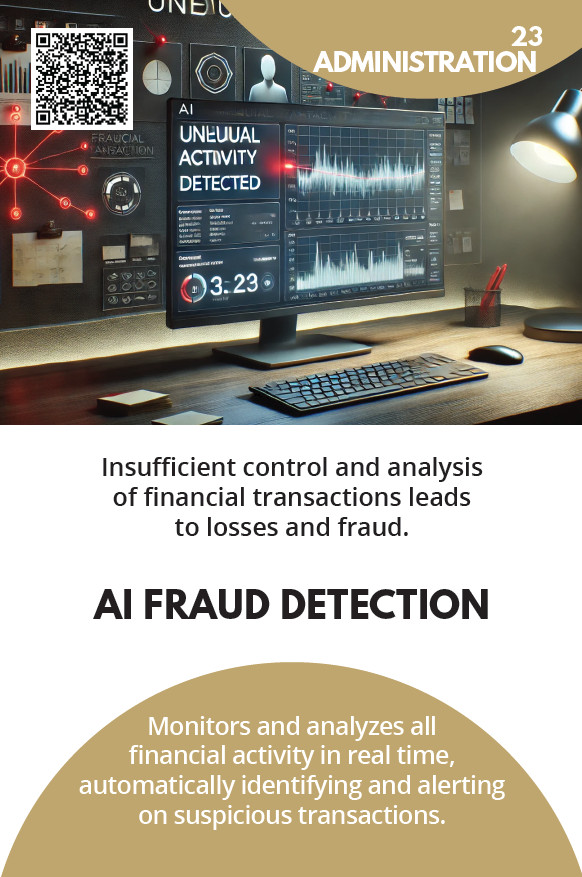
What challenge or problem does this AI solution solve?
Companies often discover fraud, irregular transactions, duplicate payments, suspicious supplier invoices, and internal abuse too late. Manual controls are slow, fragmented, and depend on human attention, which increases the risk that important warning signs will go unnoticed. As transaction volume grows, finance and control teams find it harder to detect suspicious behavior in time, which can lead to direct financial losses and reputational damage.
Why does AI solve this problem best?
Traditional control systems use fixed rules and predefined thresholds, but fraud patterns change quickly and often do not follow obvious rules. AI can analyze large volumes of financial and operational data in real time, identify anomalies, compare behavior patterns, and recognize suspicious transactions that standard controls may miss. Unlike public AI services, this system is trained on internal company data and business rules, which ensures confidentiality, accuracy, and practical relevance in fraud prevention.
How does AI solve this challenge or problem?
The AI system automatically analyzes transactions, invoices, suppliers, approvals, employee actions, payment behavior, and deviations from normal patterns. It detects anomalies, flags high-risk events, identifies suspicious links between entities, and generates alerts for finance, audit, and management teams. The system can also prioritize cases by risk level, summarize suspicious scenarios, compare them with historical fraud cases, and support investigation and prevention activities.
What are the concrete benefits for the company?
By implementing this AI assistant, the company achieves:
- Earlier detection of suspicious transactions and fraud risks.
- Reduction in financial losses caused by fraud or abuse.
- Less manual control work and faster investigation of anomalies.
- Better transparency in approvals, suppliers, and payment flows.
- Stronger internal controls and greater confidence in financial operations.
The company’s administration team handles risk control and fraud-prevention tasks more accurately, easily, quickly, and efficiently.
Required data sets
To create this AI sales assistant, the following data sets are required:
- Finance: transactions, invoices, payments, journals, expense claims, and approval records.
- ERP / procurement: suppliers, purchase orders, delivery confirmations, contract values, and payment terms.
- Administration / HR: user roles, approval rights, employee actions, and access logs.
- Audit / compliance: historical fraud cases, control exceptions, internal findings, and risk indicators.
- (Optional: bank statements, external sanctions lists, beneficial ownership data, and forensic investigation results.)
The data is used to train the AI model so it can best adapt to your business.
Elements for ROI calculation – Investment Profitability
CAPEX (investment):
- Development of the AI model for anomaly detection and fraud-risk scoring.
- Integration with ERP, finance, procurement, audit, and approval systems.
- Setup of control rules, alert thresholds, and investigation dashboards.
OPEX (costs):
- Model maintenance and retraining with new fraud patterns and operational data.
- Cloud processing and API costs for anomaly detection and risk scoring.
- Updating rules, case libraries, and compliance parameters.
KPI (success indicators):
- Increase in fraud detection rate (% of suspicious cases identified).
- Reduction in false negatives and delayed fraud detection.
- Reduction in manual review time per suspicious case.
- Improvement in anomaly classification accuracy.
- Reduction in financial loss exposure caused by fraud and abuse.
Average ROI for this AI solution
- Return on investment: 60% – 160%
- Time to ROI: 4 – 10 months
- Best for: finance teams, audit, procurement, banks, insurance, telecom, retail, healthcare, logistics, and large B2B organizations
How do you choose and implement the right AI tools?
The first step toward successful implementation of AI solutions tailored to your business
2-day training for preparing the implementation of business AI solutions
Start a successful Digital AI Transformation in our practical consulting workshop, using interactive visual AI cards (50 cards) that simply and intuitively connect your business challenges and operational problems with the appropriate AI solutions.
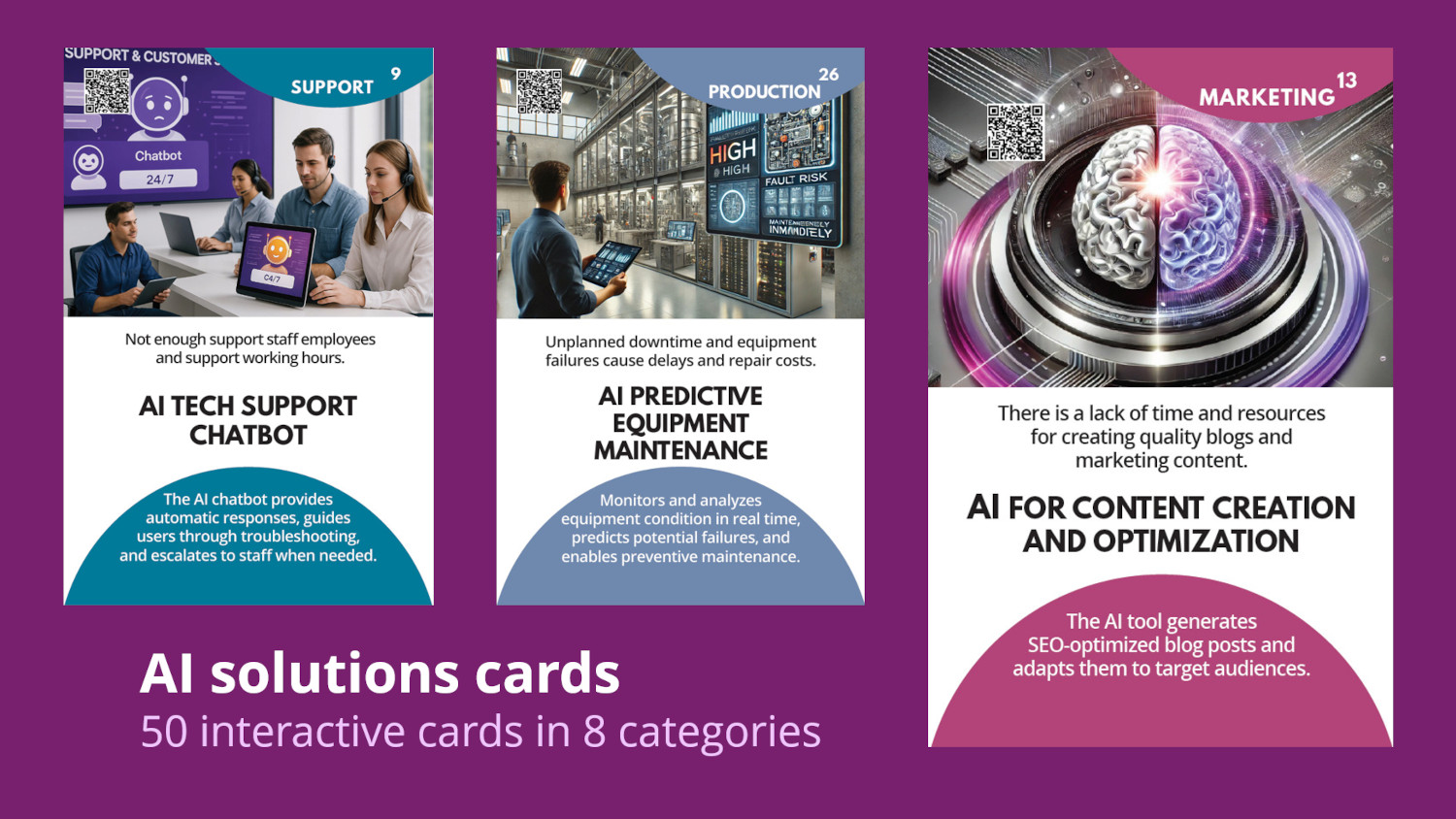
Visual interactive cards with business AI solutions
What do we do in our interactive workshop?
- AI solutions on our cards are not generic tools, but business solutions developed specifically for each company based on data and concrete needs.
- They are trained on your internal data and adapted to specific business processes — sales, procurement, production, or customer support.
- Unlike general online AI tools such as ChatGPT, Claude, or Gemini, these solutions provide full control over data within the company.
See how this workshop helps you make the best possible business decisions?
From the interactive workshop in Banja Luka
Implement this AI solution
Together with leading AI companies in Serbia, we actively cooperate on the implementation of AI tool projects (business artificial intelligence solutions presented on our visual cards).
We will help you choose the AI solution and provider that best match your needs.