Lack Of Alignment With Company Values – ORGANISATIONAL CULTURE – 36
When company values exist mostly on posters, websites, or presentations, but are not reflected in everyday decisions and behaviours, employees become confused about what truly matters and how they are expected to act.
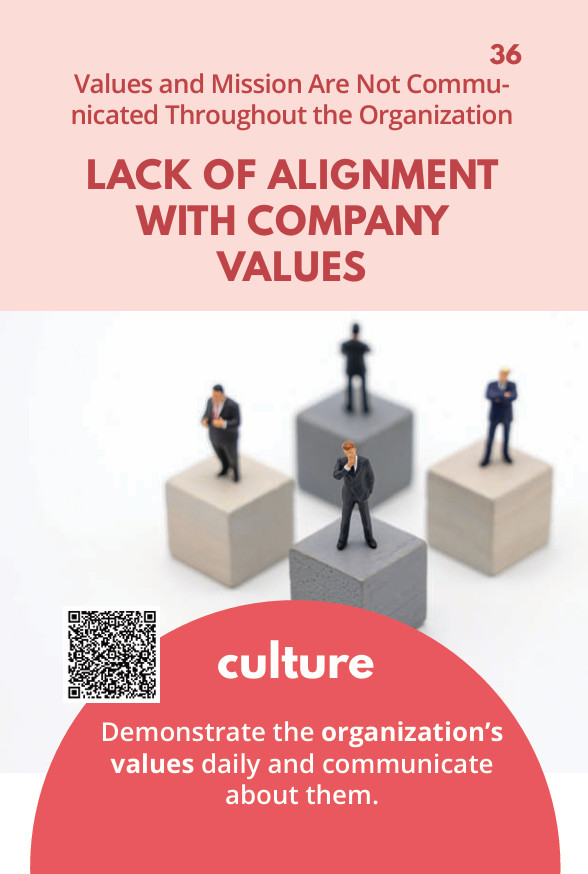
Where you’ll notice this in everyday work
A lack of alignment with company values usually doesn’t appear as one dramatic event. Instead, it shows up through everyday inconsistencies between what the organization says it stands for and how decisions are actually made.
- Values are quoted in presentations, but ignored under pressure.
- Managers act differently from what the values suggest is acceptable.
- Employees receive mixed signals about what behaviour is rewarded.
- Short-term results override principles when deadlines or targets are at risk.
- People become cynical about values, calling them “just marketing.”
- Decisions feel inconsistent, unpredictable, or unfair.
Over time, values stop guiding behaviour and become background noise instead of a shared compass.
Why it happens
Misalignment with company values rarely comes from bad intentions. More often, it develops when values are defined abstractly, without being translated into concrete expectations and decisions.
- Values are too generic: they sound good, but mean different things to different people.
- Leadership inconsistency: leaders don’t model values under pressure.
- Competing priorities: speed, profit, or efficiency quietly override principles.
- No consequences: behaviour that contradicts values is tolerated.
- Lack of discussion: teams rarely talk about how values apply to real situations.
When values are not operationalized, people default to what feels safest or most rewarded.
How it affects results
A gap between stated values and real behaviour directly affects trust, engagement, and long-term performance.
- lower trust in leadership and decisions,
- reduced sense of belonging and pride,
- ethical and reputational risks,
- conflicts about “the right way” to act,
- higher turnover among value-driven employees.
How to reduce and overcome it
Alignment with values is built through daily decisions, not slogans. The key is to make values practical, visible, and consistently applied.
- Translate values into behaviours: define what each value looks like in action.
- Use values in decisions: explicitly reference them when choosing priorities.
- Model from the top: leaders must demonstrate values, especially under pressure.
- Reward alignment: recognise behaviour that reflects company values.
- Address misalignment early: talk about behaviour gaps openly and constructively.
Practical tools
1) Values-to-Behaviour Map
For each core value, define 3–5 observable behaviours that show the value in everyday work.
2) Values-Based Decision Check
Before major decisions, ask: “Which value does this decision support?” and “Which value might it undermine?”
3) Real Scenario Discussions
Use real dilemmas from work to discuss how values should guide action, instead of relying on abstract examples.
4) Values Feedback Loop
Include alignment with values as a regular topic in performance conversations and retrospectives.
Recommended links
Improve Your Team Heath and Effectiveness
How can your team overcome hidden obstacles that slow it down?
Take our 3-day Organizational Health Improvement Workshop
- How can you identify specific problems and challenges in teamwork, cooperation, and internal communication among employees?
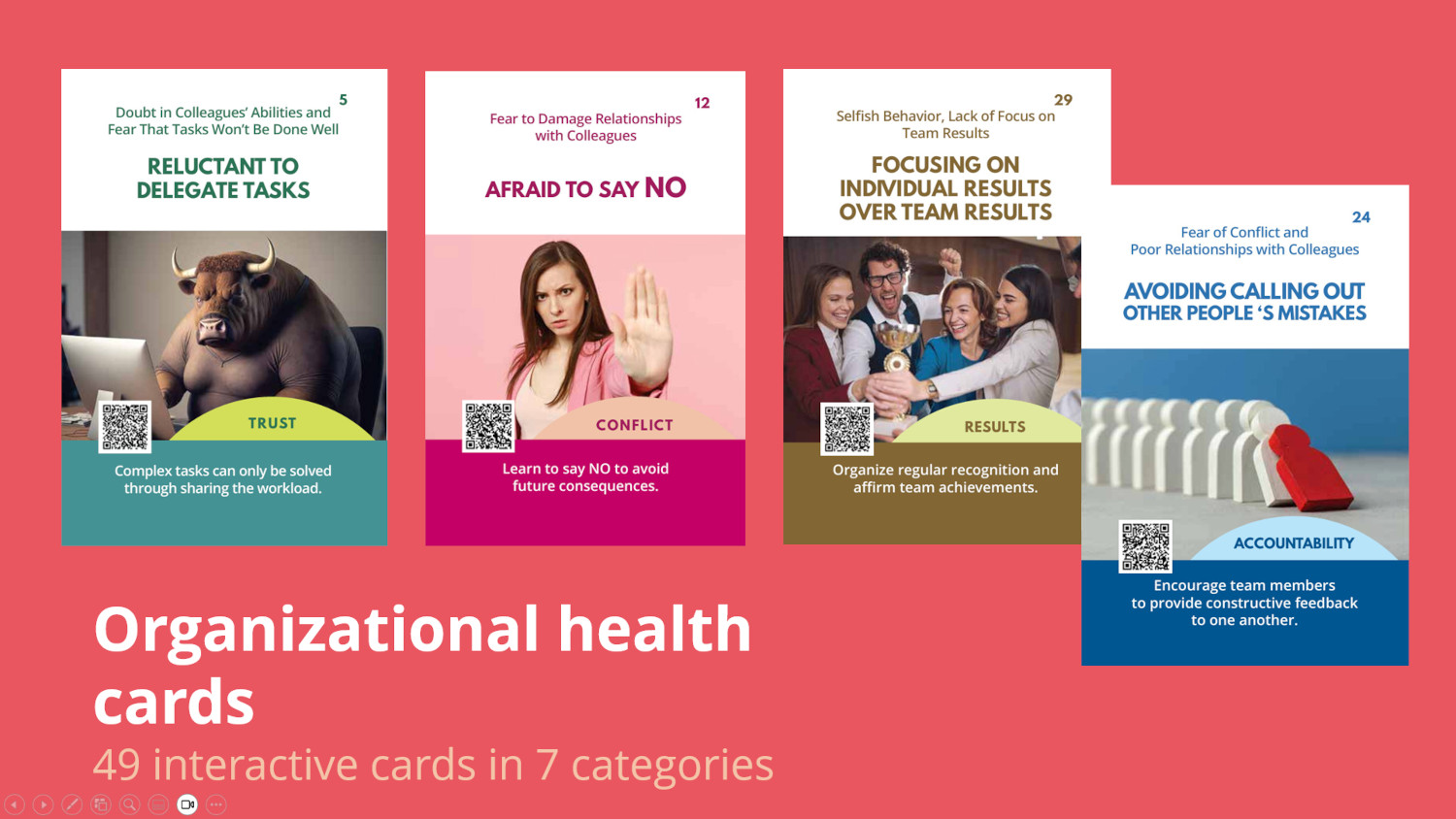
- How can you discover the root causes of these challenges and successfully solve them using our visual interactive “team effectiveness” cards?
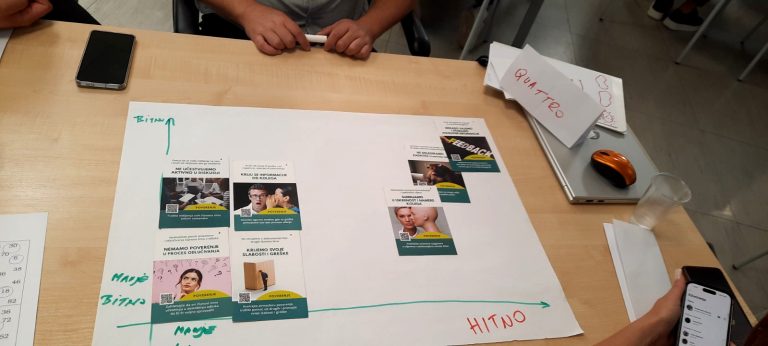
By placing the visual cards on the Urgent–Important matrix, you can quickly and easily set priorities and create an action plan.
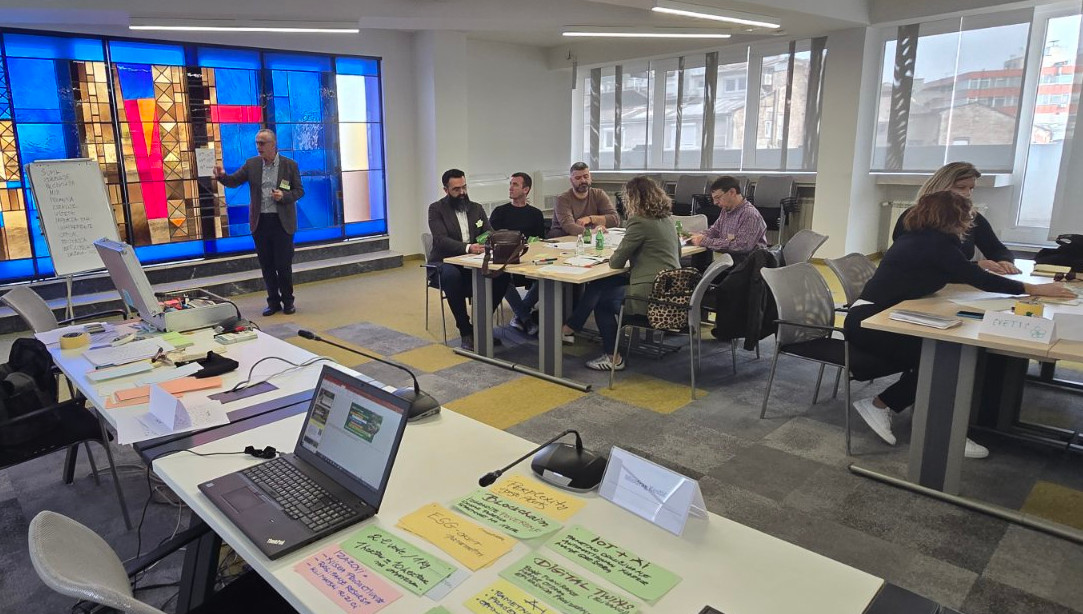
From an interactive workshop in Belgrade
Contact us to schedule a meeting
Tel: + 381 65 26 080 26
Email: poslovnaznanja@gmail.com