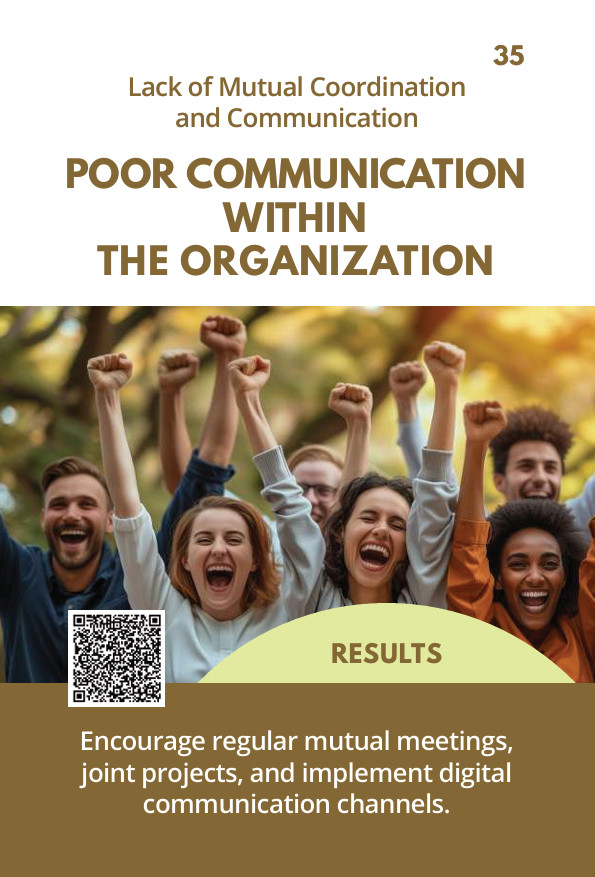
Poor Communication Within The Organization – RESULTS – 35
When communication inside the organization is unclear, delayed, or inconsistent, even good strategies and capable teams struggle to deliver results, because people simply do not have the information they need to act effectively.
Where you’ll notice this in everyday work
Poor internal communication rarely appears as one obvious failure. More often, it shows up as a collection of small breakdowns that gradually slow work down and increase frustration across teams.
- Information arrives late, after decisions have already been made or deadlines passed.
- Different teams have different versions of the truth, leading to confusion and rework.
- Important messages are buried in long emails, chats, or documents that few people fully read.
- People hear about changes indirectly, through colleagues rather than official communication.
- Questions keep repeating because answers are not shared clearly or consistently.
- Meetings feel unproductive, with time spent aligning instead of moving forward.
Over time, teams stop trusting communication channels and rely on informal networks, which increases inequality and risk.
Why it happens
Poor communication is usually not caused by lack of effort, but by unclear structures, overloaded channels, and missing ownership for communication itself.
- No clear communication standards: people don’t know what to share, when, or where.
- Too many channels: email, chat, meetings, tools — without clear purpose.
- Assumptions instead of clarity: “I thought everyone knew.”
- Top-down overload: long messages without clear priorities or actions.
- Weak feedback loops: senders don’t check if messages were understood.
When communication lacks structure, people compensate with guesses, workarounds, and repeated alignment.
How it affects results
Over time, poor communication becomes a direct performance issue, not just a “soft” organizational problem.
- delays and duplicated work,
- lower quality and more errors,
- missed opportunities and slow decision-making,
- frustration and disengagement,
- loss of trust between teams and management.
How to reduce and overcome it
Improving communication does not mean “more communication”, but clearer, simpler, and more intentional communication.
- Define communication rules: what goes where, for whom, and by when.
- Clarify ownership: every key message has a sender responsible for clarity.
- Separate information from decisions: clearly mark what requires action.
- Reduce channels: fewer tools, clearer purpose.
- Close the loop: check understanding and confirm next steps.
Practical communication tools
1) Communication Charter (one page)
A simple agreement that defines which channels are used for which type of message, expected response times, and who needs to be informed.
2) Message Clarity Template
Structure important messages using four lines: context → decision → action → deadline.
3) Weekly Alignment Update
One short weekly message covering priorities, changes, and risks, sent consistently in the same format and channel.
4) “Read & Confirm” rule
For critical information, require a simple acknowledgment or short summary, not just silent receipt.
Recommended links
Improve Your Team Heath and Effectiveness
How can your team overcome hidden obstacles that slow it down?
Take our 3-day Organizational Health Improvement Workshop
- How can you identify specific problems and challenges in teamwork, cooperation, and internal communication among employees?
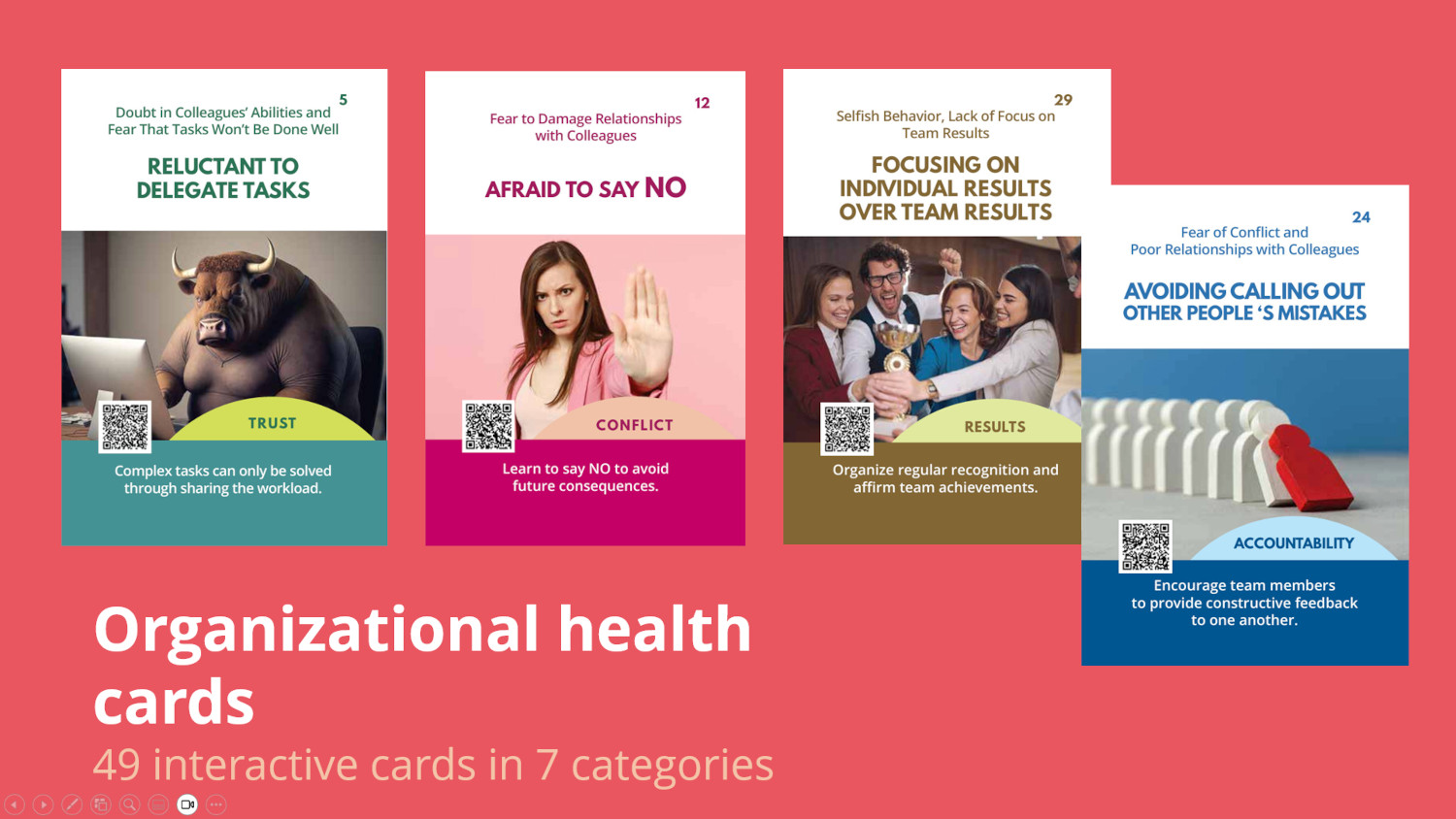
- How can you discover the root causes of these challenges and successfully solve them using our visual interactive “team effectiveness” cards?
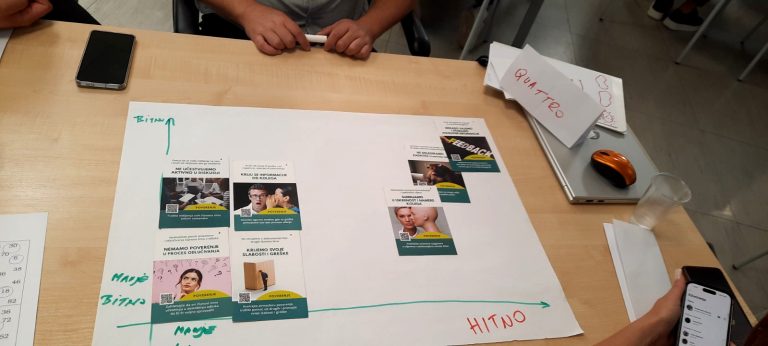
By placing the visual cards on the Urgent–Important matrix, you can quickly and easily set priorities and create an action plan.

From an interactive workshop in Belgrade
Contact us to schedule a meeting
Tel: + 381 65 26 080 26
Email: poslovnaznanja@gmail.com