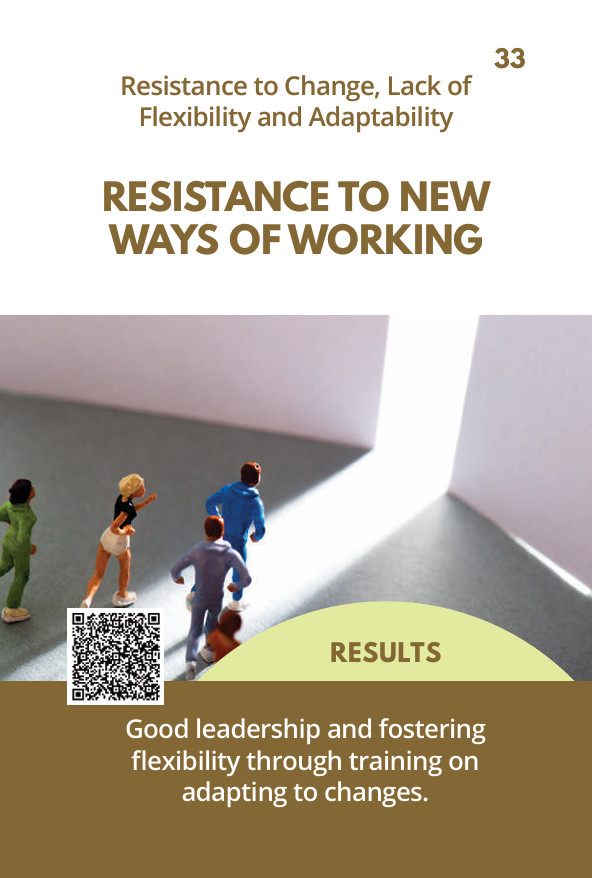
Resistance To New Ways of Working – RESULTS – 33
When results stay invisible, motivation drops — people stop feeling that their work really matters.
Where you’ll notice this in a team
This problem shows up when people work hard, but they rarely get a clear “signal” that progress is happening. Over time, the team starts feeling like they are running, but not moving forward.
- Weekly work feels like a blur: tasks are completed, but nobody can say what changed, improved, or moved closer to a goal.
- People lose energy after launches: a project goes live, but there is no follow-up, no outcomes shared, and no sense of achievement.
- Confusing priorities: today “urgent” is one thing, tomorrow it’s something else, so the team can’t connect effort with results.
- Low recognition: good work happens, but it is not noticed, measured, or celebrated, so people stop pushing for quality.
- Frustration with leadership: employees feel management asks for more, but does not explain what success looks like or how impact is tracked.
Why it happens
Most teams don’t have a “visibility system” that turns work into understandable progress. When goals are vague, metrics are missing, and feedback loops are slow, results remain hidden even if the team is doing valuable work.
- Goals are not concrete: the team hears “do better” or “increase quality,” but not what to measure and by when.
- No agreed indicators: people track different things (or nothing), so there is no shared picture of progress.
- Work is fragmented: many small tasks across tools and channels, with no single place that shows what they add up to.
- Feedback is delayed: customers, users, or internal stakeholders respond weeks later, so the team can’t learn fast.
- Success is not communicated: even when results exist, they stay in reports or dashboards that nobody actually reviews together.
When this continues for months, it becomes emotional: people start believing their effort is “pointless,” and motivation slowly drops. That is why visibility of results is not only a measurement topic — it is also a trust and engagement topic.
How to reduce and overcome it
The goal is simple: make progress visible, frequent, and easy to understand. You don’t need a perfect KPI system — you need a consistent habit of connecting work to outcomes.
- Translate goals into outcomes: define what “good” looks like in plain language (speed, quality, adoption, fewer errors, happier customers), and pick 2–4 indicators.
- Create one shared “results page”: a simple board or document that shows goals, indicators, current value, and trend — so everyone sees the same truth.
- Build short feedback loops: review progress every week (15 minutes) and decide one adjustment immediately, instead of waiting for monthly reports.
- Show results in stories: don’t only show numbers; show examples (“Before/After”, customer quotes, resolved issues, cycle-time reduction) so people feel the impact.
- Celebrate progress, not only big wins: highlight small improvements and learning, because that keeps energy and ownership high.
Practical tools (explained)
1) The “3–3–3 Results Dashboard” (quick and realistic)
This is a lightweight dashboard you can build in one page. It works especially well for teams that feel overwhelmed by complex reporting.
- 3 goals: the top three outcomes for the next 4–8 weeks (not tasks).
- 3 indicators: one indicator per goal (keep them measurable and easy to update).
- 3 insights: every week write three short notes: what improved, what got worse, what we learned / will change next week.
How to use it: update it weekly in 10 minutes, then discuss it for 15 minutes as a team. This makes results visible and creates a habit of learning, not blaming.
2) “Outcome Review” meeting (15 minutes, no slides)
Many teams talk a lot about tasks, but not about outcomes. This short meeting shifts the focus to impact.
- Step 1: review the 2–4 indicators (trend up/down, what changed).
- Step 2: name one key driver (what caused the change) using real examples from the week.
- Step 3: agree on one adjustment for next week (one experiment, one improvement, one decision).
Rule: if you can’t explain the change, you don’t add more tasks — you improve the way you measure, track, or learn. This prevents “busy work.”
3) “Before / After” evidence library (makes impact feel real)
Create a simple folder or page where the team stores short proof of progress. This is especially helpful when outcomes are qualitative, not just numerical.
- Examples: customer feedback snippets, fewer complaints, reduced rework, improved response time, quality check improvements.
- Format: one paragraph per item: What was the situation? What did we change? What is different now?
- Use: review 1–2 items weekly to connect effort with real-world results and keep motivation strong.
Recommended links
- Atlassian – OKRs (simple explanation and examples)
- What Matters – OKR basics and practical guidance
- Harvard Business Review – measurement and performance topics
- MindTools – improving performance and productivity (practical articles)
- Scrum.org – feedback loops and inspection/adaptation (useful for weekly reviews)
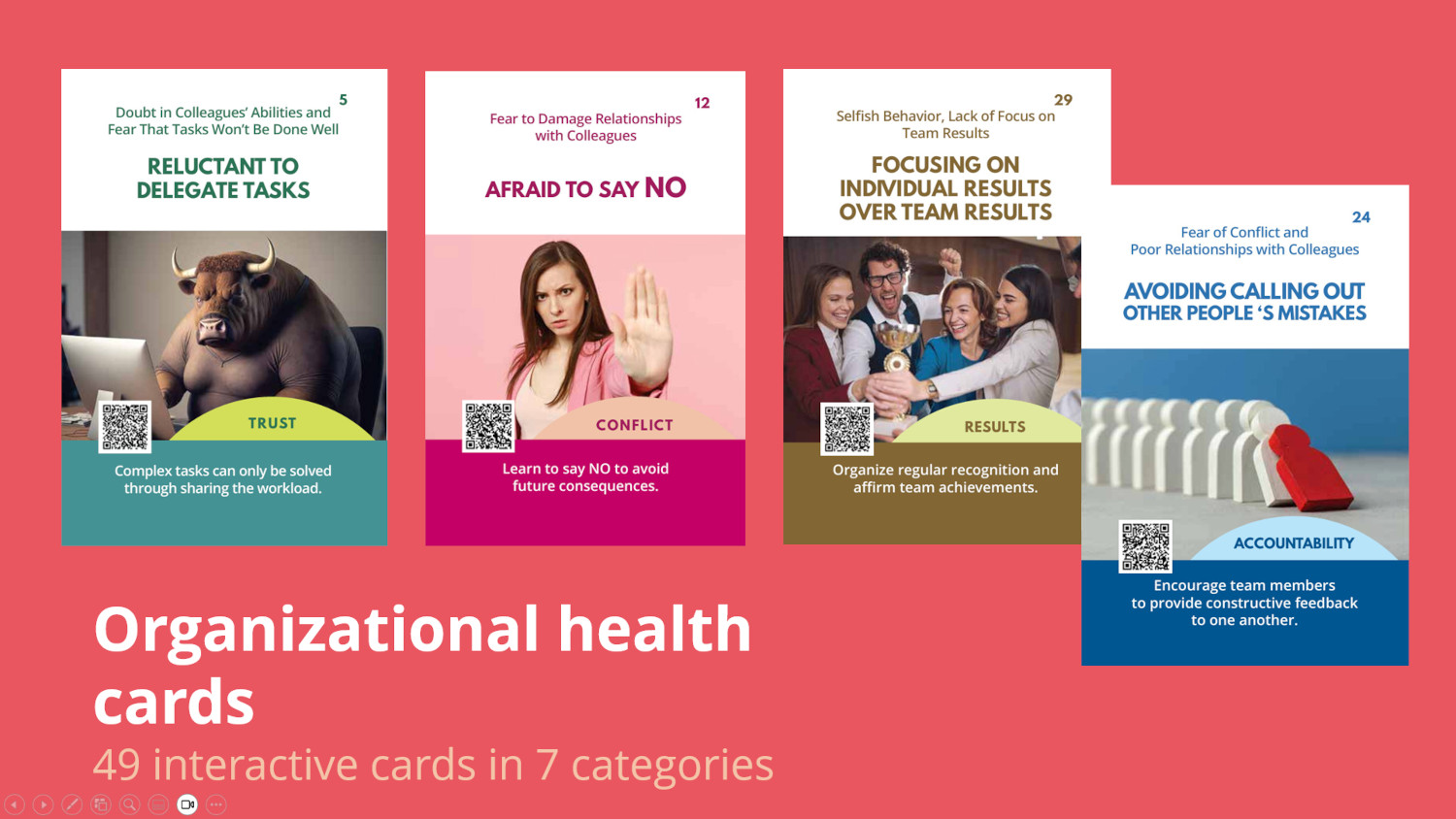
- Healthy Team Cards – view all cards
Improve Your Team Heath and Effectiveness
How can your team overcome hidden obstacles that slow it down?
Take our 3-day Organizational Health Improvement Workshop
- How can you identify specific problems and challenges in teamwork, cooperation, and internal communication among employees?
- How can you discover the root causes of these challenges and successfully solve them using our visual interactive “team effectiveness” cards?
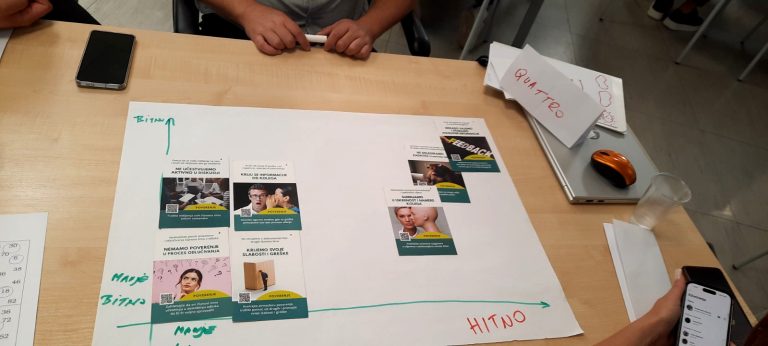
By placing the visual cards on the Urgent–Important matrix, you can quickly and easily set priorities and create an action plan.
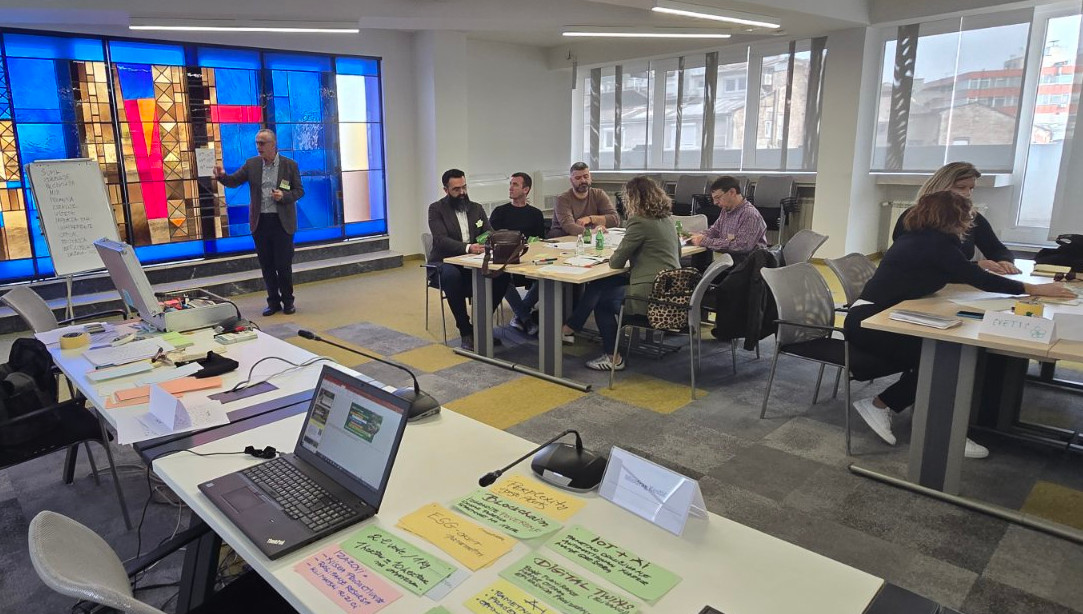
From an interactive workshop in Belgrade
Contact us to schedule a meeting
Tel: + 381 65 26 080 26
Email: poslovnaznanja@gmail.com
Resistance To New Ways of Working – RESULTS – 33
When results stay invisible, motivation drops — people stop feeling that their work really matters.
Where you’ll notice this in a team
This problem shows up when people work hard, but they rarely get a clear “signal” that progress is happening. Over time, the team starts feeling like they are running, but not moving forward.
- Weekly work feels like a blur: tasks are completed, but nobody can say what changed, improved, or moved closer to a goal.
- People lose energy after launches: a project goes live, but there is no follow-up, no outcomes shared, and no sense of achievement.
- Confusing priorities: today “urgent” is one thing, tomorrow it’s something else, so the team can’t connect effort with results.
- Low recognition: good work happens, but it is not noticed, measured, or celebrated, so people stop pushing for quality.
- Frustration with leadership: employees feel management asks for more, but does not explain what success looks like or how impact is tracked.
Why it happens
Most teams don’t have a “visibility system” that turns work into understandable progress. When goals are vague, metrics are missing, and feedback loops are slow, results remain hidden even if the team is doing valuable work.
- Goals are not concrete: the team hears “do better” or “increase quality,” but not what to measure and by when.
- No agreed indicators: people track different things (or nothing), so there is no shared picture of progress.
- Work is fragmented: many small tasks across tools and channels, with no single place that shows what they add up to.
- Feedback is delayed: customers, users, or internal stakeholders respond weeks later, so the team can’t learn fast.
- Success is not communicated: even when results exist, they stay in reports or dashboards that nobody actually reviews together.
When this continues for months, it becomes emotional: people start believing their effort is “pointless,” and motivation slowly drops. That is why visibility of results is not only a measurement topic — it is also a trust and engagement topic.
How to reduce and overcome it
The goal is simple: make progress visible, frequent, and easy to understand. You don’t need a perfect KPI system — you need a consistent habit of connecting work to outcomes.
- Translate goals into outcomes: define what “good” looks like in plain language (speed, quality, adoption, fewer errors, happier customers), and pick 2–4 indicators.
- Create one shared “results page”: a simple board or document that shows goals, indicators, current value, and trend — so everyone sees the same truth.
- Build short feedback loops: review progress every week (15 minutes) and decide one adjustment immediately, instead of waiting for monthly reports.
- Show results in stories: don’t only show numbers; show examples (“Before/After”, customer quotes, resolved issues, cycle-time reduction) so people feel the impact.
- Celebrate progress, not only big wins: highlight small improvements and learning, because that keeps energy and ownership high.
Practical tools (explained)
1) The “3–3–3 Results Dashboard” (quick and realistic)
This is a lightweight dashboard you can build in one page. It works especially well for teams that feel overwhelmed by complex reporting.
- 3 goals: the top three outcomes for the next 4–8 weeks (not tasks).
- 3 indicators: one indicator per goal (keep them measurable and easy to update).
- 3 insights: every week write three short notes: what improved, what got worse, what we learned / will change next week.
How to use it: update it weekly in 10 minutes, then discuss it for 15 minutes as a team. This makes results visible and creates a habit of learning, not blaming.
2) “Outcome Review” meeting (15 minutes, no slides)
Many teams talk a lot about tasks, but not about outcomes. This short meeting shifts the focus to impact.
- Step 1: review the 2–4 indicators (trend up/down, what changed).
- Step 2: name one key driver (what caused the change) using real examples from the week.
- Step 3: agree on one adjustment for next week (one experiment, one improvement, one decision).
Rule: if you can’t explain the change, you don’t add more tasks — you improve the way you measure, track, or learn. This prevents “busy work.”
3) “Before / After” evidence library (makes impact feel real)
Create a simple folder or page where the team stores short proof of progress. This is especially helpful when outcomes are qualitative, not just numerical.
- Examples: customer feedback snippets, fewer complaints, reduced rework, improved response time, quality check improvements.
- Format: one paragraph per item: What was the situation? What did we change? What is different now?
- Use: review 1–2 items weekly to connect effort with real-world results and keep motivation strong.
Recommended links
- Atlassian – OKRs (simple explanation and examples)
- What Matters – OKR basics and practical guidance
- Harvard Business Review – measurement and performance topics
- MindTools – improving performance and productivity (practical articles)
- Scrum.org – feedback loops and inspection/adaptation (useful for weekly reviews)
- Healthy Team Cards – view all cards
Improve Your Team Heath and Effectiveness
How can your team overcome hidden obstacles that slow it down?
Take our 3-day Organizational Health Improvement Workshop
- How can you identify specific problems and challenges in teamwork, cooperation, and internal communication among employees?
- How can you discover the root causes of these challenges and successfully solve them using our visual interactive “team effectiveness” cards?
By placing the visual cards on the Urgent–Important matrix, you can quickly and easily set priorities and create an action plan.
From an interactive workshop in Belgrade
Contact us to schedule a meeting
Tel: + 381 65 26 080 26
Email: poslovnaznanja@gmail.com