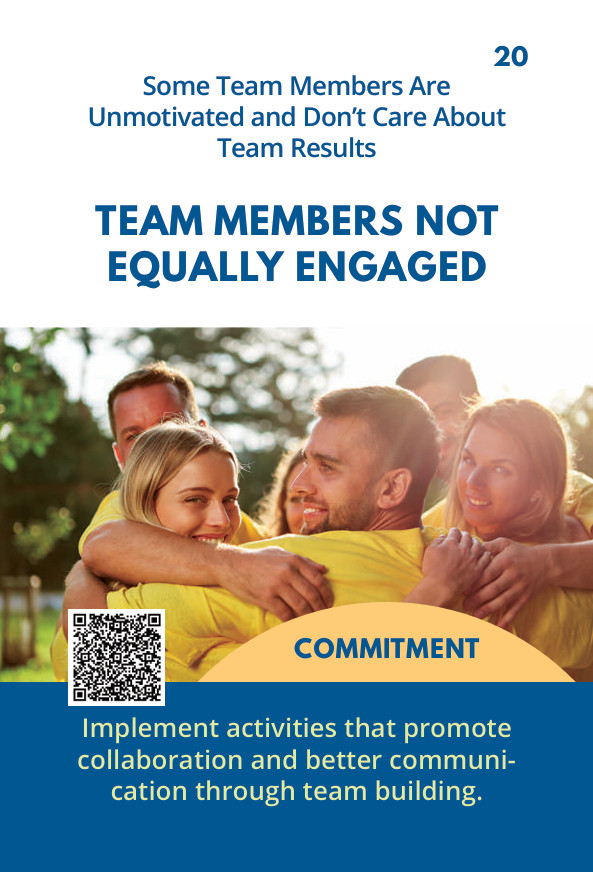
Team Members Not Equally- Engaged – COMMITMENT – 20
When only a few people carry the workload, motivation drops and commitment slowly erodes across the whole team.
What this looks like in everyday work
Unequal engagement is not always obvious at first. On the surface, work still gets done. But underneath, the same people repeatedly take initiative, speak up, solve problems, and stay late — while others remain passive or disengaged.
- The same people volunteer for tasks, while others stay silent.
- A few team members dominate discussions; others rarely contribute.
- Deadlines depend on “the reliable ones.”
- Some people disengage emotionally and do only the minimum.
- Frustration grows among high performers, but remains unspoken.
Over time, this imbalance becomes normalized. Engagement turns into an individual choice, not a shared team expectation.
Why it happens
Unequal engagement is rarely about laziness. It usually develops when the system silently rewards some behaviors and tolerates others.
- Unclear expectations: no shared definition of what “engaged” means.
- Lack of accountability: low contribution has no consequences.
- Over-reliance on strong performers: they are always asked to step in.
- Fear of visibility: some people avoid speaking up to avoid mistakes.
- Burnout: disengagement can be a defense mechanism.
When effort is uneven, motivation becomes uneven as well.
How it affects results
Teams with unequal engagement may function short-term, but they are fragile in the long run.
- burnout of key contributors,
- lower overall performance,
- growing resentment and disengagement,
- loss of trust in fairness,
- reduced team ownership of outcomes.
How to reduce and overcome it
Engagement improves when expectations are clear, participation is structured, and contribution is made visible.
- Define minimum engagement: what participation is expected from everyone.
- Rotate responsibility: don’t rely on the same people every time.
- Make contribution visible: track who does what, openly.
- Address imbalance early: talk about patterns, not personalities.
- Protect high performers: stop rewarding overload.
Practical tools (explained)
1) Engagement expectations check
Explicitly define what engagement looks like in your team: speaking up, preparing for meetings, owning tasks, supporting others.
How to use it: write 5–7 clear expectations and agree on them as a team. Review them quarterly.
2) Structured participation rounds
Instead of open discussion, go around the table and invite each person to contribute.
How to use it: use rounds for decisions, risks, or reflections — this reduces dominance and increases inclusion.
3) Visible task ownership board
Use a simple board (physical or digital) that shows who owns which task. Visibility encourages fairness.
How to use it: review ownership weekly and rebalance when needed.
4) Contribution reflection
Ask the team to reflect: “Who carried most of the load this month?” This builds awareness without blaming.
How to use it: discuss patterns, not names — and agree on adjustments.
Recommended links
Improve Your Team Heath and Effectiveness
How can your team overcome hidden obstacles that slow it down?
Take our 3-day Organizational Health Improvement Workshop
- How can you identify specific problems and challenges in teamwork, cooperation, and internal communication among employees?
- How can you discover the root causes of these challenges and successfully solve them using our visual interactive “team effectiveness” cards?
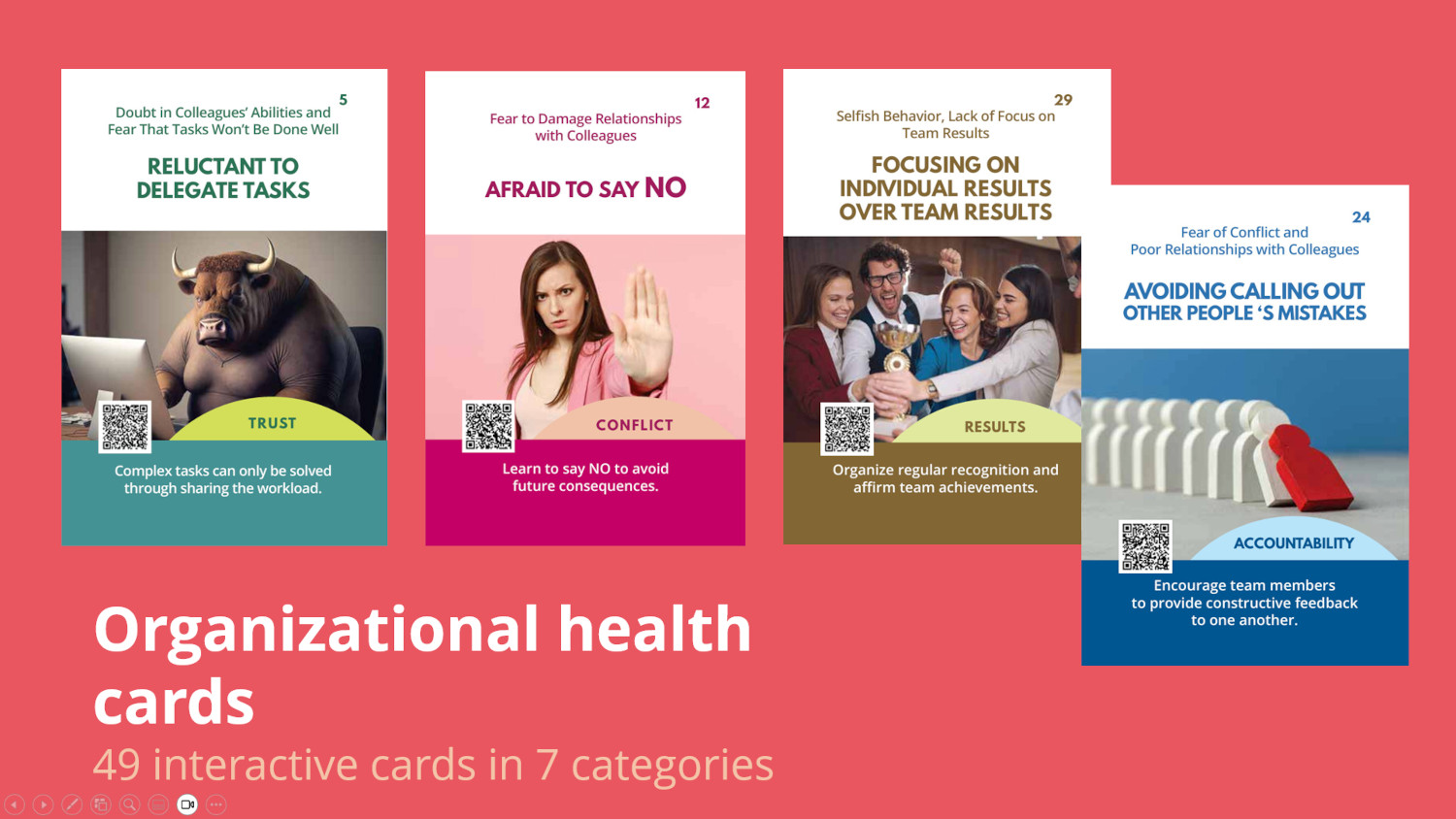
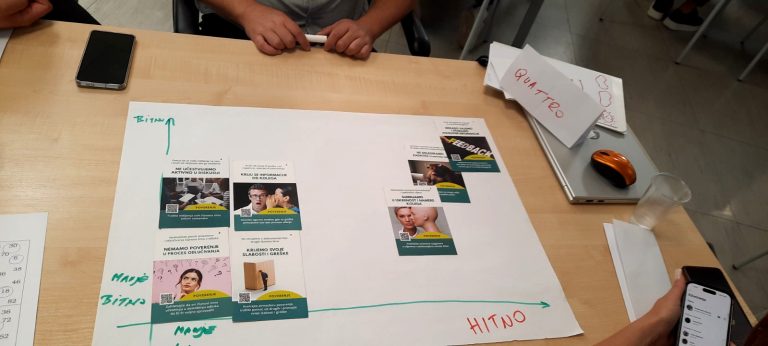
By placing the visual cards on the Urgent–Important matrix, you can quickly and easily set priorities and create an action plan.
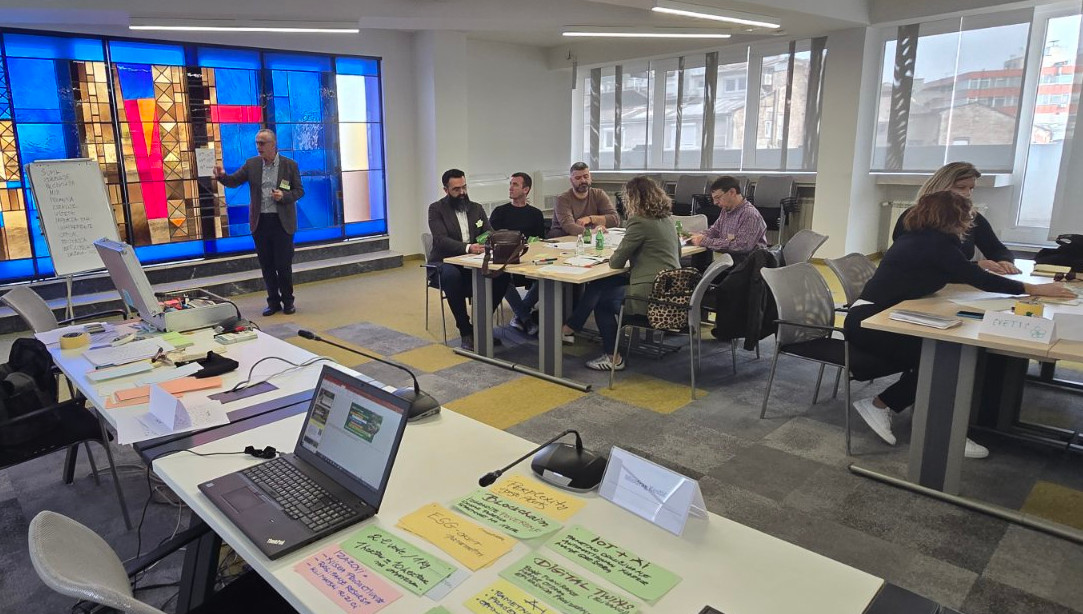
From an interactive workshop in Belgrade
Contact us to schedule a meeting
Tel: + 381 65 26 080 26
Email: poslovnaznanja@gmail.com