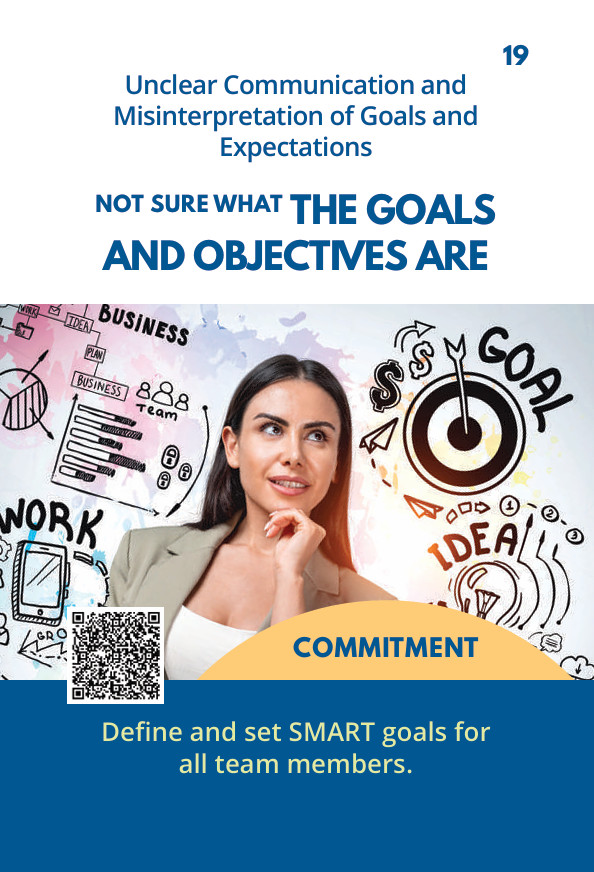
Not Sure What the Goals and Objectives Are – MO COMMITMENT – 19
When goals are fuzzy, people work hard — but not in the same direction.
What this looks like in real life
“Unclear goals” rarely means the team has no goal. More often, it means the goal is stated in a way that leaves room for multiple interpretations. People then make reasonable assumptions — and those assumptions don’t match. You’ll notice this when:
- Meetings circle around “updates” but end without a clear decision, priority, or owner for the next step.
- Different people describe success differently (“ship the feature” vs “reduce complaints” vs “improve conversion”).
- Scope keeps expanding because nobody can confidently say what is “in” and what is “out.”
- Teams deliver outputs but not outcomes (lots of activity, little impact, unclear value).
- Stakeholders keep changing their expectations because the original expectation was never made concrete.
Why it happens
Goal clarity breaks down for a few common reasons. Sometimes leadership wants to keep goals “flexible,” but that flexibility turns into confusion. Sometimes the goal is written in inspiring language (vision) but not translated into measurable outcomes (execution). And often, teams don’t align on the trade-offs: what matters most if time or budget becomes tight?
Another frequent cause: the team never aligns on the basic “goal structure” — why we’re doing it (problem), what success means (outcome), who it’s for (user/customer), and by when (timeframe). Without that, even excellent professionals pull in different directions.
How to reduce and overcome it
The fix is not “more documents.” The fix is a short, shared agreement that the team can repeat in one minute — and then use as a filter for decisions. Aim for clarity that is simple enough to remember, and specific enough to guide action.
- Define success as an outcome: not what you will do, but what will be better when you’re done (customer, quality, speed, cost, risk).
- Set boundaries: write what is explicitly out of scope. This prevents “silent expansion.”
- Agree on priorities: if everything is important, nothing is. Pick the top 1–3 outcomes.
- Make ownership visible: who decides, who executes, who needs to be consulted, who just needs updates.
- Check understanding: ask each person to explain the goal in their own words. If answers differ, clarity is missing.
Practical tools (explained)
1) One-Minute Goal Statement (OGS)
Write the goal so the whole team can repeat it quickly and consistently. Keep it on one screen (or one sticky note). Use this format:
- For: who is this for (customer / internal user / partner)?
- We will: what will we change or deliver (in plain language)?
- So that: what outcome improves (speed, quality, cost, satisfaction, risk)?
- By: deadline or review date.
- Success means: 1–3 measurable indicators (even simple ones).
How to use it: start every weekly meeting by reading it out loud. When a new request appears, ask: “Does this move our OGS forward?” If not, park it or renegotiate scope.
2) SMART + “So what?” test
SMART helps you make goals Specific, Measurable, Achievable, Relevant, and Time-bound — but teams often stop at the template. Add the “So what?” test to make sure the goal has meaning:
- SMART check: can we measure it, and is the deadline clear?
- “So what?” check: if we achieve it, what improves (and for whom)?
- Trade-off check: what will we not do to focus on this?
How to use it: run this as a 10-minute group exercise. If you can’t answer “So what?” in one sentence, the goal is probably still too vague.
3) Mini Project Charter (one page)
This is the simplest way to stop misunderstandings early. A mini charter is not bureaucracy — it’s a shared agreement. Include only:
- Problem: what is happening now that must change?
- Outcome goal: what is “better” after the project?
- In scope / out of scope: two short lists.
- Key stakeholders: who must be satisfied?
- Risks/assumptions: what could block us?
How to use it: review it at the start, and revisit it when conflict appears. Many conflicts are actually “goal clarity” issues in disguise.
4) OKRs (light version)
If your team likes a structured approach, use a light OKR format:
- Objective: inspiring direction (human language).
- Key Results: 2–4 measurable outcomes that prove the objective is achieved.
How to use it: don’t create many OKRs. Create one strong objective with a few measurable results, and review progress every 2–4 weeks.
Recommended links
Improve Your Team Heath and Effectiveness
How can your team overcome hidden obstacles that slow it down?
Take our 3-day Organizational Health Improvement Workshop
- How can you identify specific problems and challenges in teamwork, cooperation, and internal communication among employees?
- How can you discover the root causes of these challenges and successfully solve them using our visual interactive “team effectiveness” cards?
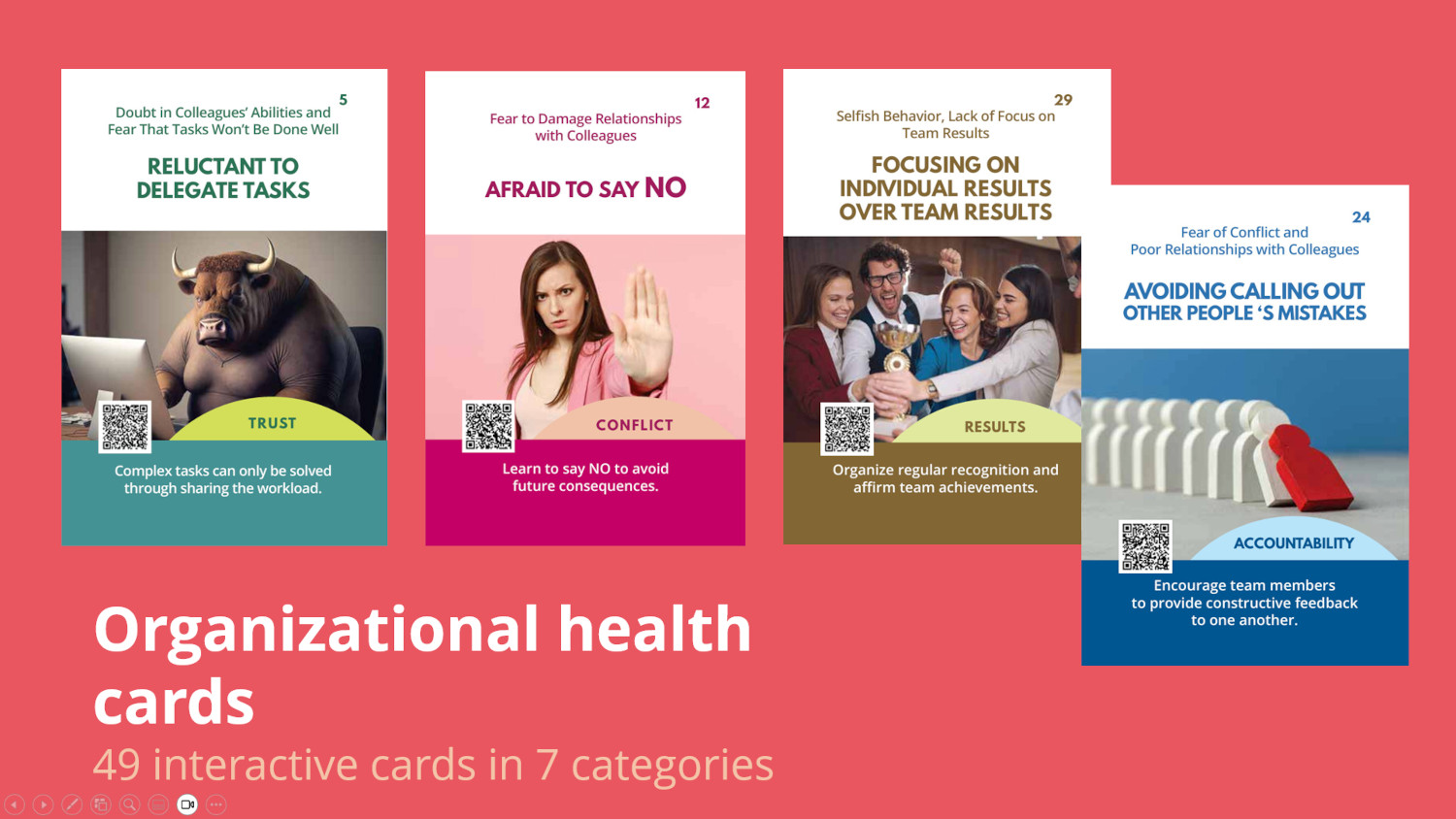
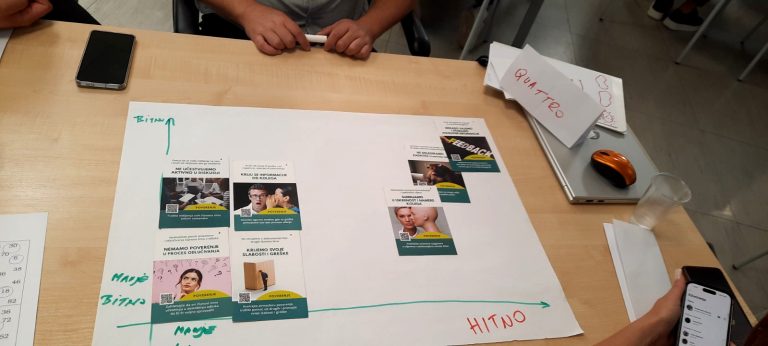
By placing the visual cards on the Urgent–Important matrix, you can quickly and easily set priorities and create an action plan.
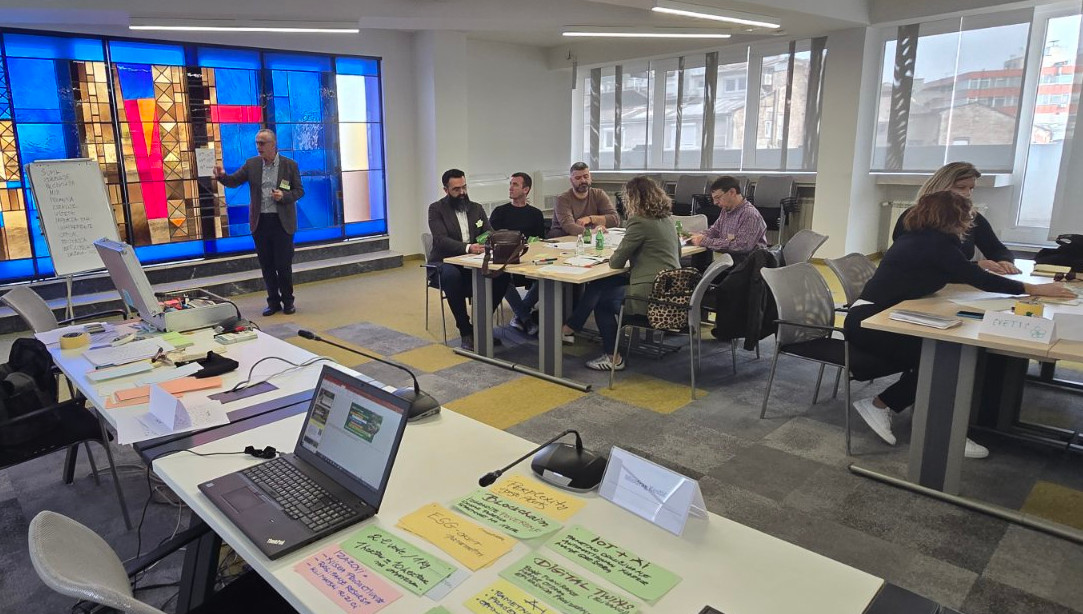
From an interactive workshop in Belgrade
Contact us to schedule a meeting
Tel: + 381 65 26 080 26
Email: poslovnaznanja@gmail.com