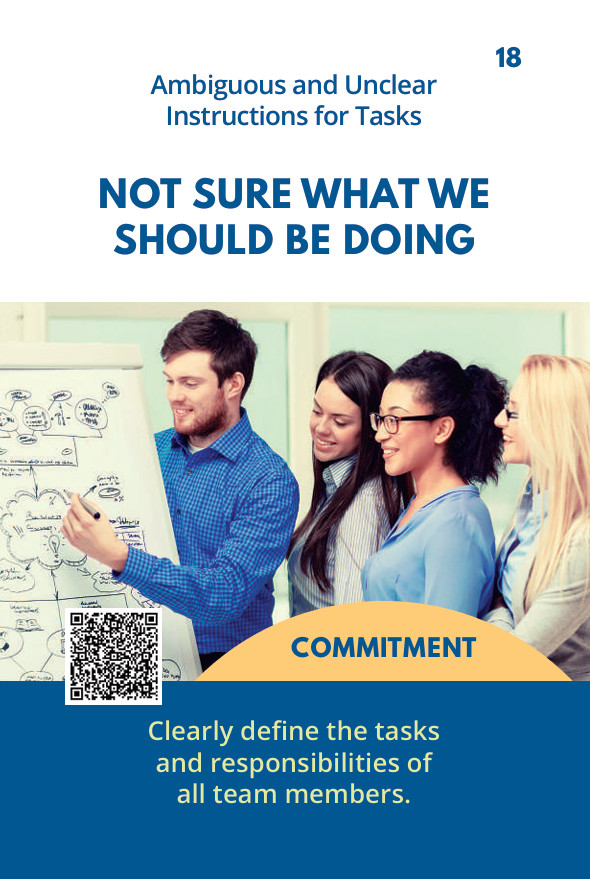
Not Sure What We Should Be Doing – NO COMMITMENT – 18
When people are unsure what is expected of them, effort is wasted, motivation drops, and even capable teams struggle to move forward.
Where you’ll notice this in a team
This issue appears when people are busy but not productive. Team members want to do a good job, yet they lack clarity about priorities, responsibilities, or expected outcomes.
- In daily work: people ask repeatedly what to focus on first.
- In meetings: discussions circle without concrete conclusions.
- In execution: tasks are started but not finished.
- In ownership: responsibilities overlap or fall through gaps.
- In motivation: energy drops because effort feels wasted.
Over time, uncertainty creates hesitation. People stop acting decisively and wait for clarification that often never comes.
Why it happens
Lack of clarity rarely comes from incompetence. It is usually the result of missing alignment and weak communication.
- Unclear priorities: everything feels equally important.
- Vague goals: outcomes are described in abstract terms.
- Undefined roles: people don’t know where their responsibility starts and ends.
- Changing direction: goals shift without explanation.
- Assumptions instead of confirmation: leaders think things are clear when they are not.
When expectations are not explicit, people fill the gaps with their own interpretations— often in different directions.
How it affects results
Unclear direction has a slow but serious impact on performance.
- duplicated or unnecessary work,
- missed deadlines and rework,
- low accountability,
- frustration and disengagement,
- loss of confidence in leadership.
How to reduce and overcome it
Clarity is created through deliberate communication, not assumptions.
- Clarify priorities explicitly: define what matters most right now.
- Translate goals into actions: explain what success looks like in practice.
- Define ownership: one person accountable for each key outcome.
- Confirm understanding: ask people to restate expectations.
- Stabilize direction: avoid frequent unannounced changes.
When expectations are clear, people act faster and with more confidence.
Practical communication tools
These simple tools help teams replace confusion with clarity.
- Priority statement: “Right now, our top priority is…”
- Outcome definition: describe what “done” looks like.
- Responsibility check: clarify who owns what.
- End-of-meeting recap: summarize decisions and next steps.
- Expectation confirmation: ask “What will you do next?”

Improve Your Team Heath and Effectiveness
How can your team overcome hidden obstacles that slow it down?
Take our 3-day Organizational Health Improvement Workshop
- How can you identify specific problems and challenges in teamwork, cooperation, and internal communication among employees?
- How can you discover the root causes of these challenges and successfully solve them using our visual interactive “team effectiveness” cards?
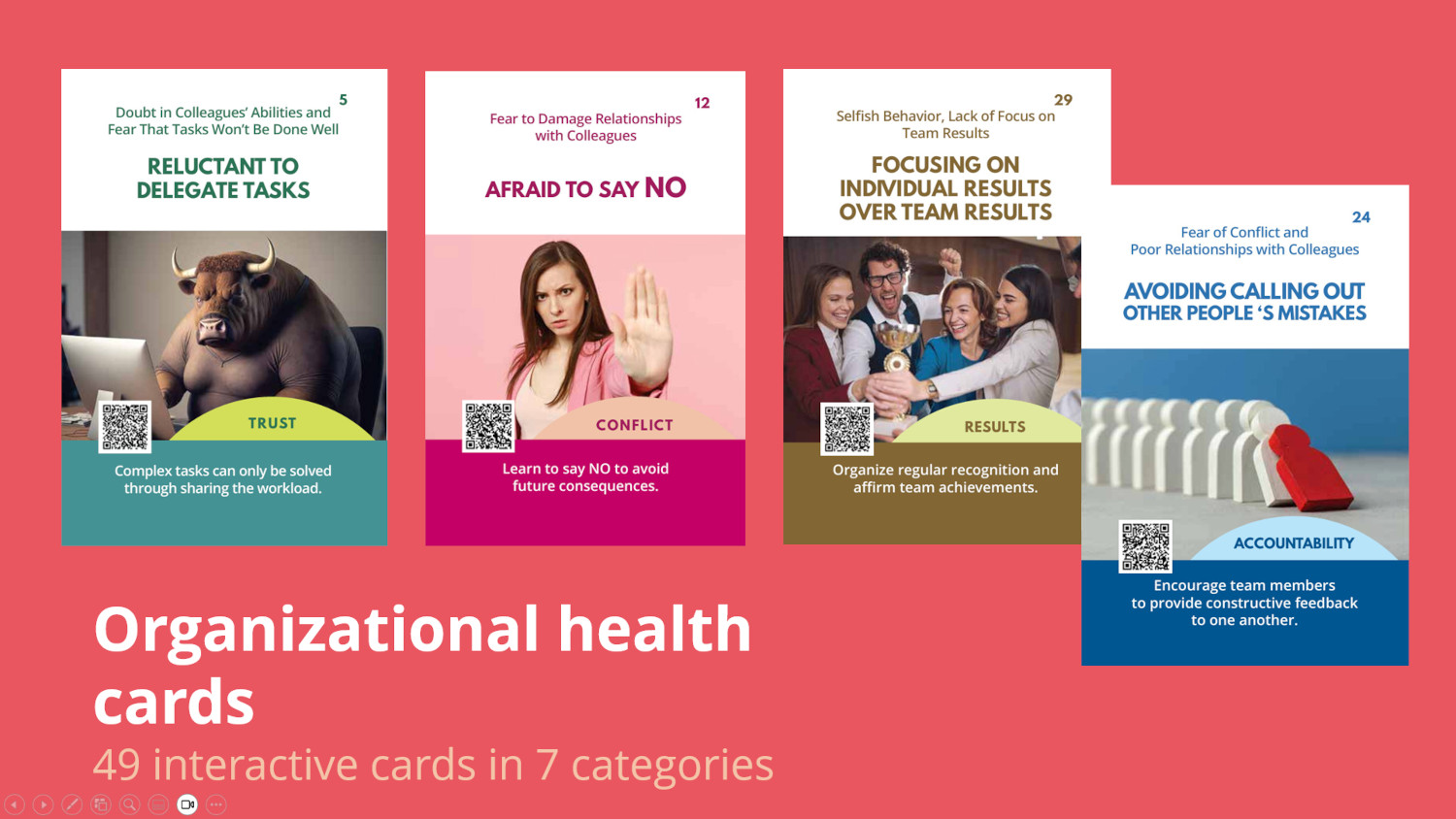
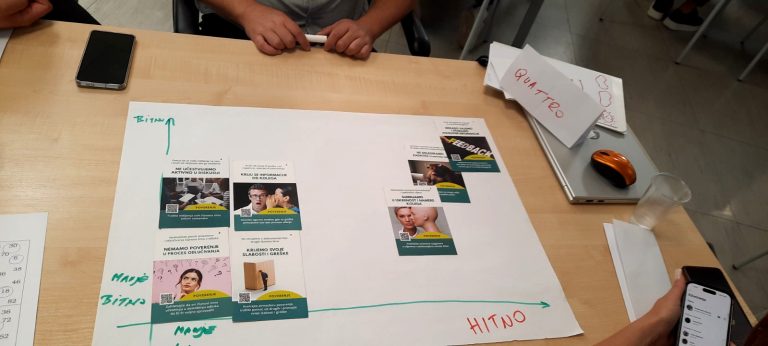
By placing the visual cards on the Urgent–Important matrix, you can quickly and easily set priorities and create an action plan.
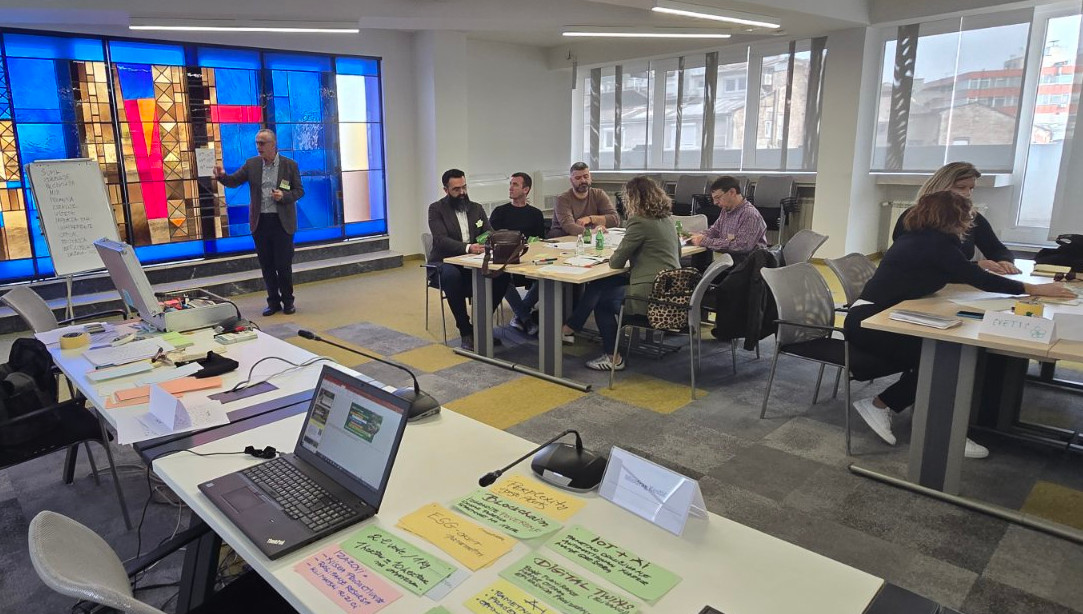
From an interactive workshop in Belgrade
Contact us to schedule a meeting
Tel: + 381 65 26 080 26
Email: poslovnaznanja@gmail.com