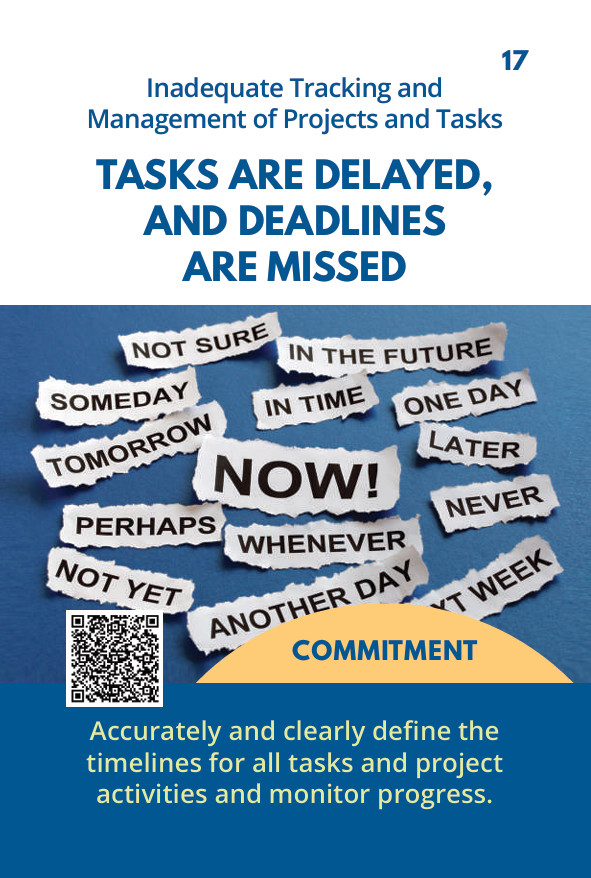
Tasks are Delayed and Deadlines are Missed – COMMITMENT – 17
When deadlines are missed repeatedly, trust in plans erodes and teams shift from proactive work to constant firefighting.
Where you’ll notice this in a team
This problem becomes visible when teams regularly agree on timelines but fail to deliver as planned. At first, delays seem occasional and understandable. Over time, however, they turn into a pattern.
- In projects: milestones are postponed and deadlines quietly moved.
- In coordination: one late task blocks several others.
- In meetings: status updates focus on explanations rather than solutions.
- In commitments: deadlines are treated as estimates, not promises.
- In trust: people stop relying on plans and prepare backup options.
Over time, the team adapts to delays instead of fixing them. “Late” becomes the expected outcome.
Why it happens
Repeated delays are rarely caused by lack of effort. Most teams work hard. The real causes are usually structural, not personal.
- Overcommitment: people say yes without checking real capacity.
- Unclear ownership: responsibility is shared, so no one feels fully accountable.
- Poor estimation: work takes longer than expected, but estimates are not adjusted.
- Hidden dependencies: teams depend on inputs that are not clearly visible.
- Late problem reporting: risks are raised only when deadlines are already missed.
When these patterns repeat, delays stop being questioned and start being accepted.
How it affects results
Chronic delays damage both performance and morale, even if individual tasks eventually get done.
- missed market or business opportunities,
- stressful last-minute work and firefighting,
- broken commitments toward clients or partners,
- loss of confidence in plans and forecasts,
- weakened accountability culture.
How to reduce and overcome it
Improving delivery reliability does not mean pushing people harder. It means creating realistic commitments and making problems visible early.
- Check capacity before committing: confirm workload and priorities first.
- Assign one accountable owner: shared responsibility often means no responsibility.
- Break work into milestones: progress should be visible before the final deadline.
- Encourage early escalation: problems reported early are easier to solve.
- Review delays constructively: focus on causes, not blame.
When teams treat deadlines as commitments rather than hopes, delivery stabilizes.
Practical communication tools
These simple tools help teams improve reliability without creating fear or pressure.
- Deadline realism check: “Is this date achievable with current priorities?”
- Single-owner rule: one clearly accountable person per task.
- Weekly delivery check-in: short updates focused on blockers.
- Dependency mapping: make visible who depends on whom.
- Post-deadline learning review: understand why delays happened.

Improve Your Team Heath and Effectiveness
How can your team overcome hidden obstacles that slow it down?
Take our 3-day Organizational Health Improvement Workshop
- How can you identify specific problems and challenges in teamwork, cooperation, and internal communication among employees?
- How can you discover the root causes of these challenges and successfully solve them using our visual interactive “team effectiveness” cards?

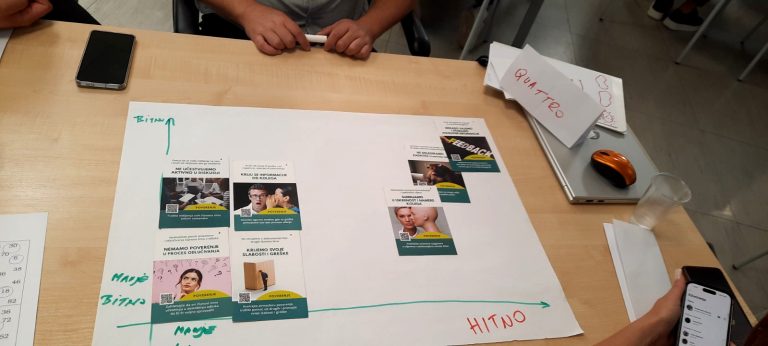
By placing the visual cards on the Urgent–Important matrix, you can quickly and easily set priorities and create an action plan.

From an interactive workshop in Belgrade
Contact us to schedule a meeting
Tel: + 381 65 26 080 26
Email: poslovnaznanja@gmail.com