Waiting For Directions From Bosses/ – COMMITMENT – 16
When people wait for instructions instead of taking initiative, progress slows and responsibility quietly shifts upward.
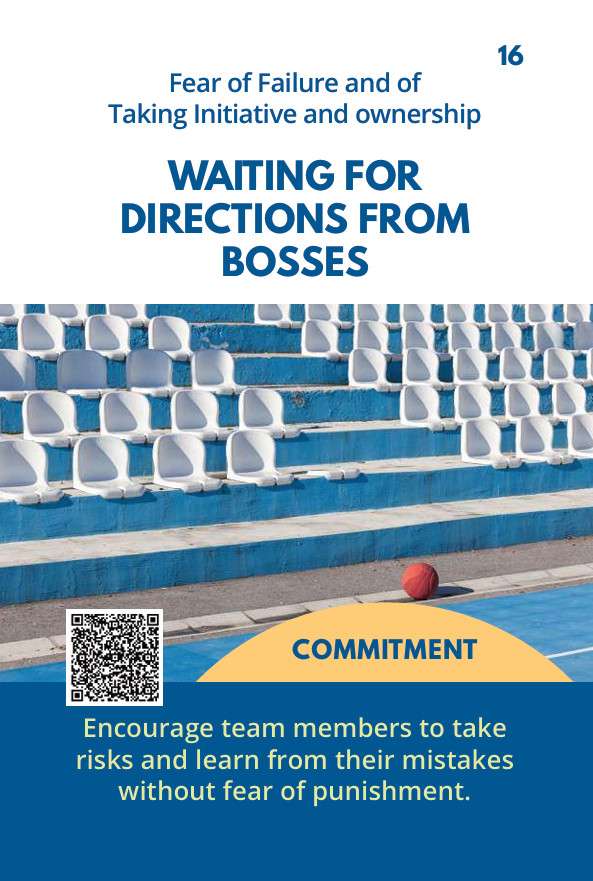
Where you’ll notice this in a team
This issue appears when team members hesitate to act unless they receive clear, explicit instructions. Even capable and experienced people stop taking initiative and wait to be told what to do next.
- In daily work: people ask for approval on routine decisions.
- In meetings: questions focus on “What should I do?” rather than “Here’s my proposal.”
- In execution: tasks stall while waiting for direction.
- In ownership: responsibility moves upward to managers.
- In engagement: motivation drops as autonomy disappears.
Over time, leaders become overloaded, while team members feel underused and disengaged.
Why it happens
Waiting for instructions is rarely about laziness. It is usually a rational response to past experiences and unclear expectations.
- Fear of mistakes: errors were criticized instead of treated as learning.
- Micromanagement: initiative was overridden or discouraged.
- Unclear authority: people don’t know what they’re allowed to decide.
- Low confidence: individuals doubt their judgment.
- Organizational culture: compliance is valued more than ownership.
In such environments, waiting feels safer than acting.
How it affects results
Teams that wait for instructions lose speed, adaptability, and ownership.
- slow execution and bottlenecks,
- overloaded managers and decision fatigue,
- missed opportunities for improvement,
- low accountability for outcomes,
- reduced engagement and motivation.
How to reduce and overcome it
Initiative grows when people feel trusted, supported, and clear about boundaries.
- Clarify decision space: define what people can decide independently.
- Ask for proposals: encourage options, not just questions.
- Respond constructively to mistakes: focus on learning, not blame.
- Reduce micromanagement: step back once expectations are clear.
- Recognize initiative: visibly reward proactive behavior.
When initiative is safe, teams move faster and feel more engaged.
Practical communication tools
These tools help teams shift from dependency to ownership.
- Decision boundary statement: “You decide up to this point.”
- Option-based questions: “What are your proposed options?”
- Expectation framing: clarify outcomes instead of steps.
- After-action learning: review what worked and why.
- Ownership recap: clearly assign responsibility for next steps.
Improve Your Team Heath and Effectiveness
How can your team overcome hidden obstacles that slow it down?
Take our 3-day Organizational Health Improvement Workshop
- How can you identify specific problems and challenges in teamwork, cooperation, and internal communication among employees?
- How can you discover the root causes of these challenges and successfully solve them using our visual interactive “team effectiveness” cards?
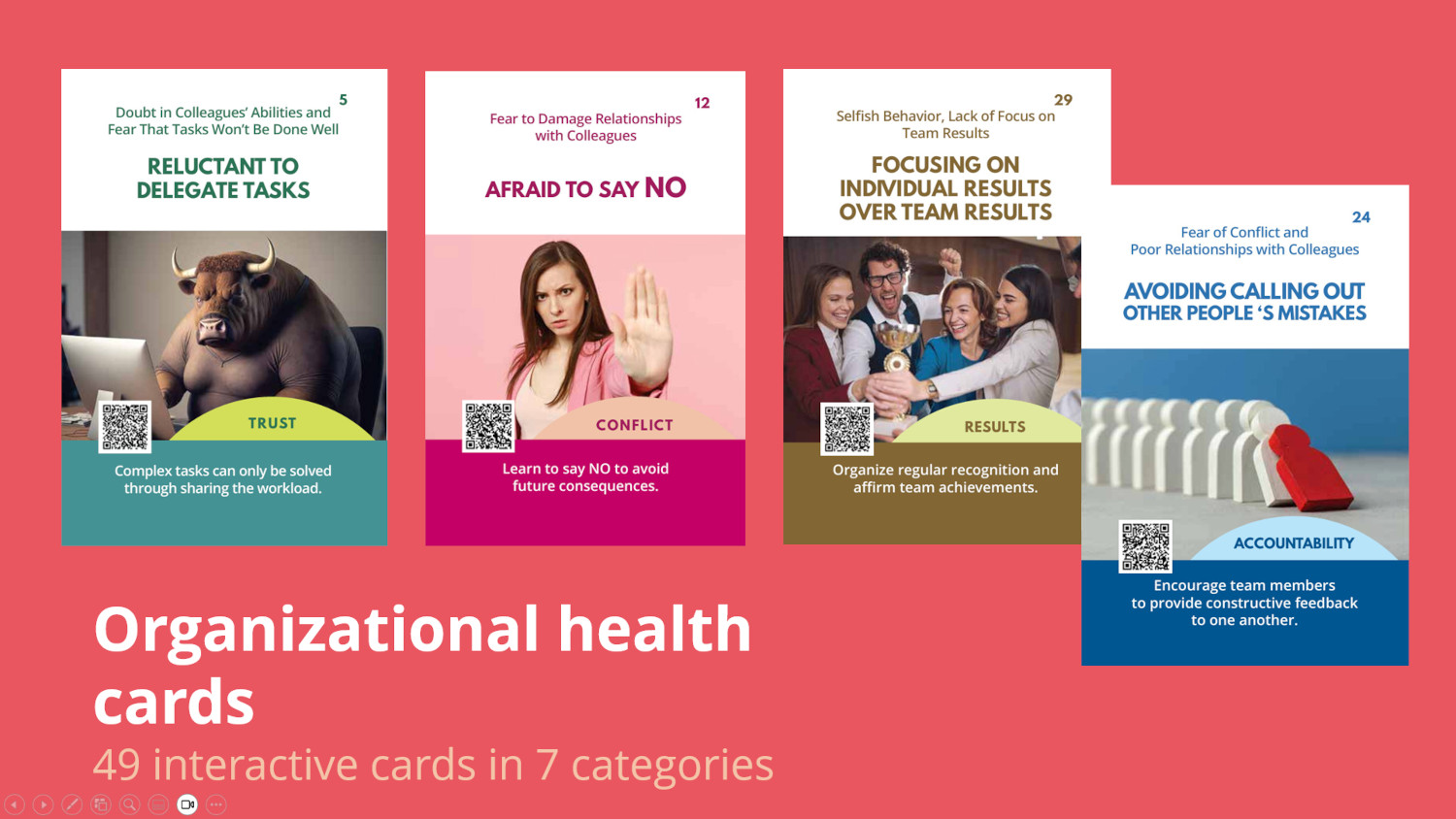
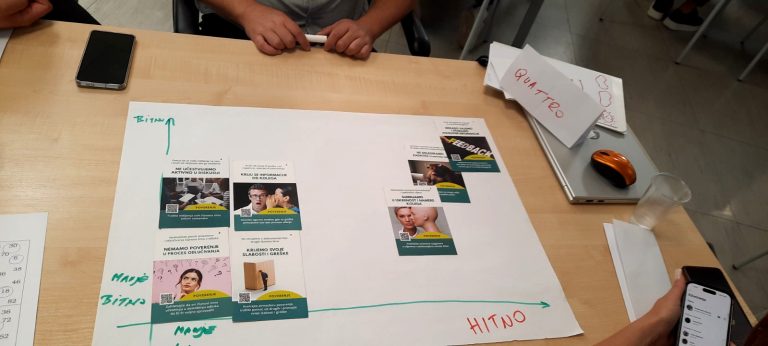
By placing the visual cards on the Urgent–Important matrix, you can quickly and easily set priorities and create an action plan.
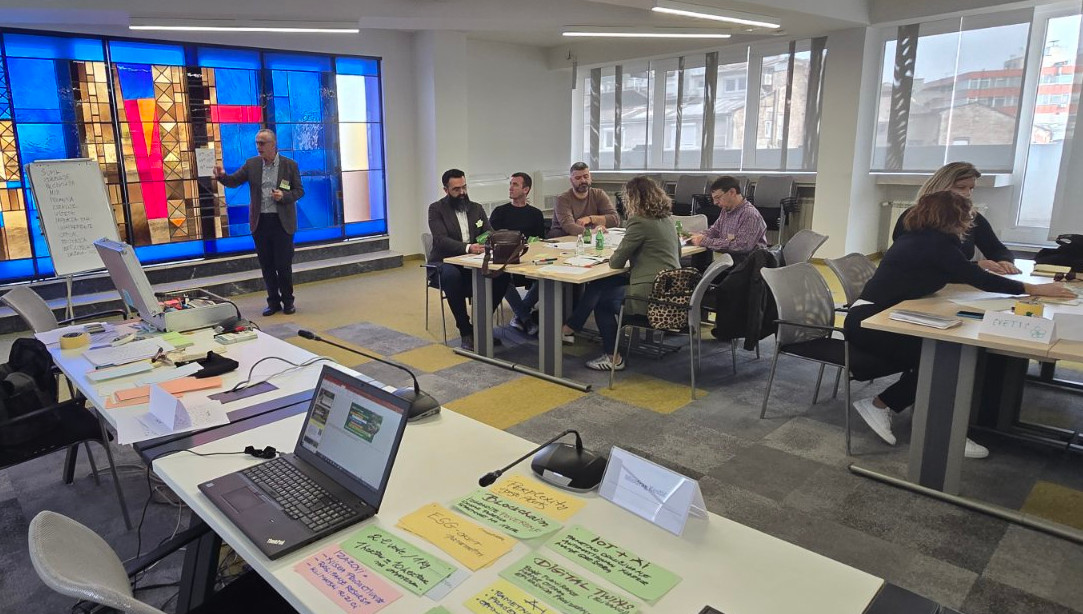
From an interactive workshop in Belgrade
Contact us to schedule a meeting
Tel: + 381 65 26 080 26
Email: poslovnaznanja@gmail.com