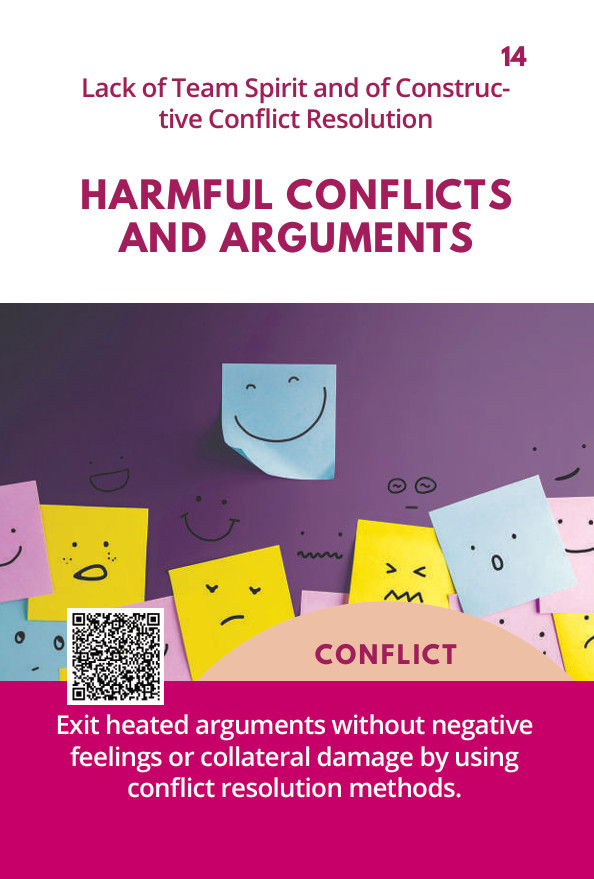
Harmful Conflicts and Arguments – CONFLICT – 14
When conflicts turn personal and destructive, trust erodes and collaboration becomes emotionally unsafe.
Where you’ll notice this in a team
Conflict itself is not the problem—harmful conflict is. This card describes situations where disagreements escalate into personal attacks, emotional outbursts, or ongoing hostility.
- In meetings: voices are raised, sarcasm appears, or people interrupt aggressively.
- In disagreements: arguments focus on “who is wrong” instead of what is right.
- In communication: blame, defensiveness, or silence follow conflicts.
- In relationships: people avoid certain colleagues after clashes.
- In atmosphere: tension is felt even when nothing is openly said.
Over time, people stop engaging honestly—not because they don’t care, but because conflict feels unsafe and exhausting.
Why it happens
Harmful conflict usually arises when emotions are unmanaged and structures for healthy disagreement are missing.
- Unclear roles or goals: people fight over territory and responsibility.
- Accumulated frustration: small issues were ignored for too long.
- Low psychological safety: people feel attacked instead of heard.
- Poor conflict skills: disagreements turn personal quickly.
- Leadership avoidance: conflicts are left to escalate without intervention.
When emotions take over, even valid points are delivered in ways that damage relationships.
How it affects results
Destructive conflict doesn’t just hurt feelings—it directly impacts performance and results.
- loss of trust and cooperation,
- slower decision-making,
- avoidance of important topics,
- high emotional stress and burnout,
- reduced quality of collaboration.
How to reduce and overcome it
Healthy teams don’t eliminate conflict—they learn how to handle it constructively.
- Separate people from problems: focus on issues, not personalities.
- Slow the conversation: pause when emotions rise.
- Name what’s happening: acknowledge tension instead of ignoring it.
- Use neutral facilitation: bring structure to difficult conversations.
- Close with agreements: define what changes going forward.
When conflict is handled well, it strengthens understanding instead of destroying trust.
Practical communication tools
These tools help transform destructive arguments into productive dialogue.
- SBIC conflict framing: describe situation, behavior, impact, and change needed.
- Cooling-off pauses: agree to pause discussions when emotions spike.
- Neutral language rule: avoid accusations and absolutes (“always”, “never”).
- Facilitated conflict reset: structured conversation with clear boundaries.
- Agreement recap: document outcomes and expectations.
Useful links
Improve Your Team Heath and Effectiveness
How can your team overcome hidden obstacles that slow it down?
Take our 3-day Organizational Health Improvement Workshop
- How can you identify specific problems and challenges in teamwork, cooperation, and internal communication among employees?
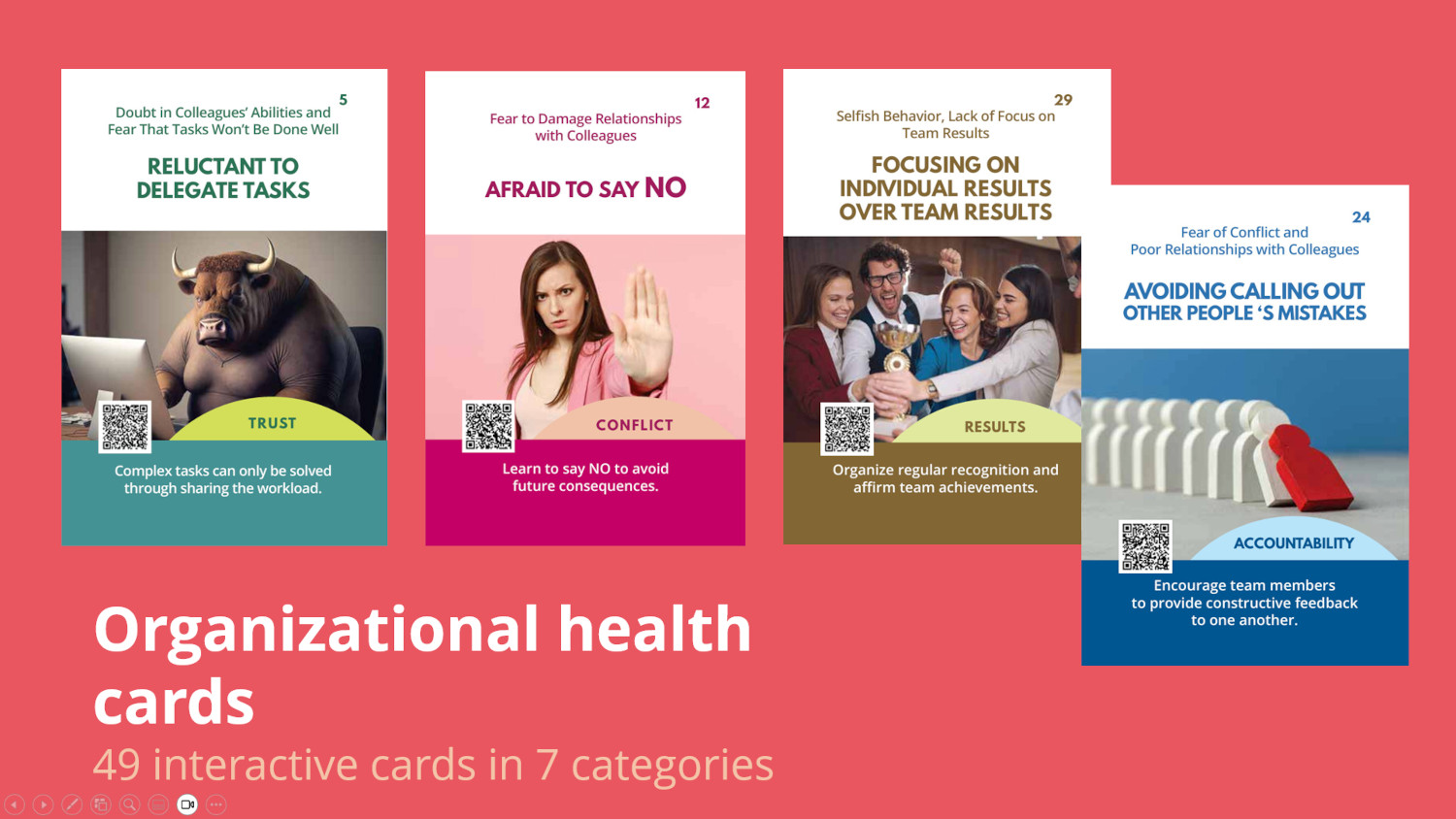
- How can you discover the root causes of these challenges and successfully solve them using our visual interactive “team effectiveness” cards?
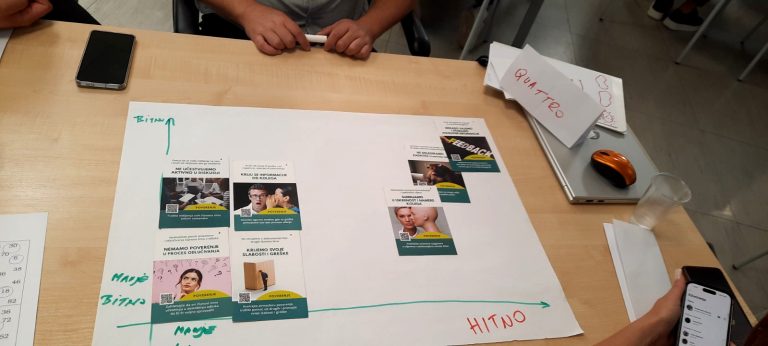
By placing the visual cards on the Urgent–Important matrix, you can quickly and easily set priorities and create an action plan.
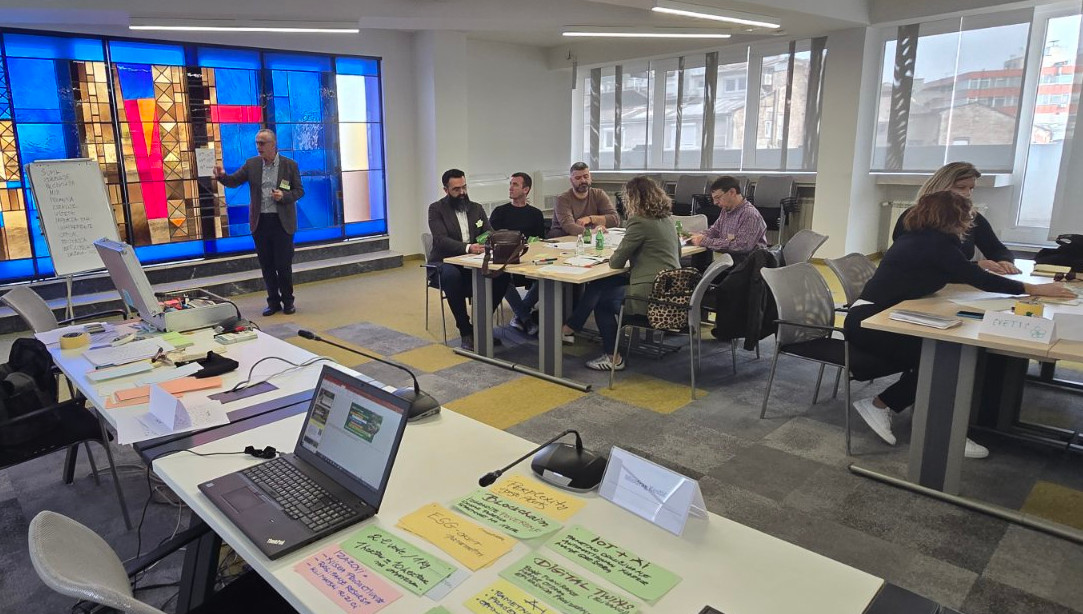
From an interactive workshop in Belgrade
Contact us to schedule a meeting
Tel: + 381 65 26 080 26
Email: poslovnaznanja@gmail.com