Not Open to New Ideas – CONFLICT – 11
When new ideas are dismissed too quickly, teams stop innovating and fall back on habits—even when they no longer work.

Where you’ll notice this in a team
This challenge becomes visible when teams react defensively or dismissively to anything that challenges the current way of working. New ideas are not explored—they are filtered out almost automatically.
- In meetings: suggestions are quickly met with “We tried that before” or “That won’t work here.”
- In problem-solving: teams default to familiar solutions, even when results are poor.
- In innovation efforts: ideas are evaluated too early, before they are fully understood.
- In cross-generational teams: input from newer or younger colleagues is ignored.
- In retrospectives: conversations focus on defending past decisions instead of learning.
Over time, people stop sharing ideas altogether, not because they lack creativity, but because experience has taught them it’s pointless.
Why it happens
Resistance to new ideas is rarely about the ideas themselves. It is usually driven by fear, fatigue, or identity.
- Fear of change: new ideas threaten comfort, expertise, or status.
- Past failures: earlier initiatives failed and left people skeptical.
- Time pressure: teams feel they don’t have time to experiment.
- Expert identity: “If a new idea is better, what does that say about my past decisions?”
- Low trust: ideas are judged based on who suggests them, not their value.
When these factors combine, teams protect the status quo—even when it no longer serves them.
How it affects results
Teams that are closed to new ideas gradually lose relevance and adaptability. The impact is often slow but cumulative.
- missed opportunities for improvement,
- declining innovation and creativity,
- frustration among proactive team members,
- repeated use of ineffective solutions,
- reduced ability to respond to change.
How to reduce and overcome it
Openness to ideas grows when teams separate exploring ideas from deciding on them. Not every idea must be accepted—but every idea should be heard.
- Delay evaluation: explore ideas before judging them.
- Reward curiosity: acknowledge people who bring new perspectives.
- Reduce personal threat: frame ideas as experiments, not verdicts.
- Broaden input: invite perspectives from different roles and backgrounds.
- Link ideas to real problems: focus on usefulness, not novelty.
When teams feel safe to explore, they become more resilient and future-ready.
Practical communication tools
These tools help teams create space for ideas without losing focus or control.
- “Yes, and…” responses: build on ideas instead of shutting them down.
- Idea parking lot: capture ideas that can’t be addressed immediately.
- Small experiments: test ideas on a limited scale before full adoption.
- Idea separation rule: separate idea generation from decision-making.
- After-action learning: review what was learned from trying something new.
Useful links

Improve Your Team Heath and Effectiveness
How can your team overcome hidden obstacles that slow it down?
Take our 3-day Organizational Health Improvement Workshop
- How can you identify specific problems and challenges in teamwork, cooperation, and internal communication among employees?
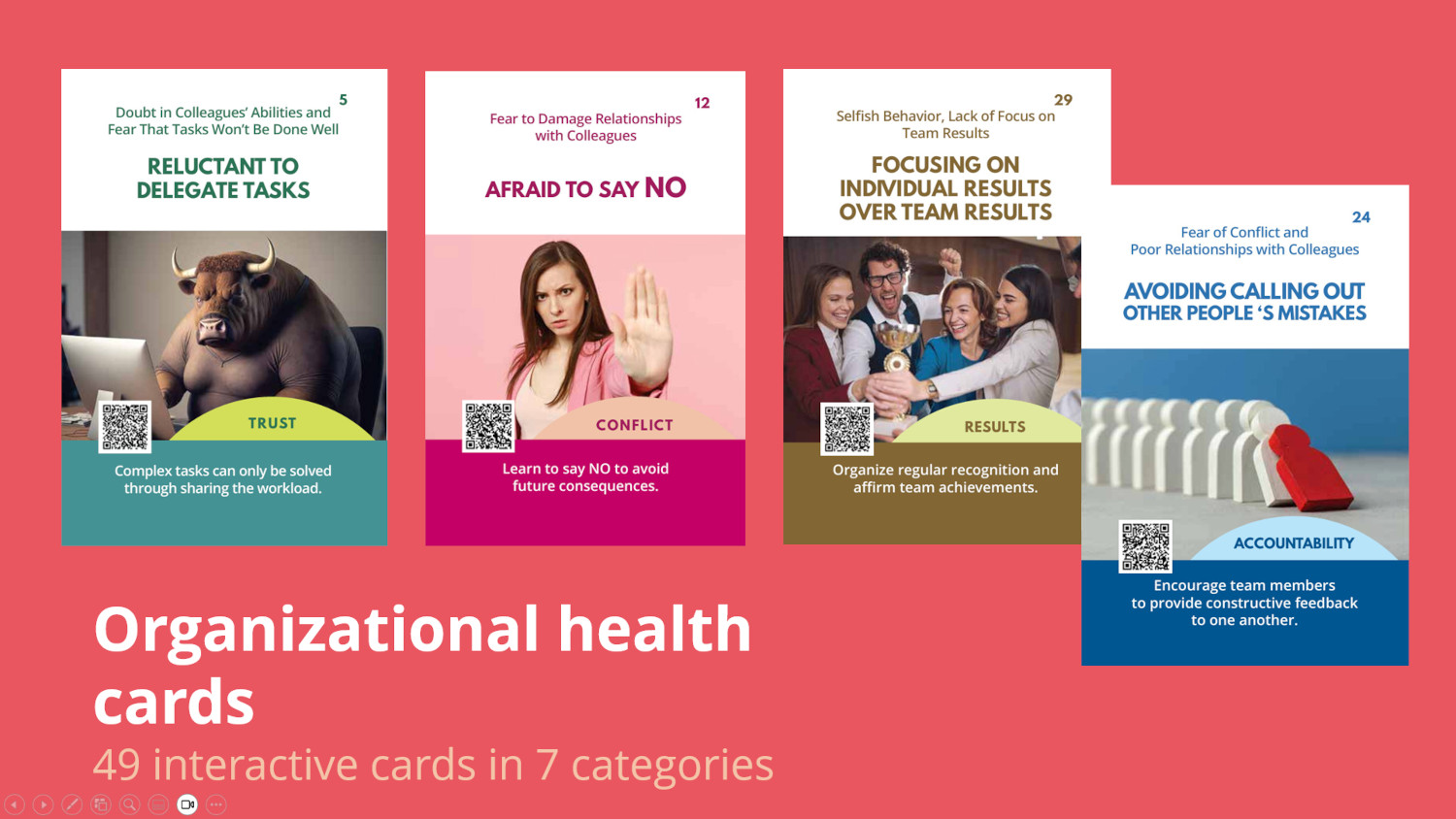
- How can you discover the root causes of these challenges and successfully solve them using our visual interactive “team effectiveness” cards?
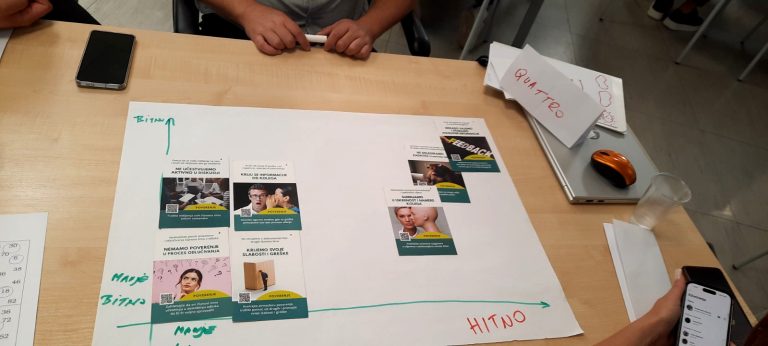
By placing the visual cards on the Urgent–Important matrix, you can quickly and easily set priorities and create an action plan.
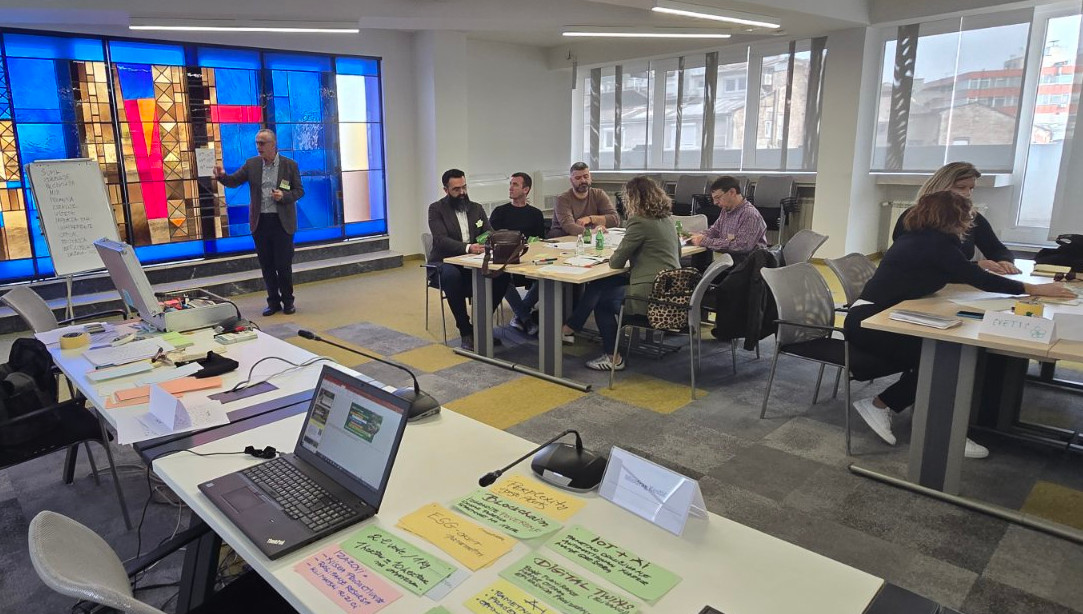
From an interactive workshop in Belgrade
Contact us to schedule a meeting
Tel: + 381 65 26 080 26
Email: poslovnaznanja@gmail.com