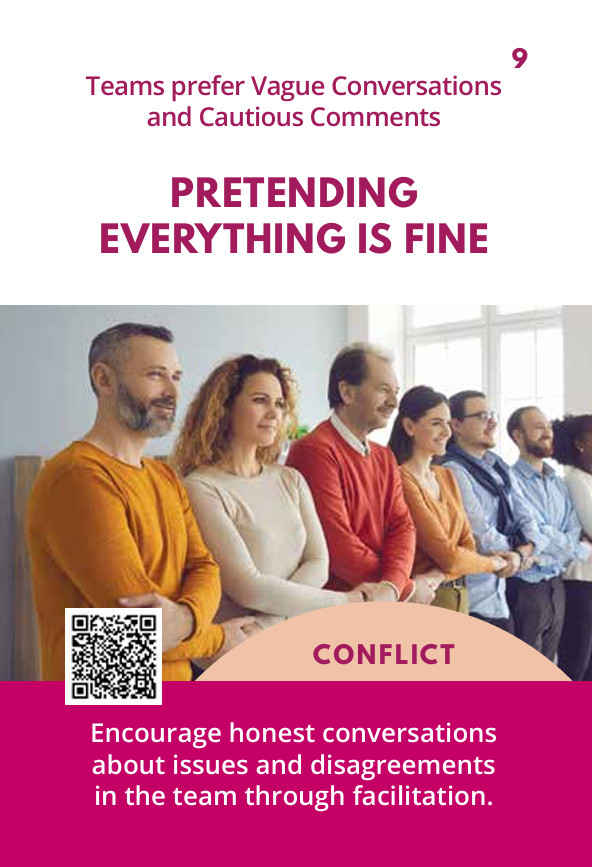
Pretending Everything is Fine – CONFLICT – 9
When teams pretend that problems don’t exist, tensions grow quietly and issues become harder to fix.
Where you’ll notice this in a team
This pattern appears when teams avoid acknowledging problems, even when everyone senses that something is not working as it should.
- In meetings: issues are softened, skipped, or quickly moved past.
- In feedback: people say “all good” while feeling frustrated inside.
- In conflicts: tension is visible, but no one names it directly.
- In performance: results decline, yet conversations stay superficial.
- In informal talk: real concerns are discussed privately, not openly.
On the surface, things look calm—but underneath, unresolved issues keep growing.
Why it happens
Pretending everything is fine is often a coping strategy rather than indifference.
- Avoiding discomfort: difficult conversations feel risky or exhausting.
- Fear of escalation: people worry that naming issues will create conflict.
- Low trust: past openness led to negative consequences.
- Pressure to appear positive: problems are seen as “complaining.”
- Lack of skills: people don’t know how to raise issues constructively.
Over time, avoidance becomes normal and honesty feels increasingly unsafe.
How it affects results
Teams that avoid problems early usually face bigger problems later.
- unresolved conflicts that resurface repeatedly,
- lower trust and engagement,
- poor decisions based on incomplete reality,
- declining performance over time,
- emotional exhaustion and cynicism.
How to reduce and overcome it
Healthy teams learn to name issues early and calmly—before they turn into major conflicts.
- Name the reality: acknowledge what everyone already senses.
- Lower the emotional tone: focus on facts and impact, not blame.
- Make issues discussable: show that raising problems is valued.
- Address small things early: don’t wait for a crisis.
- Close conversations with action: agree on one concrete next step.
Practical communication tools
These tools help teams surface issues without creating unnecessary tension.
- “Elephant in the room” check: ask, “Is there something we’re avoiding?”
- Fact–impact framing: describe what’s happening and why it matters.
- Regular retrospectives: short reviews focused on improvement, not blame.
- Issue parking lot: capture concerns that need follow-up.
- Safe facilitation: use a neutral facilitator for sensitive topics.
Useful links
Improve Your Team Heath and Effectiveness
How can your team overcome hidden obstacles that slow it down?
Take our 3-day Organizational Health Improvement Workshop
- How can you identify specific problems and challenges in teamwork, cooperation, and internal communication among employees?
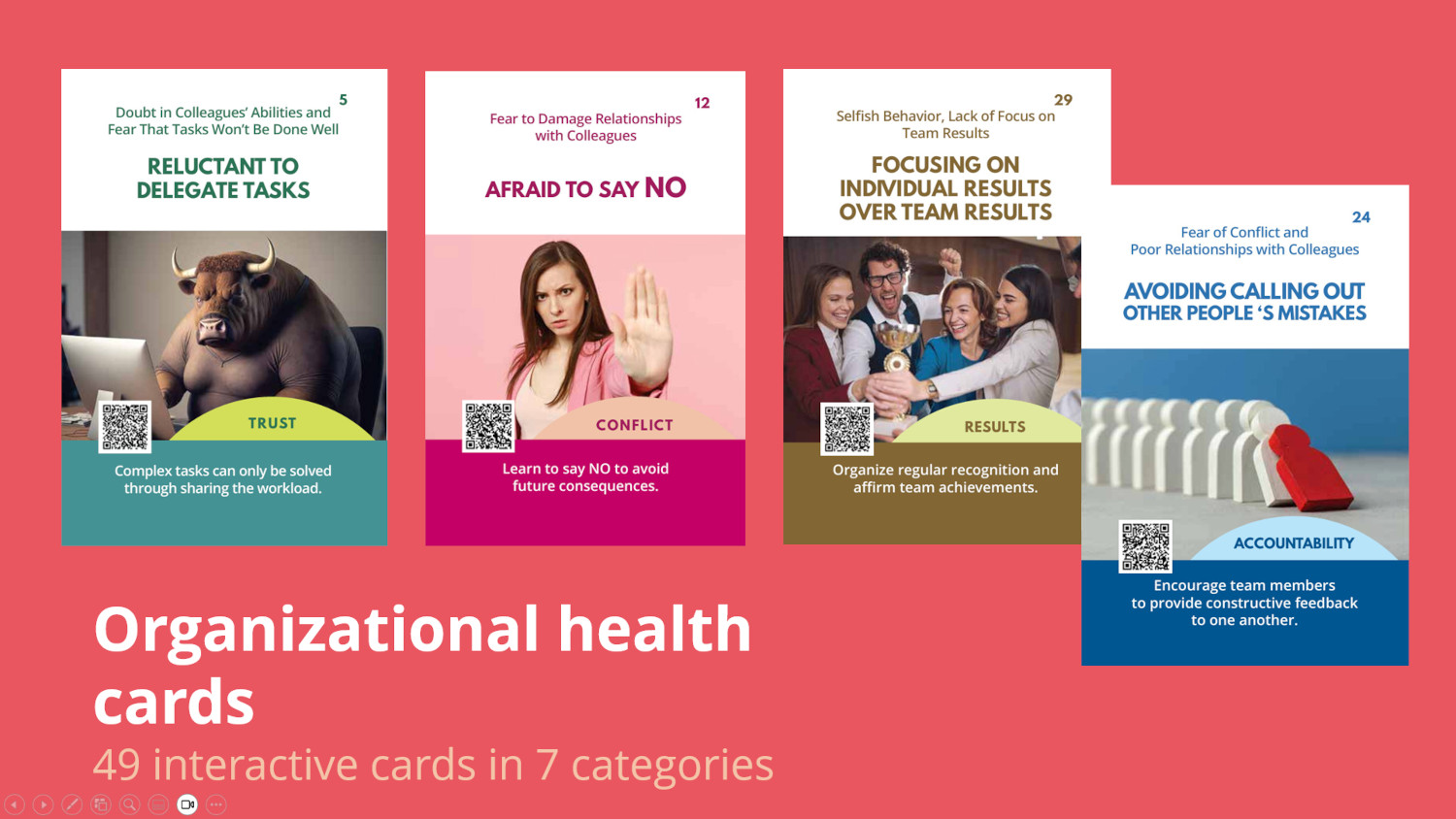
- How can you discover the root causes of these challenges and successfully solve them using our visual interactive “team effectiveness” cards?
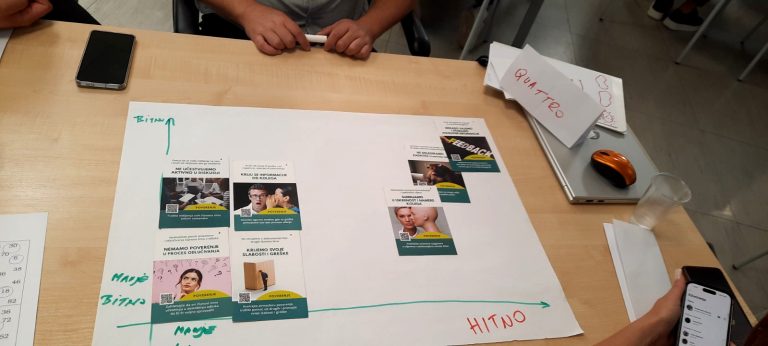
By placing the visual cards on the Urgent–Important matrix, you can quickly and easily set priorities and create an action plan.
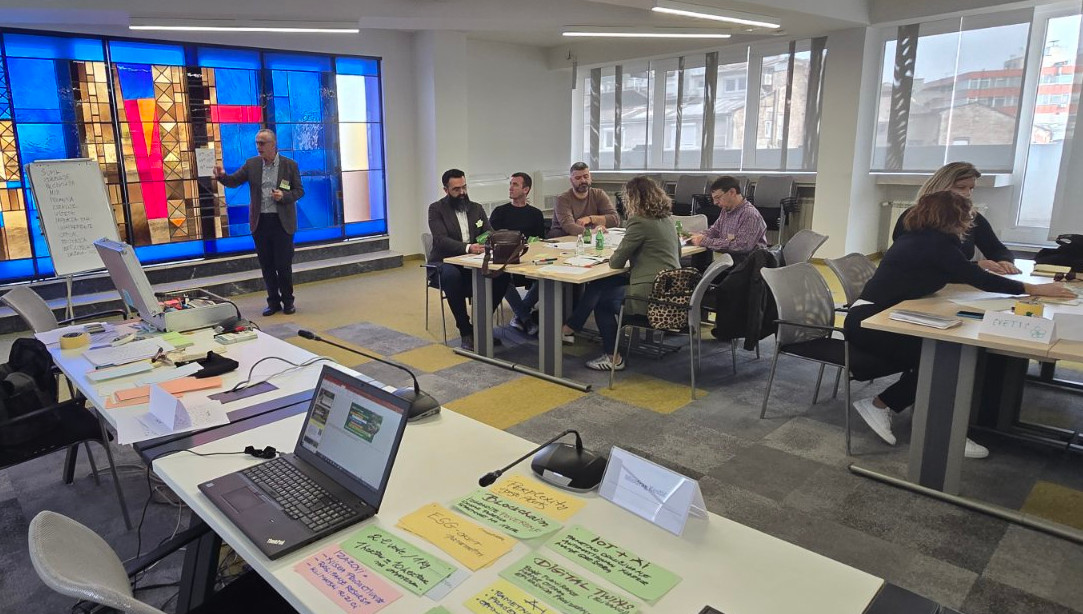
From an interactive workshop in Belgrade
Contact us to schedule a meeting
Tel: + 381 65 26 080 26
Email: poslovnaznanja@gmail.com