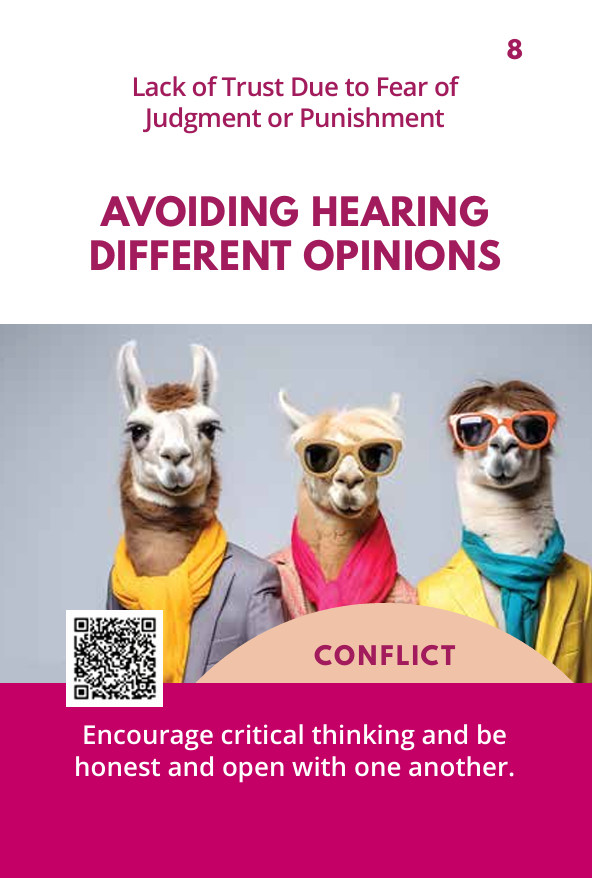
Avoiding Hearing Different Opinions – CONFLICT – 8
When teams avoid different opinions, conflicts go underground and decision quality drops.
Where you’ll notice this in a team
This challenge appears when teams prefer agreement and comfort over open discussion. Different opinions are seen as a problem rather than a resource.
- In meetings: disagreement is quickly shut down or ignored.
- In decision-making: people nod in agreement but privately disagree.
- In brainstorming: only “safe” ideas are shared.
- In cross-team work: alternative views are dismissed as “not relevant.”
- After decisions: resistance appears later instead of being addressed early.
Over time, teams lose the ability to challenge assumptions and make strong decisions.
Why it happens
Avoiding different opinions is often driven by fear, habits, and past experience.
- Fear of conflict: disagreement is seen as personal or disruptive.
- Desire for harmony: teams value “niceness” over honesty.
- Power dynamics: junior members don’t feel safe to challenge seniors.
- Past negative reactions: disagreement was punished or ignored.
- Lack of facilitation: discussions are not structured to handle differences.
When this becomes the norm, silence replaces debate and poor decisions go unchallenged.
How it affects results
Teams that avoid different opinions pay a high price over time.
- weak decisions based on limited perspectives,
- hidden resistance and passive-aggressive behavior,
- missed risks and opportunities,
- lower innovation and creativity,
- conflicts that surface too late.
How to reduce and overcome it
Healthy teams separate disagreement from personal conflict and learn to debate ideas openly.
- Normalize disagreement: state clearly that different views are expected.
- Debate before deciding: create space for opposing arguments.
- Protect dissenting voices: ensure people can disagree without consequences.
- Focus on ideas, not people: challenge assumptions, not personalities.
- Align after the decision: once decided, support the outcome together.
Practical communication tools
These tools help teams turn disagreement into better thinking and stronger decisions.
- Devil’s advocate role: assign someone to challenge assumptions on purpose.
- Round of perspectives: ask each person to share one concern or alternative.
- Silent brainstorming: write ideas before discussing them.
- “What could go wrong?” question: surface risks early.
- Decision rationale: explain why one option was chosen over others.
Useful links
Improve Your Team Heath and Effectiveness
How can your team overcome hidden obstacles that slow it down?
Take our 3-day Organizational Health Improvement Workshop
- How can you identify specific problems and challenges in teamwork, cooperation, and internal communication among employees?
- How can you discover the root causes of these challenges and successfully solve them using our visual interactive “team effectiveness” cards?
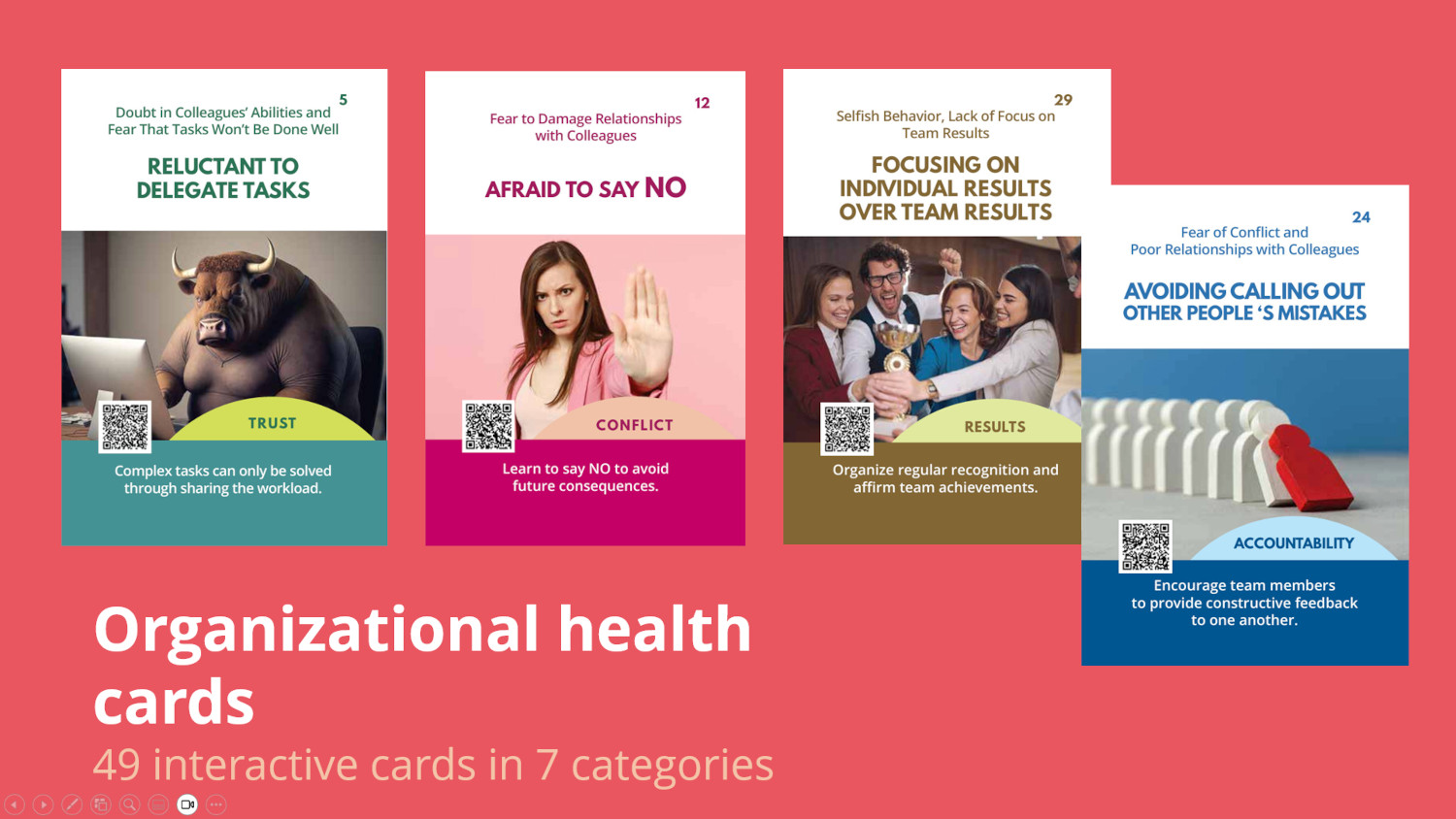
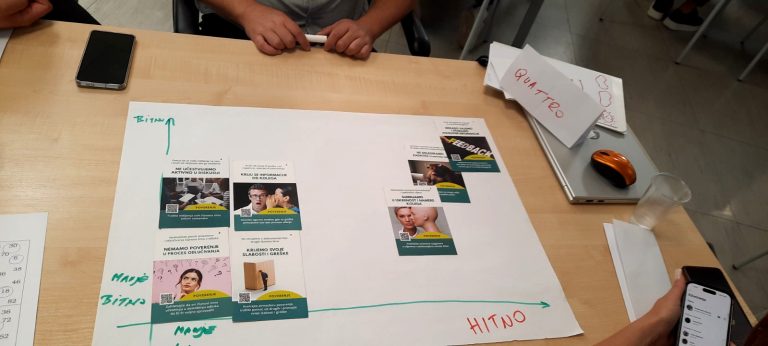
By placing the visual cards on the Urgent–Important matrix, you can quickly and easily set priorities and create an action plan.
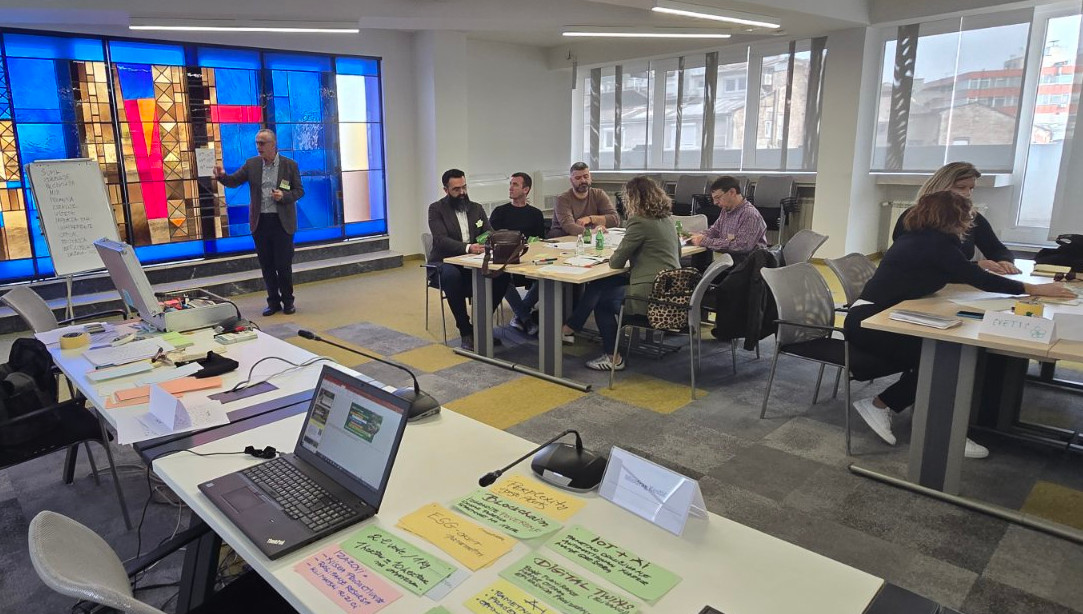
From an interactive workshop in Belgrade
Contact us to schedule a meeting
Tel: + 381 65 26 080 26
Email: poslovnaznanja@gmail.com