Avoiding Participation in Discussions – TRUST – 4
When people stay silent in discussions, decisions suffer and valuable perspectives remain unheard.
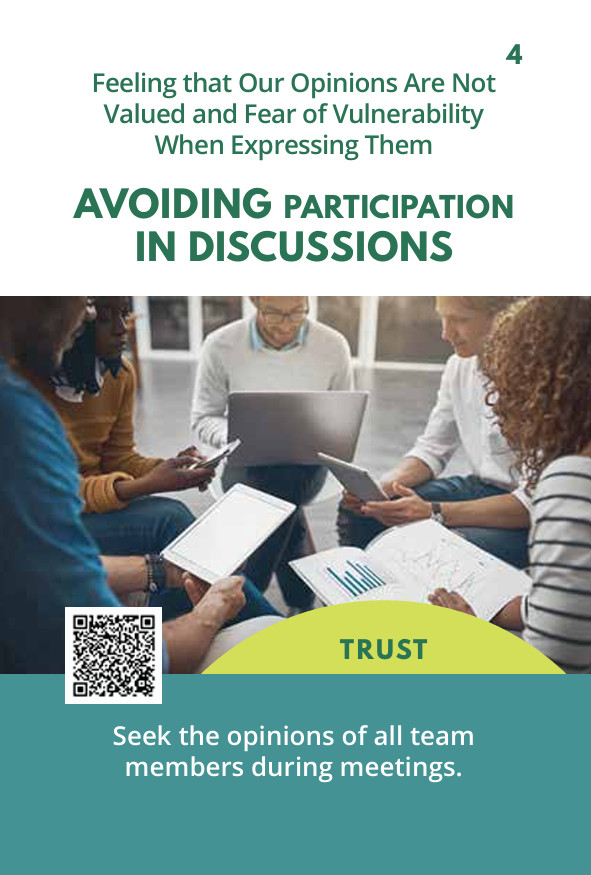
Where you’ll notice this in a team
This challenge becomes visible when team members are physically present in discussions but mentally absent. Silence replaces dialogue, and only a few voices dominate conversations.- In meetings: the same people speak, while others remain quiet or disengaged.
- During decision-making: agreement is assumed, but not confirmed.
- In brainstorming sessions: ideas are limited to what feels “safe” to say.
- In cross-functional discussions: people avoid speaking outside their formal role.
- After meetings: concerns are shared privately instead of openly.
Why it happens
Avoiding participation is rarely about lack of ideas. More often, it is about perceived risk and past experience.- Fear of negative reactions: people worry their ideas will be dismissed or criticized.
- Low psychological safety: speaking up feels unsafe.
- Hierarchical culture: “Only senior people should talk.”
- Past experiences: ideas were ignored or used against them.
- Unclear expectations: people are unsure if their input is actually wanted.
How it affects results
When discussions lack broad participation, teams lose both quality and commitment.- decisions are based on incomplete information,
- risks are identified too late,
- creativity and innovation decline,
- commitment to decisions is weaker,
- engagement drops among quieter team members.
How to reduce and overcome it
Participation improves when teams intentionally design discussions to include everyone, not just the most vocal members.- Set clear expectations: make it explicit that everyone’s input is expected.
- Create psychological safety: respond respectfully to all contributions.
- Slow the discussion down: give people time to think before speaking.
- Invite quieter voices: ask open questions and rotate who speaks first.
- Close the loop: show how input influenced the final decision.
Practical communication tools
These tools help teams create discussions where participation feels normal and safe.- Round-robin sharing: each participant briefly shares a thought before open discussion.
- Silent writing: individuals write ideas first, then share them with the group.
- Explicit invitations: facilitators directly invite input from quieter members.
- Meeting roles: assign a facilitator to ensure balanced participation.
- Reflection moments: pause discussions to ask “What are we not saying yet?”
Recommended reading and resources
Improve Your Team Heath and Effectiveness
How can your team overcome hidden obstacles that slow it down?
Take our 3-day Organizational Health Improvement Workshop
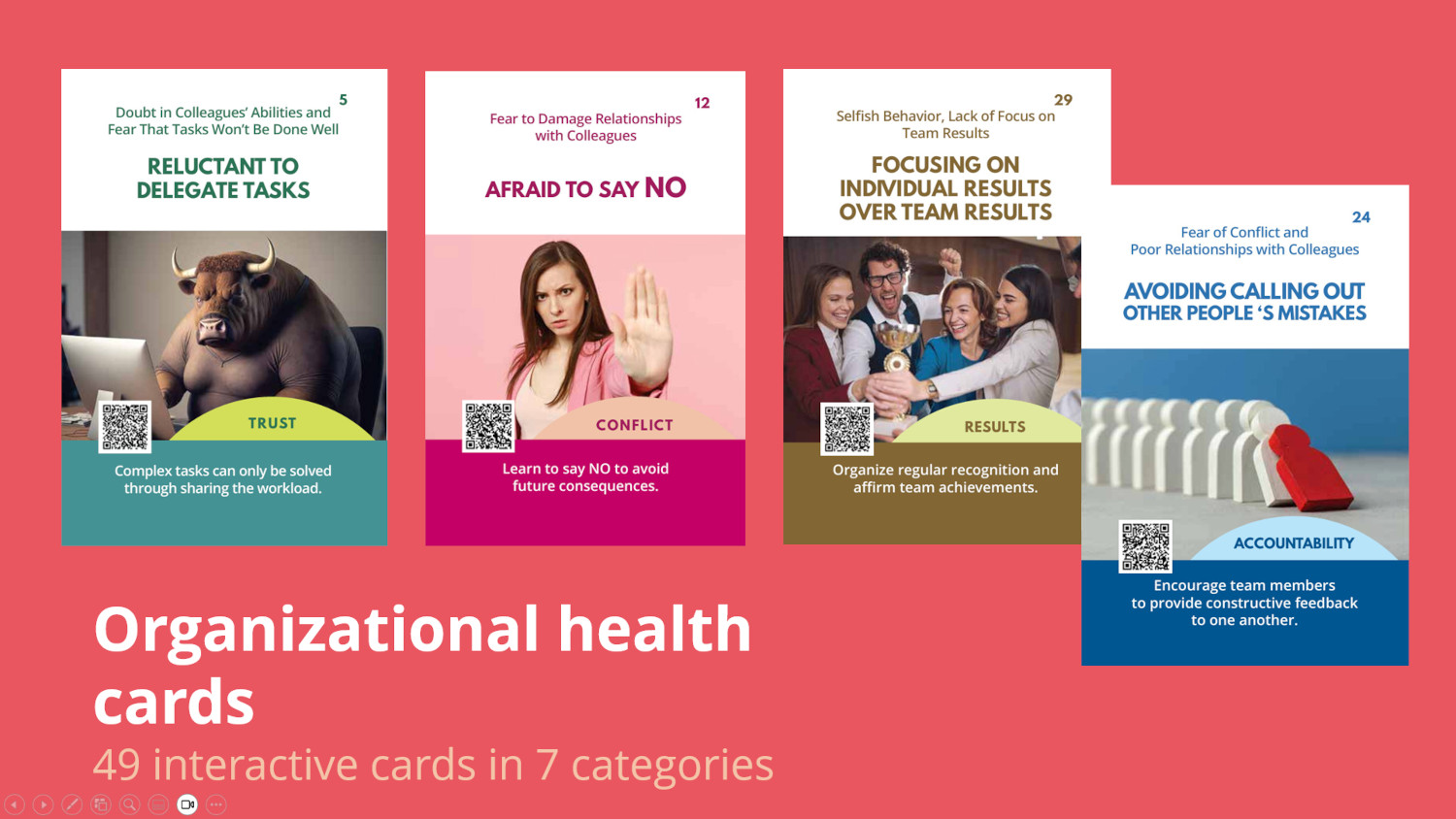
- How can you identify specific problems and challenges in teamwork, cooperation, and internal communication among employees?
- How can you discover the root causes of these challenges and successfully solve them using our visual interactive “team effectiveness” cards?
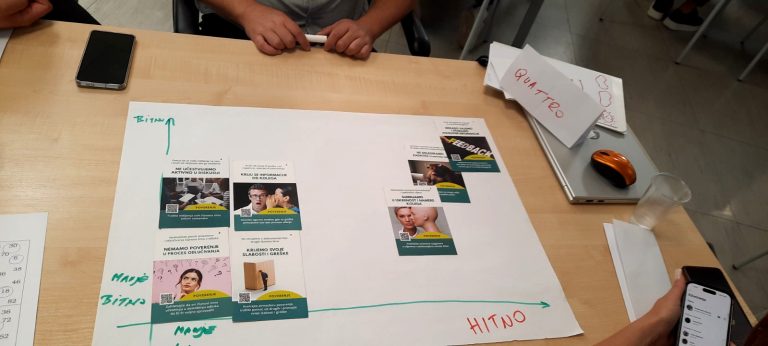
By placing the visual cards on the Urgent–Important matrix, you can quickly and easily set priorities and create an action plan.
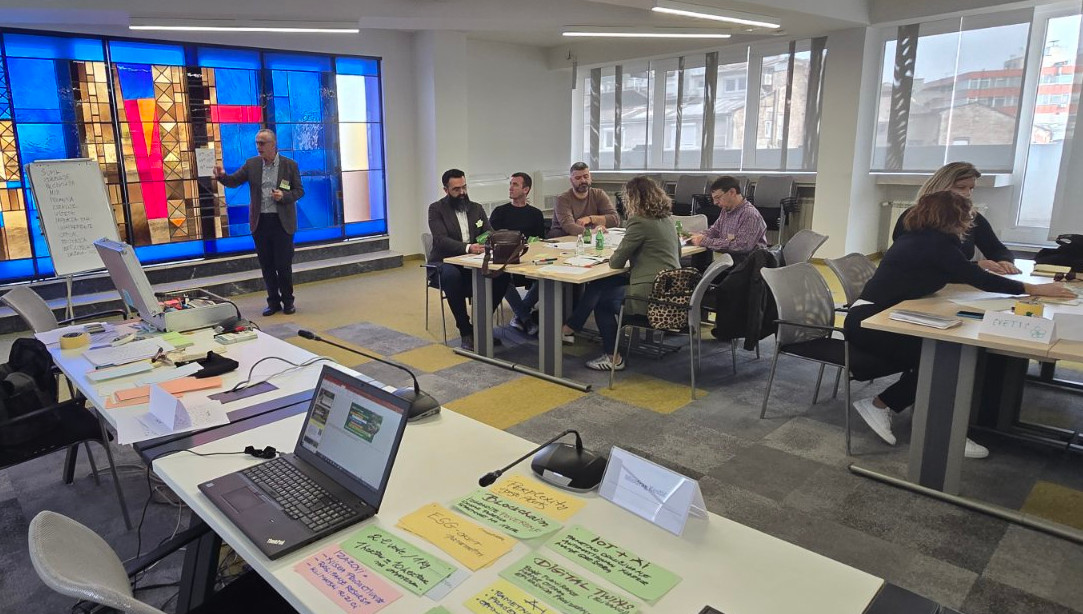
From an interactive workshop in Belgrade
Contact us to schedule a meeting
Tel: + 381 65 26 080 26
Email: poslovnaznanja@gmail.com