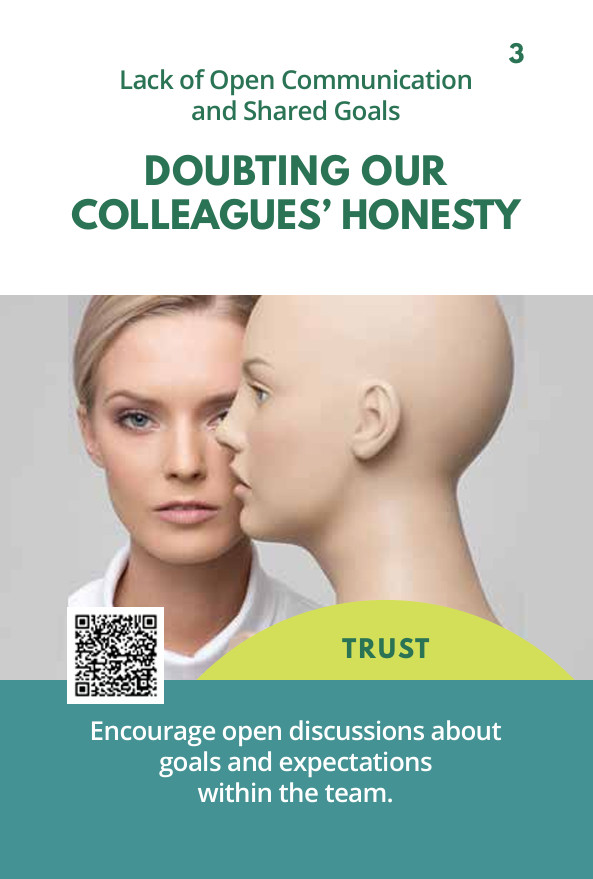
Doubting our Colleagues’ Honesty – TRUST – 3
When people question each other’s intentions, trust erodes and cooperation becomes defensive instead of open.
Where you’ll notice this in a team
This problem shows up when team members start questioning each other’s motives rather than focusing on the work itself. It often appears quietly, through assumptions and interpretations rather than open accusations.- In conversations: people read hidden intentions into neutral comments or questions.
- In collaboration: suggestions are dismissed because of who said them, not what was said.
- In decision-making: people assume others are protecting personal interests.
- In feedback situations: feedback is perceived as manipulation rather than support.
- In informal talk: speculation and gossip replace direct clarification.
Why it happens
Doubting colleagues’ honesty rarely starts without a reason. It is usually the result of accumulated experiences and unclear communication.- Past disappointments: promises were broken or expectations were not met.
- Lack of transparency: decisions are made without explanation.
- Inconsistent behavior: words and actions do not align.
- Unclear incentives: people don’t understand what others are rewarded for.
- Organizational politics: survival strategies replace collaboration.
How it affects results
Teams that doubt each other’s honesty struggle to build momentum. Energy is spent on protecting positions instead of solving problems.- slower decision-making,
- reluctance to share ideas or concerns,
- defensive communication,
- increased misunderstandings and conflicts,
- declining engagement and motivation.
How to reduce and overcome it
Rebuilding trust requires consistent behavior and clarity, not slogans or one-off initiatives.- Clarify intentions: explain the reasoning behind decisions and actions.
- Align words and actions: follow through on commitments, even small ones.
- Address assumptions early: encourage people to ask instead of guessing.
- Create transparency around incentives: make goals and evaluation criteria visible.
- Model openness as leaders: trust grows when leaders show consistency and honesty.
Practical communication tools
These tools help teams replace assumptions with clarity and open dialogue.- Assumption check: ask “What evidence do we actually have for this conclusion?”
- Intent clarification: explicitly state the purpose behind requests or feedback.
- Decision transparency: briefly explain how and why decisions were made.
- Direct questions: encourage asking colleagues directly instead of speculating.
- Consistency review: regularly reflect on whether actions match stated values.
Recommended reading and resources
Improve Your Team Heath and Effectiveness
How can your team overcome hidden obstacles that slow it down?
Take our 3-day Organizational Health Improvement Workshop
- How can you identify specific problems and challenges in teamwork, cooperation, and internal communication among employees?
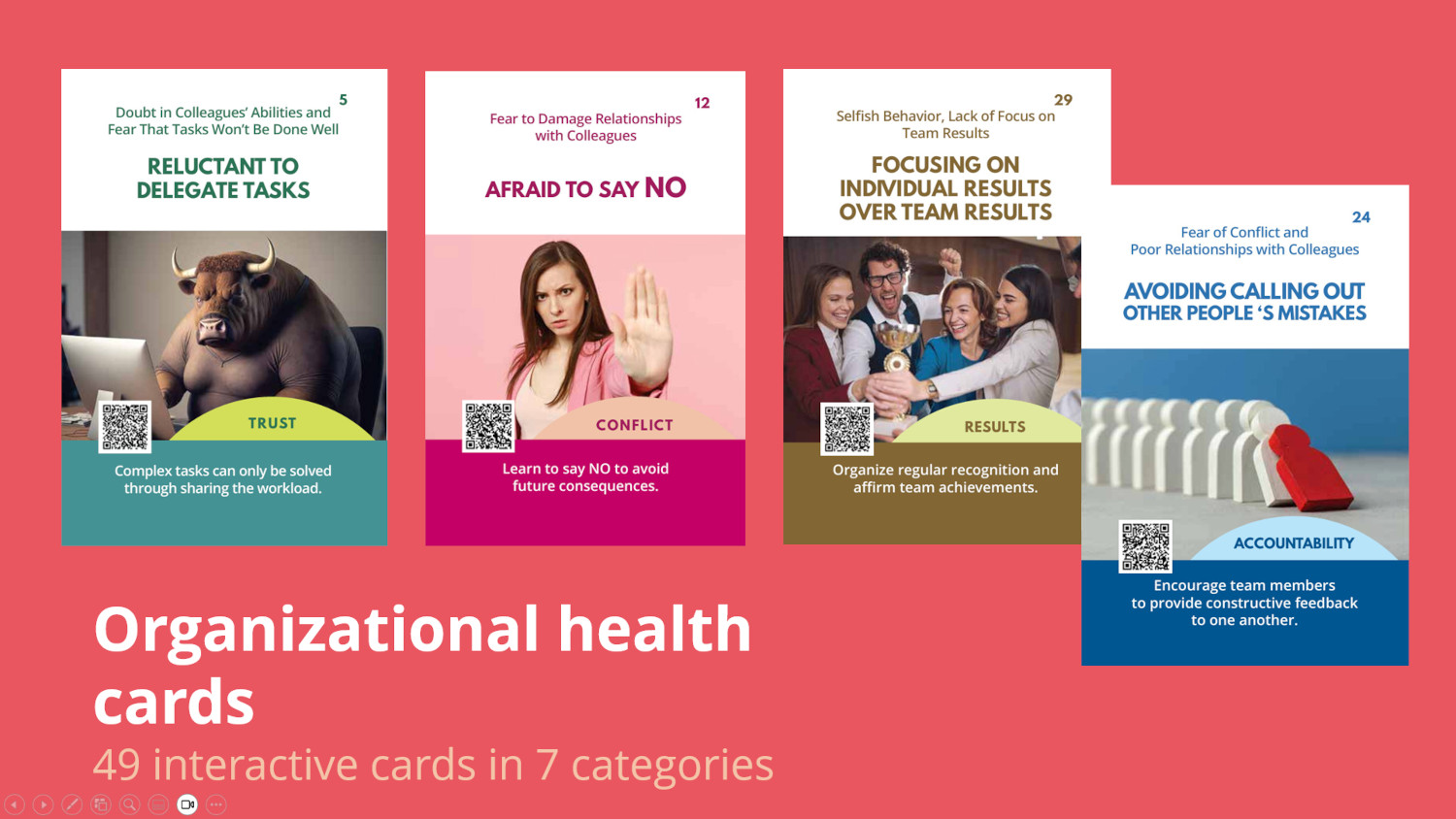
- How can you discover the root causes of these challenges and successfully solve them using our visual interactive “team effectiveness” cards?
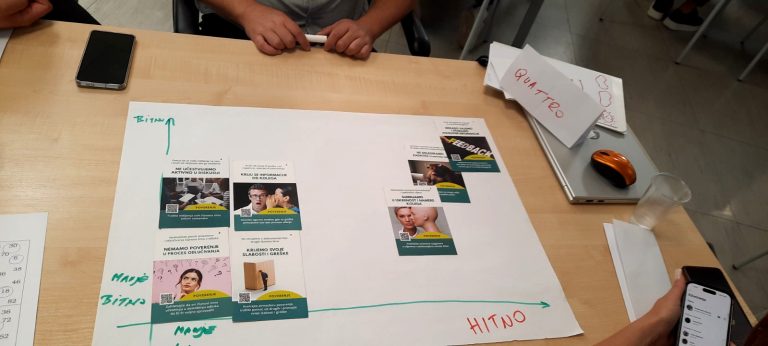
By placing the visual cards on the Urgent–Important matrix, you can quickly and easily set priorities and create an action plan.
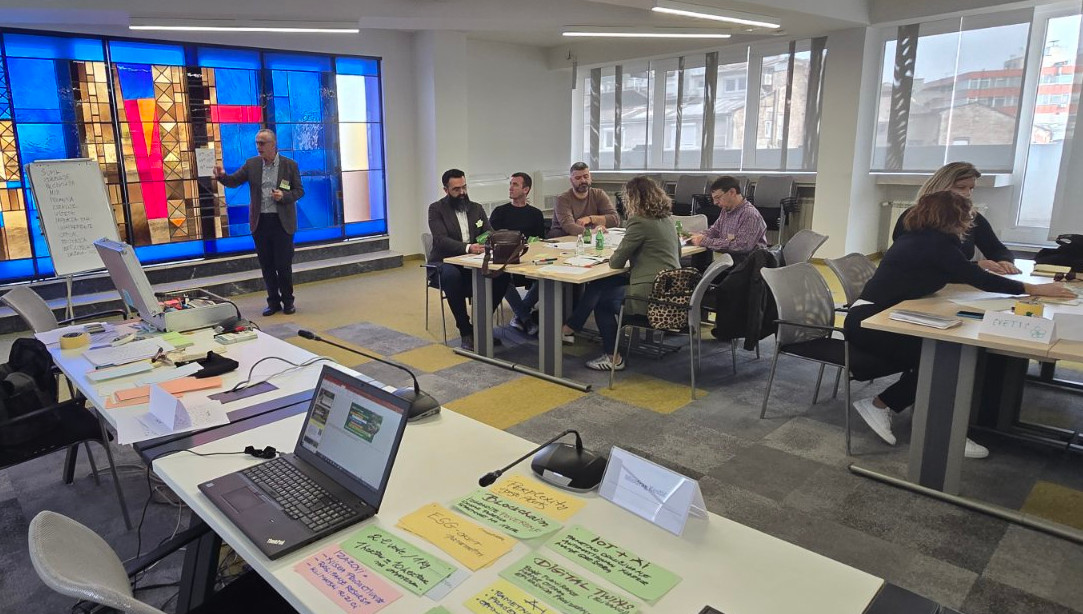
From an interactive workshop in Belgrade
Contact us to schedule a meeting
Tel: + 381 65 26 080 26
Email: poslovnaznanja@gmail.com