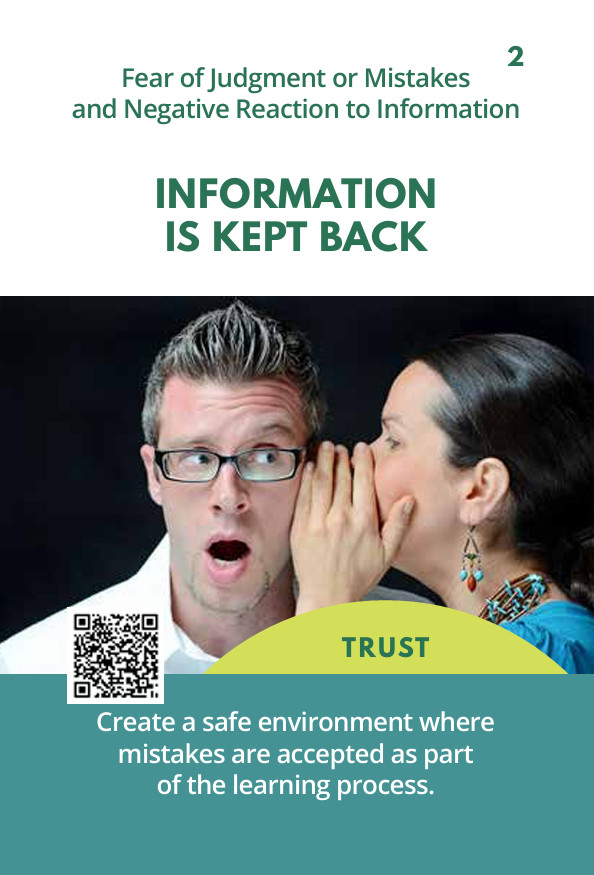
Information is Kept Back – TRUST – 2
When information is selectively shared, trust weakens, decisions suffer, and teamwork slowly breaks down.
Where you’ll notice this in a team
This issue appears when information that others genuinely need is not shared openly, fully, or on time. It usually does not look dramatic at first. Instead, it shows up in small, repeated situations that gradually damage trust.
- In daily work: people share only parts of the information or do it too late to be useful.
- Between teams or departments: information is treated as “ours” instead of something that supports joint work.
- In meetings: important facts are mentioned after decisions have already been made.
- In projects: risks and constraints surface late, creating rework and frustration.
- In handovers: assumptions are left unspoken, leading to misunderstandings.
Over time, people stop asking questions, stop relying on each other, and start working in parallel instead of together.
Why it happens
Information is rarely kept back by accident. In most cases, it is a learned behavior shaped by culture, past experience, and unclear expectations.
- Information as power: people believe that holding information gives them control or security.
- Lack of trust: fear that others will misuse the information or draw wrong conclusions.
- Unclear responsibility: no shared understanding of who should inform whom.
- Avoiding responsibility: staying vague to avoid being held accountable.
- Cultural habits: transparency was never modeled or encouraged.
When this becomes normal, silence replaces openness, and collaboration becomes reactive instead of proactive.
How it affects results
Teams where information is kept back often experience slower execution and weaker results. Even strong individuals struggle when they do not have the full picture.
- decisions are revisited or reversed,
- mistakes are repeated,
- deadlines are missed due to missing inputs,
- trust between colleagues erodes,
- engagement drops among proactive team members.
How to reduce and overcome it
The goal is to make transparency the default way of working. This does not mean sharing everything, but sharing what others need to succeed.
- Clarify what must be shared: agree which information is critical for coordination and decisions.
- Share early, not perfectly: partial information early is better than complete information too late.
- Explain the impact: show how transparency improves results and reduces stress.
- Create psychological safety: ensure people are not punished for sharing openly.
- Address hoarding calmly: name the behavior and its consequences without blaming.
Practical communication tools
These tools help teams turn transparency into a habit, not a one-time initiative.
- Information-sharing check: before finalizing a task, ask “Who else needs to know this to do their job well?”
- Short alignment updates: regular check-ins focused on changes, risks, and dependencies — not status reporting.
- Decision notes: briefly document key decisions and assumptions in a shared space.
- Meeting opening question: start meetings with “What does everyone here need to know before we decide?”
- Clear ownership: define who is responsible for sharing which information and when.
Recommended reading and resources
Improve Your Team Heath and Effectiveness
How can your team overcome hidden obstacles that slow it down?
Take our 3-day Organizational Health Improvement Workshop
- How can you identify specific problems and challenges in teamwork, cooperation, and internal communication among employees?
- How can you discover the root causes of these challenges and successfully solve them using our visual interactive “team effectiveness” cards?
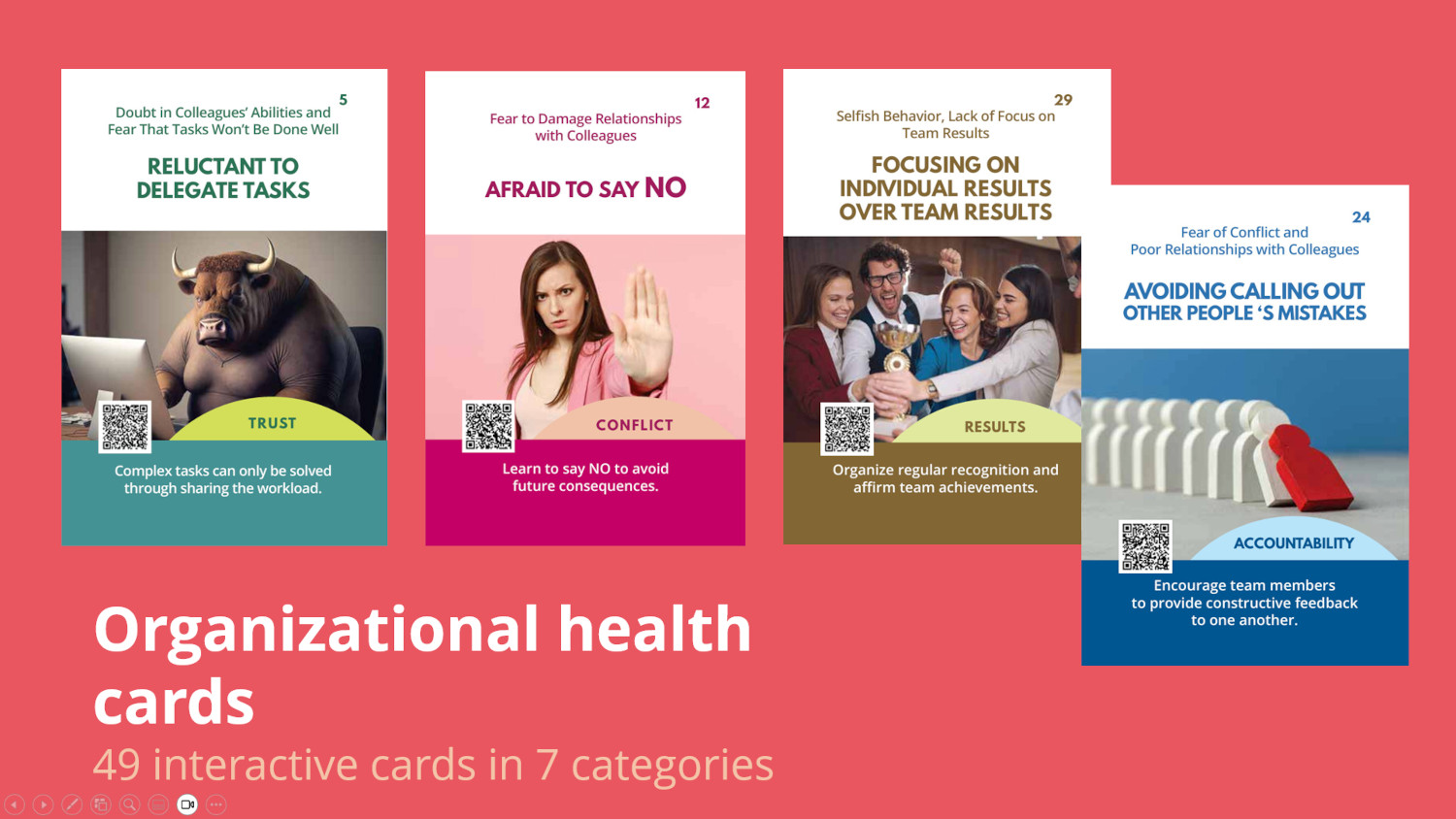
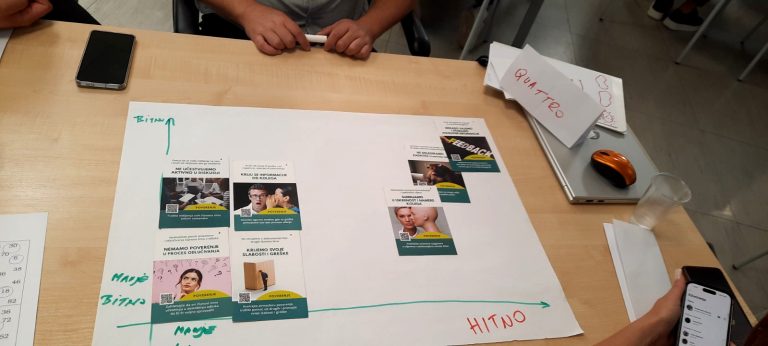
By placing the visual cards on the Urgent–Important matrix, you can quickly and easily set priorities and create an action plan.
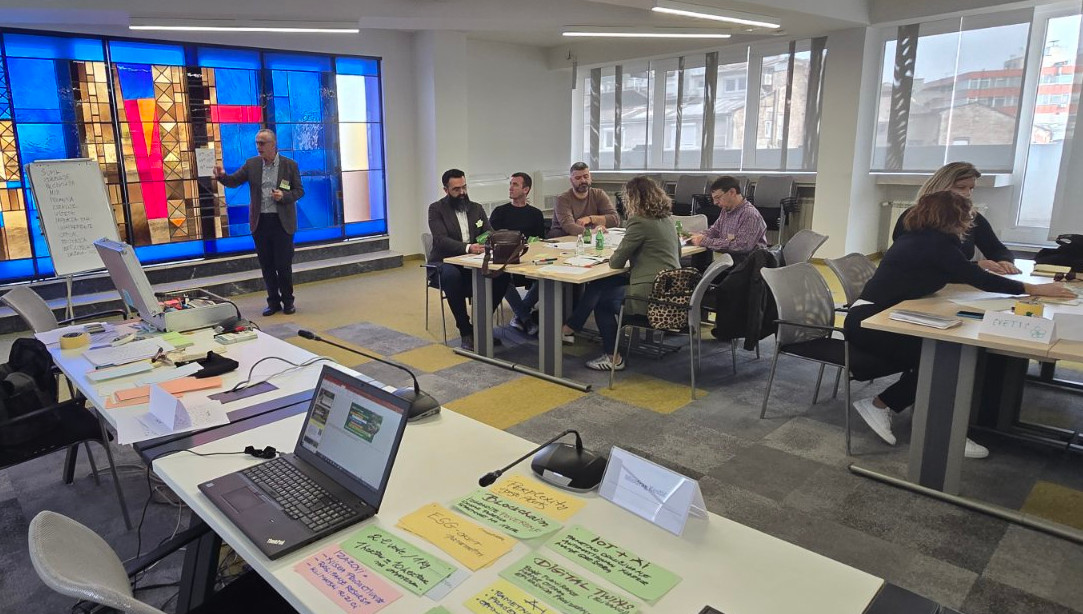
From an interactive workshop in Belgrade
Contact us to schedule a meeting
Tel: + 381 65 26 080 26
Email: poslovnaznanja@gmail.com