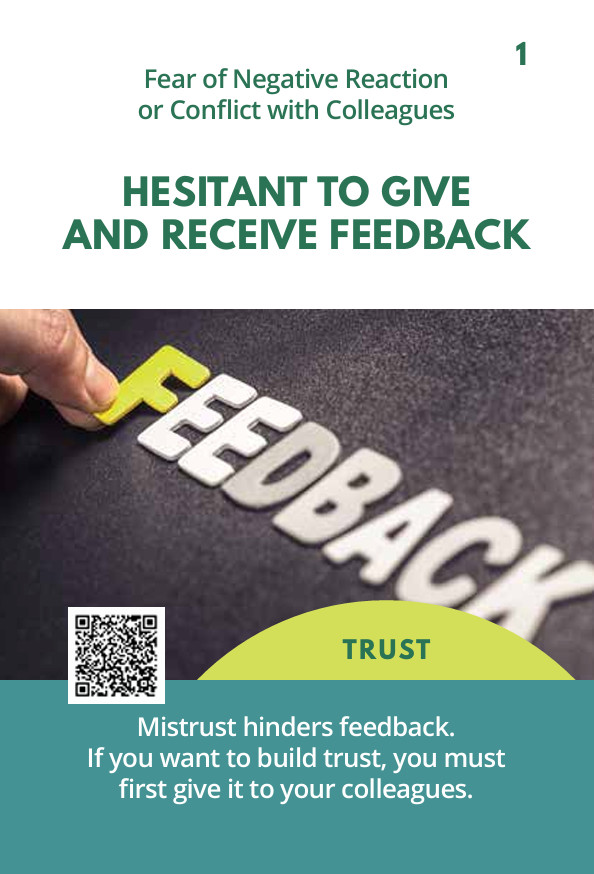
Hesitant To Give And Receive Feedback – TRUST – 1
When people hesitate to give or receive feedback, learning slows down, misunderstandings remain unresolved, and trust gradually erodes because important issues are left unspoken or addressed too late.
← Previous card
Where you’ll notice this in everyday work
A lack of open feedback often creates a polite and calm surface, but underneath it generates confusion, tension, and missed opportunities for improvement.
- Meetings feel “safe” but shallow, with little real discussion.
- Problems are discussed privately, not openly with those involved.
- People avoid difficult topics to protect relationships.
- Feedback appears suddenly during reviews or conflicts.
- Repeated mistakes continue without correction.
- Silence is interpreted as approval, even when it isn’t.
Over time, people stop expecting feedback and focus on avoiding risk instead of improving their work.
Why it happens
Feedback hesitation usually comes from fear rather than indifference. People worry about reactions, consequences, and damaged relationships.
- Fear of conflict: feedback may trigger emotional reactions.
- Fear of being judged: receiving feedback feels threatening.
- Past negative experiences: feedback was delivered harshly.
- Unclear expectations: feedback feels personal, not factual.
- Lack of skill: people don’t know how to give feedback well.
In low-trust environments, even well-intended feedback can feel like criticism or attack.
How it affects results
Without regular feedback, performance problems remain hidden and growth becomes slow and inconsistent.
- slower learning and development,
- repeated inefficiencies and mistakes,
- lower confidence and motivation,
- misalignment with expectations,
- weakened trust within the team.
How to reduce and overcome it
Feedback becomes effective when it is frequent, predictable, and focused on learning rather than judgment.
- Normalize feedback: make it part of daily work.
- Focus on behaviour and impact: avoid personal labels.
- Encourage two-way feedback: leaders model openness.
- Deliver feedback early: while it can still help.
- Create psychological safety: reward honesty, not silence.
Practical feedback tools
1) SBIC Feedback Model
Structure feedback using Situation, Behaviour, Impact, and Change to keep it clear, factual, and constructive.
2) Regular Feedback Check-ins
Short, recurring moments dedicated to sharing feedback prevent issues from accumulating.
3) Start–Stop–Continue
A simple format that helps teams discuss improvement without personal tension.
4) Feedback Requests
Encourage people to actively ask for feedback instead of waiting passively.
Recommended links
- Harvard Business Review – feedback culture
- Google re:Work – giving and receiving feedback
- MindTools – feedback skills
- Atlassian – 1:1 feedback conversations
- Poslovna Znanja – trust & feedback programs
← Previous card
Improve Your Team Heath and Effectiveness
How can your team overcome hidden obstacles that slow it down?
Take our 3-day Organizational Health Improvement Workshop
- How can you identify specific problems and challenges in teamwork, cooperation, and internal communication among employees?
- How can you discover the root causes of these challenges and successfully solve them using our visual interactive “team effectiveness” cards?
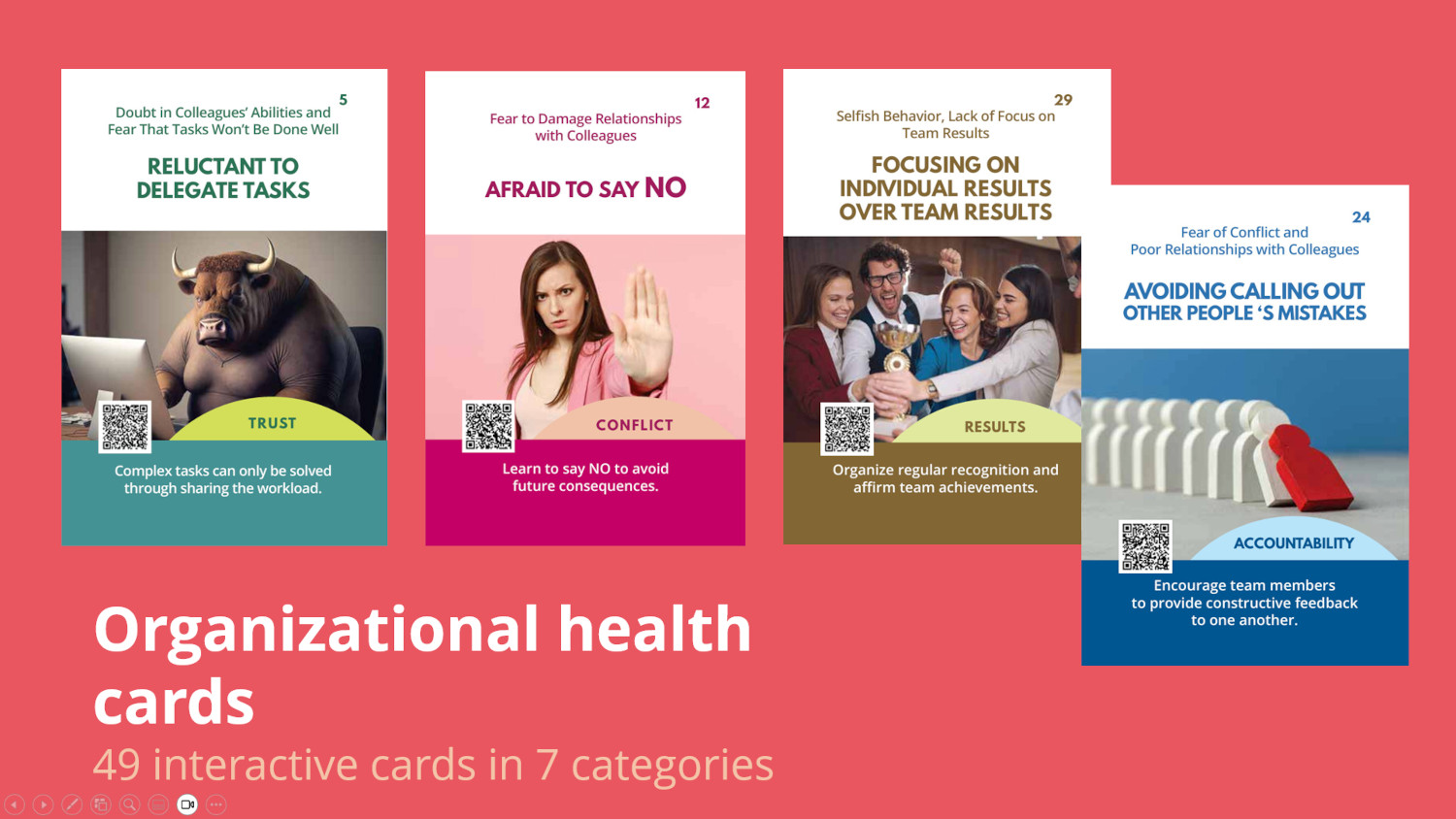
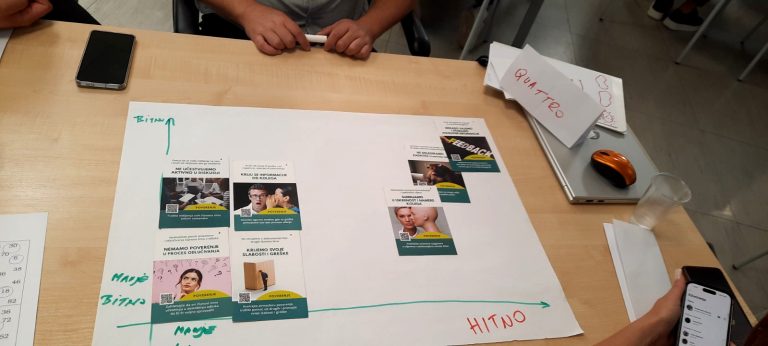
By placing the visual cards on the Urgent–Important matrix, you can quickly and easily set priorities and create an action plan.
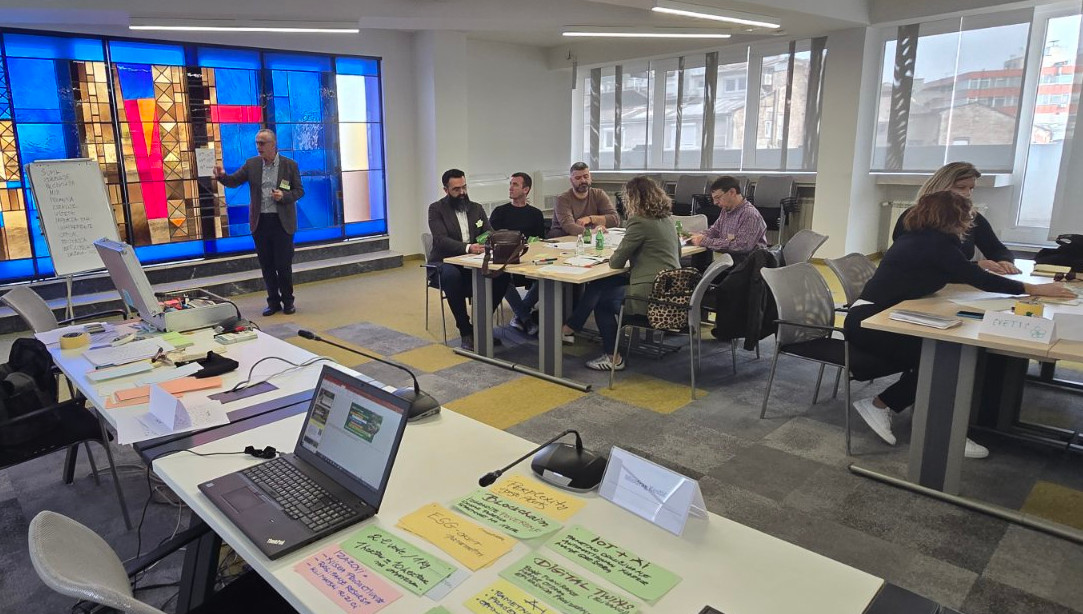
From an interactive workshop in Belgrade
Contact us to schedule a meeting
Tel: + 381 65 26 080 26
Email: poslovnaznanja@gmail.com