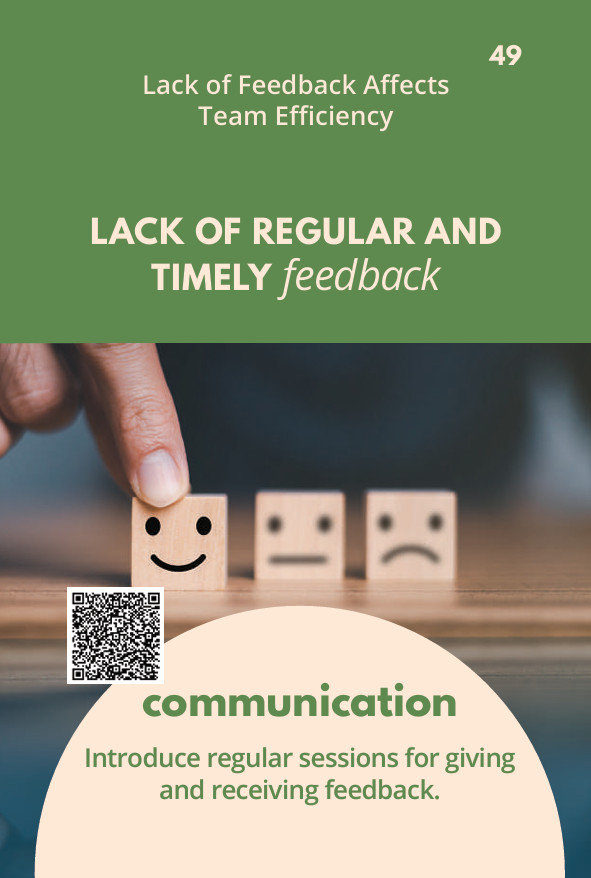
Lack Of Regular And Timely Feedback – COMMUNICATION – 49
When feedback is rare, delayed, or inconsistent, people are left guessing whether they are doing the right thing, problems persist longer than necessary, and learning slows because insights arrive too late to be useful.
Next card →
Where you’ll notice this in everyday work
A lack of regular feedback often creates a calm surface, but underneath it produces uncertainty and quiet frustration.
- People don’t know where they stand unless something goes wrong.
- Feedback only appears during annual reviews or after mistakes.
- Good work goes unnoticed, while issues accumulate silently.
- Surprises in evaluations damage trust and motivation.
- Repeated mistakes occur because nobody corrected them earlier.
- Learning is slow because feedback comes too late to apply.
Over time, people stop asking for feedback and focus on avoiding visible errors instead.
Why it happens
Feedback gaps are usually not caused by lack of care, but by discomfort, habits, or missing structures.
- Avoidance of discomfort: feedback conversations feel awkward.
- Time pressure: feedback is postponed indefinitely.
- Fear of demotivating others: especially with critical feedback.
- Unclear responsibility: no one “owns” giving feedback.
- Overreliance on formal reviews: day-to-day feedback is neglected.
When feedback is not built into routines, it becomes optional—and eventually rare.
How it affects results
Without regular feedback, performance and engagement suffer quietly.
- slower improvement and learning,
- repeated errors and inefficiencies,
- lower motivation and confidence,
- weaker alignment with expectations,
- reduced trust in leadership and communication.
How to reduce and overcome it
Effective feedback is not about formality, but about frequency, timing, and clarity.
- Make feedback routine: integrate it into regular meetings.
- Focus on behaviour and impact: keep it concrete and actionable.
- Balance positive and corrective feedback: both matter.
- Give feedback close to the moment: while it’s still relevant.
- Invite upward feedback: make it two-way, not top-down.
Practical feedback tools
1) SBIC Feedback Model
Structure feedback around Situation, Behaviour, Impact, and Change to keep it clear and non-personal.
2) Monthly Feedback Moments
Short, dedicated moments in team meetings for mutual feedback and reflection.
3) Start–Stop–Continue
A simple format to discuss what should start, stop, or continue in current work practices.
4) Real-Time Micro-Feedback
Encourage brief, immediate feedback instead of saving everything for later.
Recommended links
- Harvard Business Review – feedback culture
- Google re:Work – giving effective feedback
- MindTools – feedback skills
- Atlassian Team Playbook – 1:1 feedback
- Poslovna Znanja – feedback & communication programs
Next card →
Improve Your Team Heath and Effectiveness
How can your team overcome hidden obstacles that slow it down?
Take our 3-day Organizational Health Improvement Workshop
- How can you identify specific problems and challenges in teamwork, cooperation, and internal communication among employees?
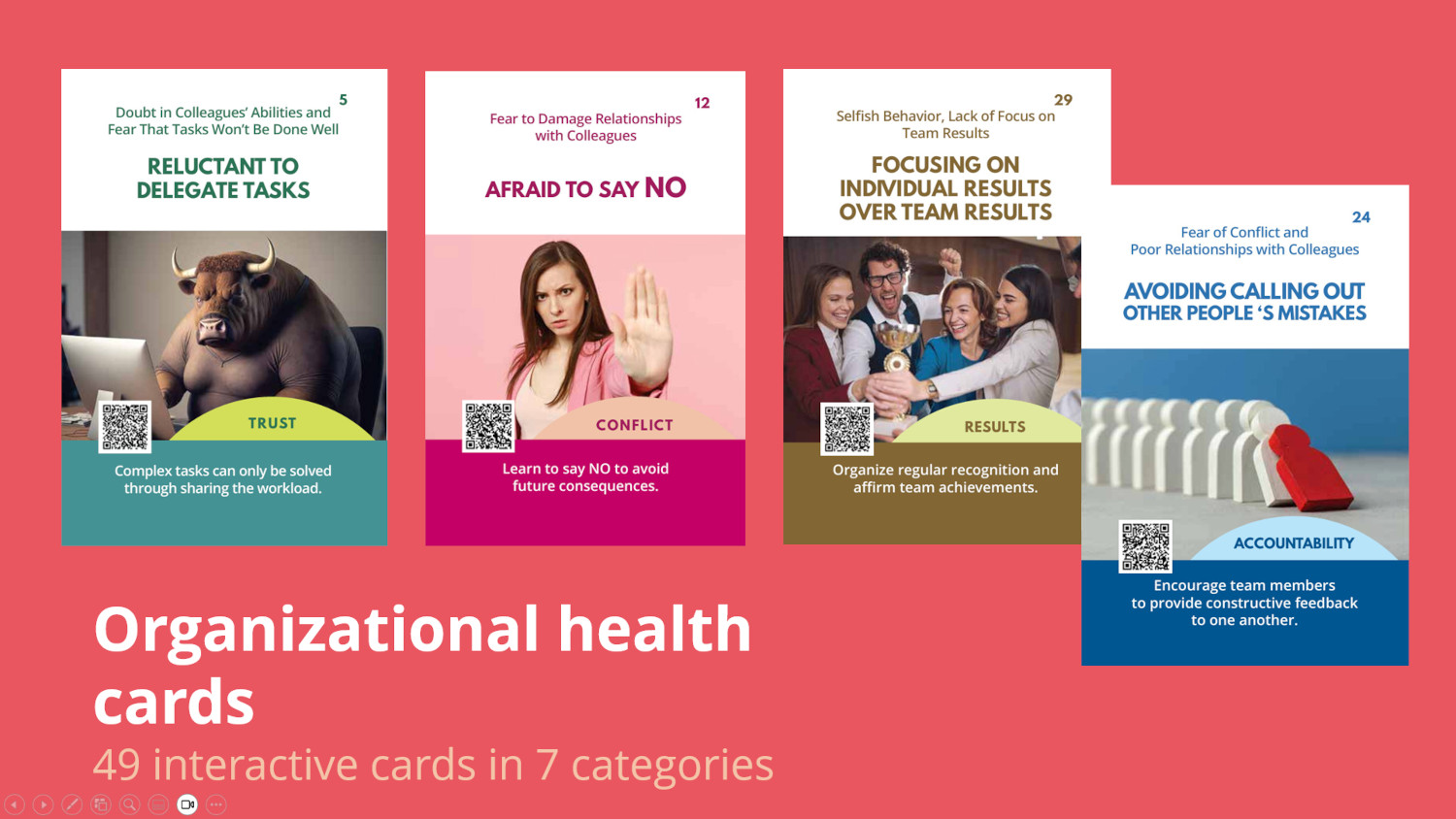
- How can you discover the root causes of these challenges and successfully solve them using our visual interactive “team effectiveness” cards?
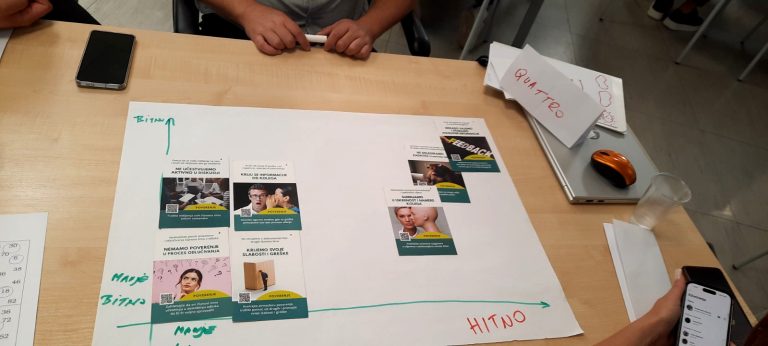
By placing the visual cards on the Urgent–Important matrix, you can quickly and easily set priorities and create an action plan.
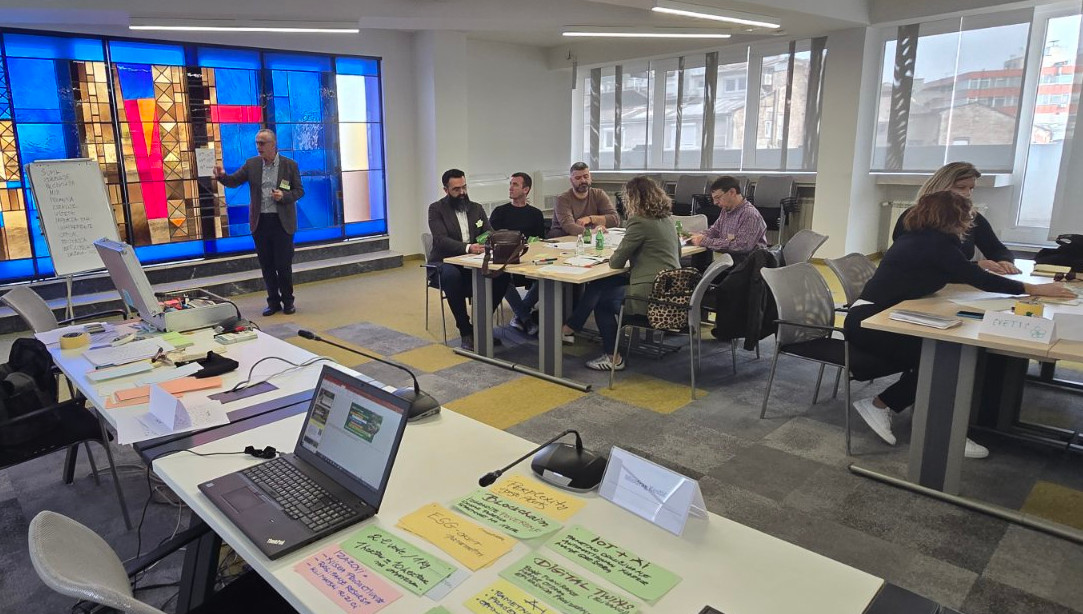
From an interactive workshop in Belgrade
Contact us to schedule a meeting
Tel: + 381 65 26 080 26
Email: poslovnaznanja@gmail.com