Information Is Not Shared On Time – COMMUNICATION – 47
When information is shared too late, teams are forced to react instead of prepare, decisions are made with incomplete context, and avoidable problems escalate simply because people did not know in time.

Where you’ll notice this in everyday work
Late information sharing rarely feels dramatic in the moment, but its effects accumulate quickly across projects, teams, and decisions.
- Last-minute surprises: key updates arrive when it’s already too late to adjust.
- Firefighting mode: teams constantly react instead of planning.
- Decisions are revisited: new information appears after choices were made.
- Frustration between teams: “Why didn’t we know this earlier?”
- Reduced trust: people suspect information is intentionally withheld.
- Missed dependencies: one delay triggers a chain reaction elsewhere.
Over time, teams stop relying on shared information and start building their own parallel versions of reality.
Why it happens
Information delays are rarely caused by bad intent. More often, they stem from unclear ownership, fear, or inefficient communication habits.
- Unclear responsibility: nobody knows who should inform whom.
- Fear of consequences: people delay sharing bad news.
- Overconfidence: assumption that “it’s not important yet.”
- Siloed thinking: information stays within teams or functions.
- Lack of communication routines: updates depend on individuals.
When timing is not valued explicitly, speed of information sharing becomes inconsistent.
How it affects results
Late information sharing directly undermines coordination, efficiency, and decision quality.
- poor planning and constant rework,
- higher stress and time pressure,
- suboptimal or rushed decisions,
- loss of trust between teams,
- reduced accountability for outcomes.
How to reduce and overcome it
Improving information flow requires clear rules about timing, ownership, and transparency.
- Define “early enough”: agree on when information must be shared.
- Clarify ownership: assign responsibility for updates explicitly.
- Normalize early warnings: share uncertainty, not just certainty.
- Use simple update routines: short, regular check-ins.
- Reward transparency: acknowledge timely sharing, even of bad news.
Practical information-sharing tools
1) Early Signal Rule
Encourage people to share concerns or changes as soon as they notice them, even if details are incomplete.
2) Weekly Status Updates
Short, structured updates covering progress, risks, and upcoming changes.
3) Dependency Mapping
Make visible who depends on whose information to highlight the importance of timing.
4) “What Others Need to Know” Question
Before closing meetings, explicitly ask what information must be shared and with whom.
Recommended links
Improve Your Team Heath and Effectiveness
How can your team overcome hidden obstacles that slow it down?
Take our 3-day Organizational Health Improvement Workshop
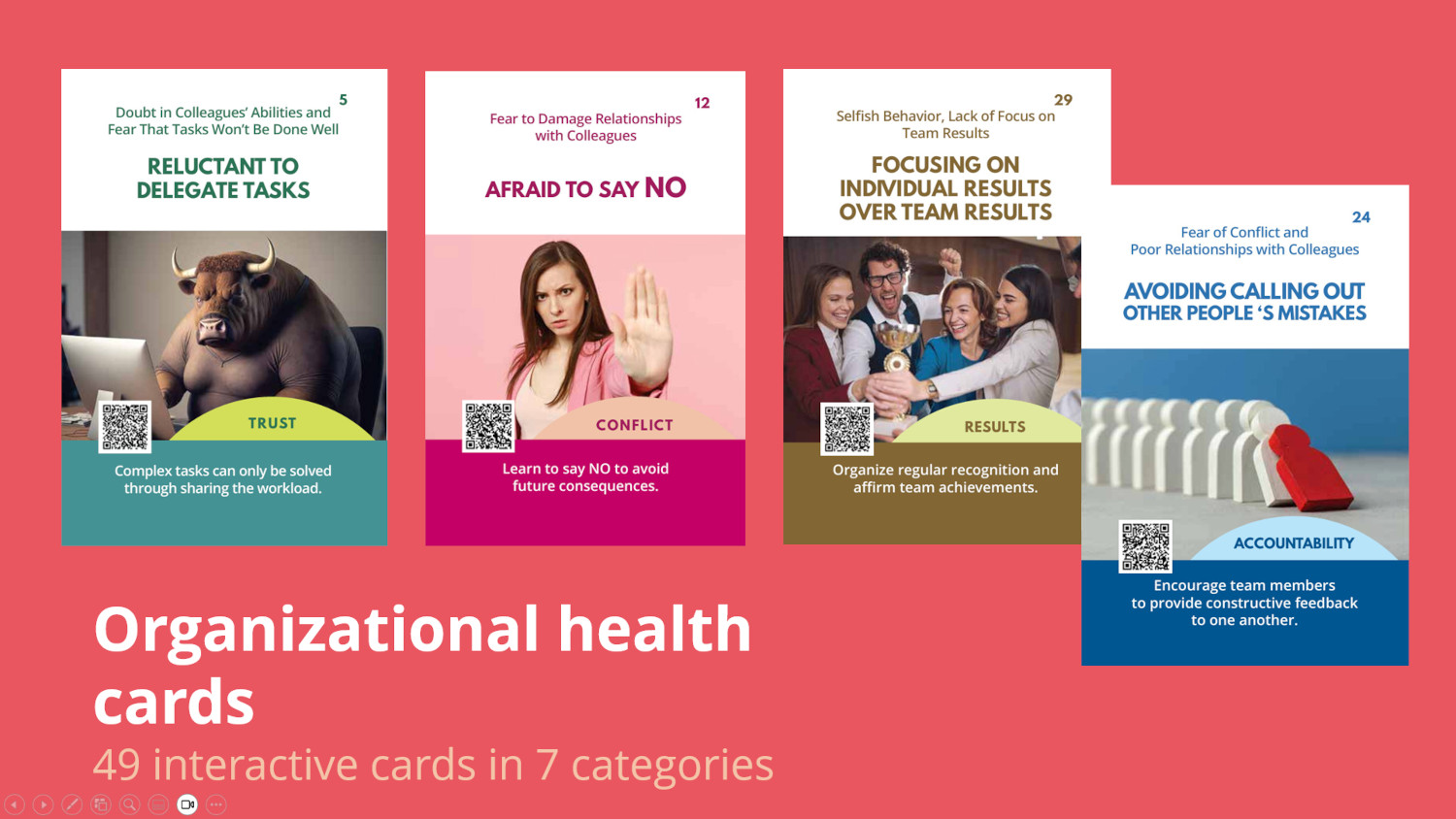
- How can you identify specific problems and challenges in teamwork, cooperation, and internal communication among employees?
- How can you discover the root causes of these challenges and successfully solve them using our visual interactive “team effectiveness” cards?
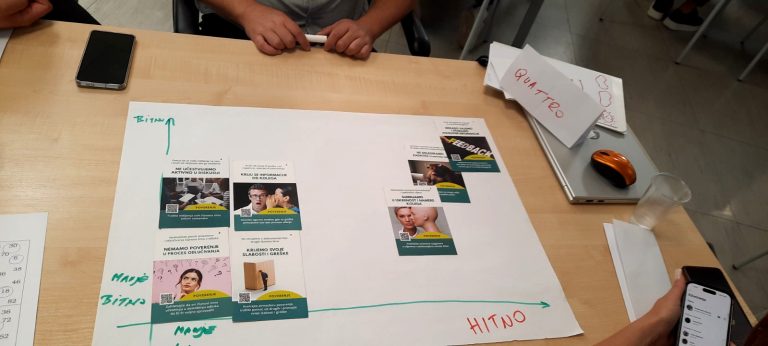
By placing the visual cards on the Urgent–Important matrix, you can quickly and easily set priorities and create an action plan.

From an interactive workshop in Belgrade
Contact us to schedule a meeting
Tel: + 381 65 26 080 26
Email: poslovnaznanja@gmail.com