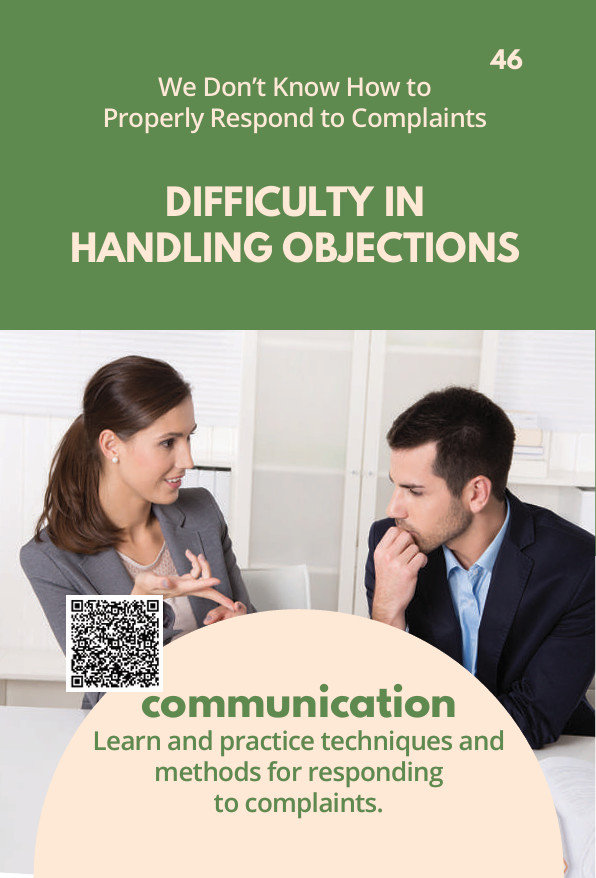
Difficulty In Handling Objections – COMMUNICATION – 46
When objections are handled poorly, discussions quickly turn defensive, people stop listening to each other, and valuable concerns are either ignored or escalated into conflict instead of being used to improve decisions and outcomes.
Where you’ll notice this in everyday work
Poor handling of objections usually shows up in emotionally charged moments, especially when decisions are questioned or alternative viewpoints are raised.
- Objections are taken personally instead of being treated as input.
- People defend their position immediately without exploring the concern.
- Discussions escalate quickly into arguments or power struggles.
- Some voices stop objecting altogether because it “never helps anyway.”
- Meetings feel tense when disagreement appears.
- Important risks remain unspoken to avoid confrontation.
Over time, objections are no longer seen as useful, but as disruptions that should be avoided.
Why it happens
Difficulty handling objections is often rooted in mindset, not in lack of intelligence or expertise.
- Fear of being wrong: objections feel like a threat to competence.
- Ego involvement: ideas are closely tied to personal identity.
- Lack of communication skills: people were never taught how to explore objections.
- Time pressure: objections are seen as slowing things down.
- Past conflict experiences: disagreement previously led to negative outcomes.
In such environments, objections trigger defense instead of curiosity.
How it affects results
When objections are poorly handled, decision quality and trust both suffer.
- missed risks and blind spots,
- decisions based on incomplete information,
- reduced psychological safety,
- conflicts that could have been avoided,
- lower commitment to final decisions.
How to reduce and overcome it
Handling objections well requires shifting from “defending a position” to “understanding a concern.”
- Pause before responding: create space between objection and reply.
- Acknowledge first: show that the concern has been heard.
- Explore intent: ask what is behind the objection.
- Separate person from idea: keep discussion professional.
- Close the loop: explain how objections influenced the final decision.
Practical objection-handling tools
1) Acknowledge – Explore – Respond (AER)
First acknowledge the objection, then explore it with questions, and only then respond with your perspective.
2) Objection Reframing
Reframe objections as signals of risk, uncertainty, or unmet needs rather than resistance.
3) Objection Parking Lot
Capture objections visibly during meetings so they are not ignored or forgotten.
4) “What Would Make This Acceptable?” Question
Shift the conversation from opposition to solution-building.
Recommended links
Improve Your Team Heath and Effectiveness
How can your team overcome hidden obstacles that slow it down?
Take our 3-day Organizational Health Improvement Workshop
- How can you identify specific problems and challenges in teamwork, cooperation, and internal communication among employees?
- How can you discover the root causes of these challenges and successfully solve them using our visual interactive “team effectiveness” cards?
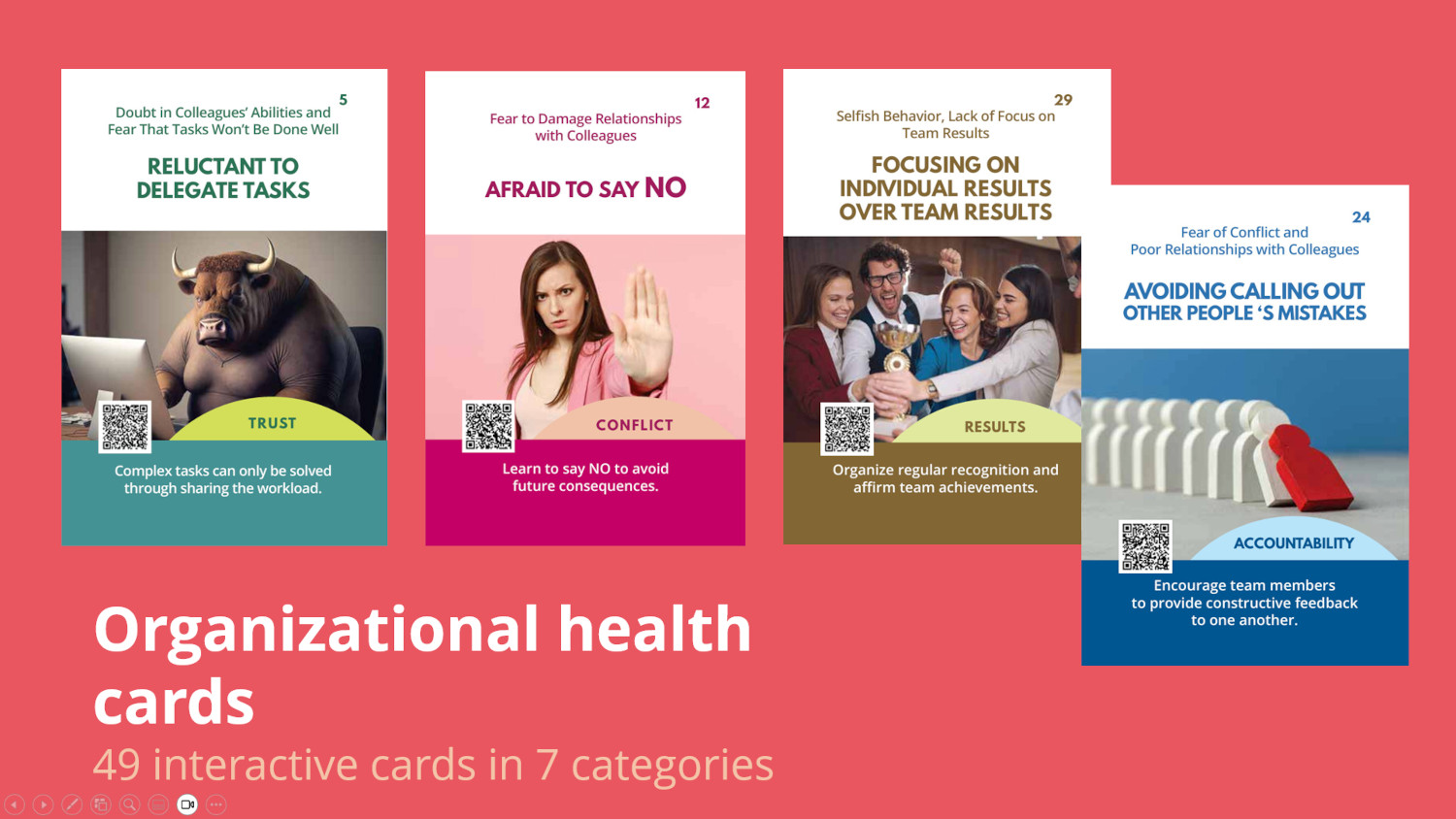
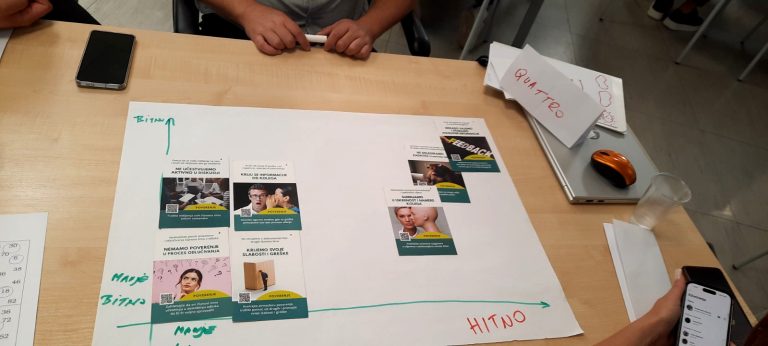
By placing the visual cards on the Urgent–Important matrix, you can quickly and easily set priorities and create an action plan.
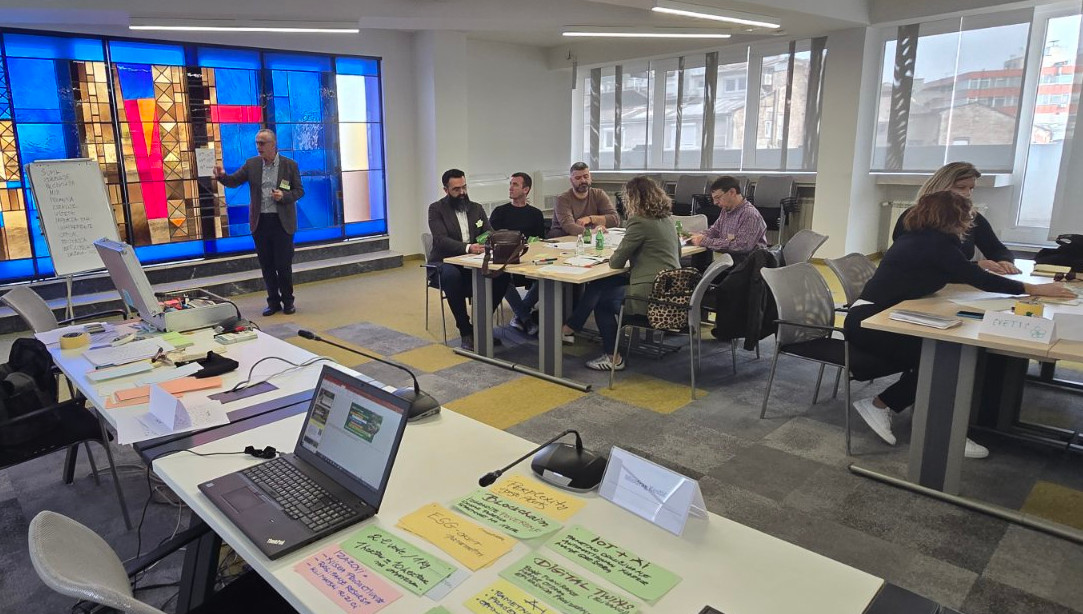
From an interactive workshop in Belgrade
Contact us to schedule a meeting
Tel: + 381 65 26 080 26
Email: poslovnaznanja@gmail.com