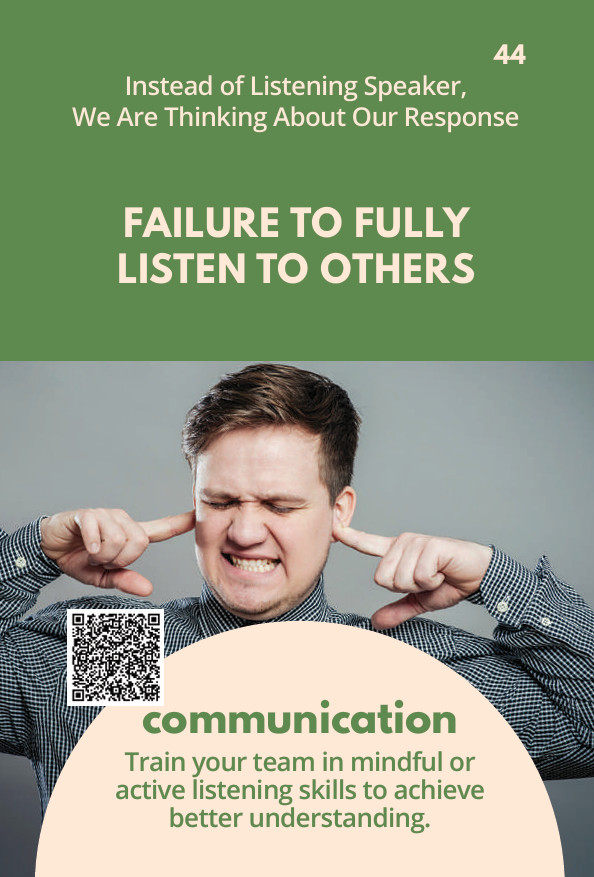
Failure To Fully Listen To Others – COMMUNICATION – 44
When people do not fully listen to one another, communication becomes fragmented, misunderstandings increase, and conversations turn into parallel monologues rather than genuine exchange and collaboration.
Where you’ll notice this in everyday work
Poor listening is often mistaken for disagreement or lack of interest, but it usually shows up as subtle communication breakdowns that repeat across meetings and conversations.
- People interrupt before the other person finishes.
- Responses don’t match the question, showing the message wasn’t absorbed.
- Multitasking during conversations (emails, phones, laptops).
- Key points need to be repeated several times.
- Decisions are revisited because people remember them differently.
- Frustration grows as people feel unheard or ignored.
Over time, conversations become inefficient, and people stop trying to explain themselves fully.
Why it happens
Failure to listen is rarely intentional. It usually results from pressure, habits, or focus on responding rather than understanding.
- Time pressure: people rush to conclusions.
- Cognitive overload: too much information at once.
- Strong opinions: preparing a response instead of listening.
- Digital distractions: constant partial attention.
- Low psychological safety: people stop listening defensively.
When listening is weak, communication quality deteriorates quickly.
How it affects results
Poor listening directly impacts coordination, trust, and execution quality.
- misunderstandings and rework,
- slower decision-making,
- reduced trust and engagement,
- conflicts caused by misinterpretation,
- lower overall communication effectiveness.
How to reduce and overcome it
Improving listening requires deliberate practice and visible leadership example.
- Slow conversations down: allow people to finish.
- Remove distractions: phones and laptops away during key discussions.
- Reflect back: summarize what you heard before responding.
- Ask follow-up questions: check understanding, not assumptions.
- Reward good listening: acknowledge when people listen well.
Practical listening tools
1) Active Listening Rounds
In discussions, one person speaks while another summarizes before adding their own view.
2) “No Interruptions” Rule
Establish clear norms that speakers are not interrupted until they finish their point.
3) Listening Check Questions
Use phrases like “What I hear you saying is…” to validate understanding.
4) Meeting Attention Agreements
Agree upfront when full attention is required and when multitasking is acceptable.
Recommended links
Improve Your Team Heath and Effectiveness
How can your team overcome hidden obstacles that slow it down?
Take our 3-day Organizational Health Improvement Workshop
- How can you identify specific problems and challenges in teamwork, cooperation, and internal communication among employees?
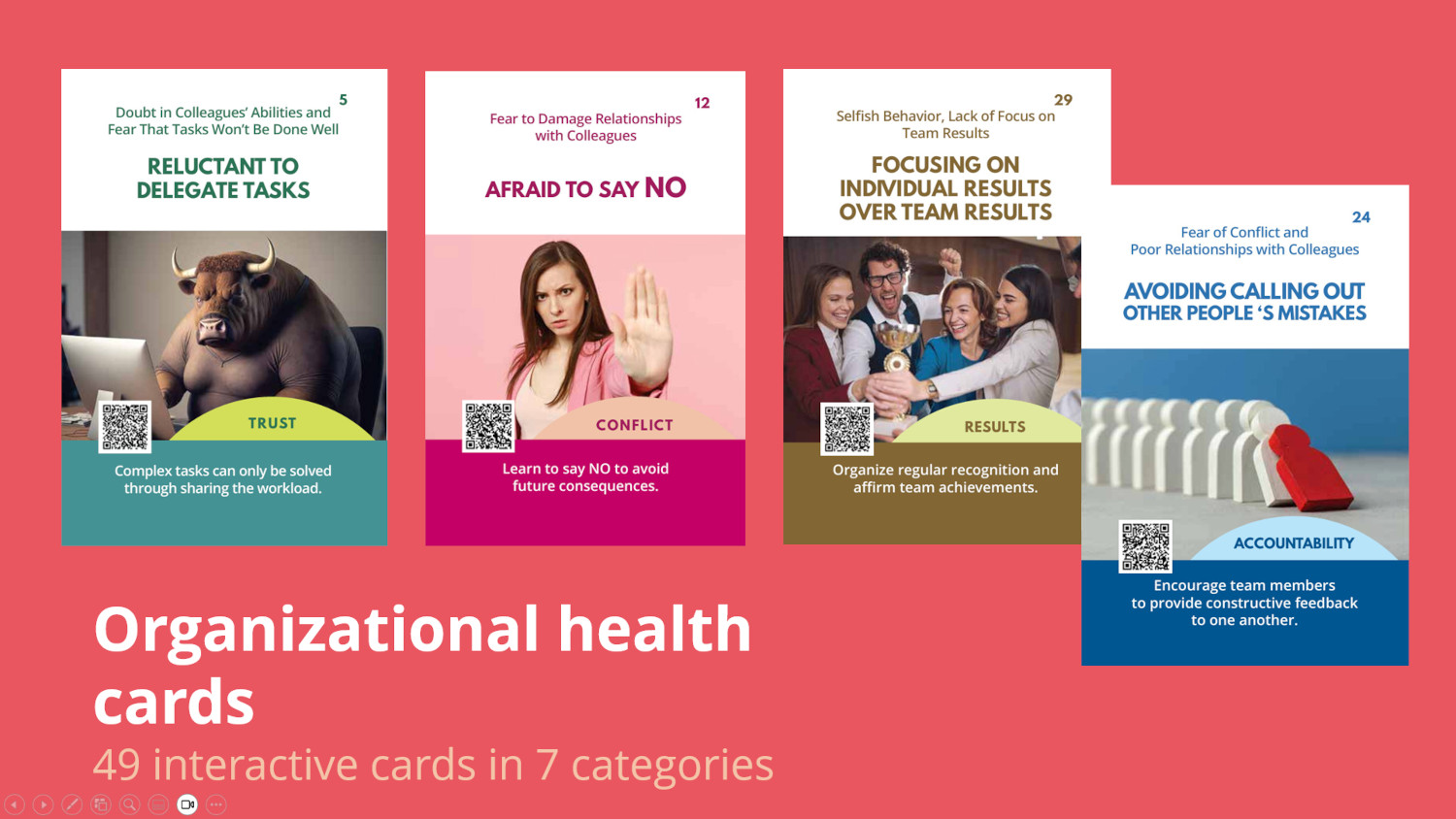
- How can you discover the root causes of these challenges and successfully solve them using our visual interactive “team effectiveness” cards?
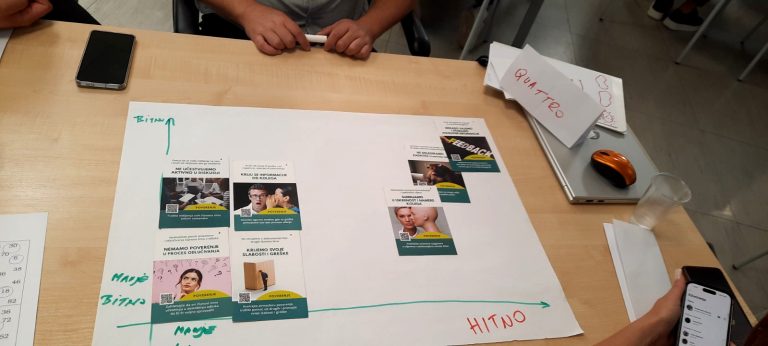
By placing the visual cards on the Urgent–Important matrix, you can quickly and easily set priorities and create an action plan.

From an interactive workshop in Belgrade
Contact us to schedule a meeting
Tel: + 381 65 26 080 26
Email: poslovnaznanja@gmail.com