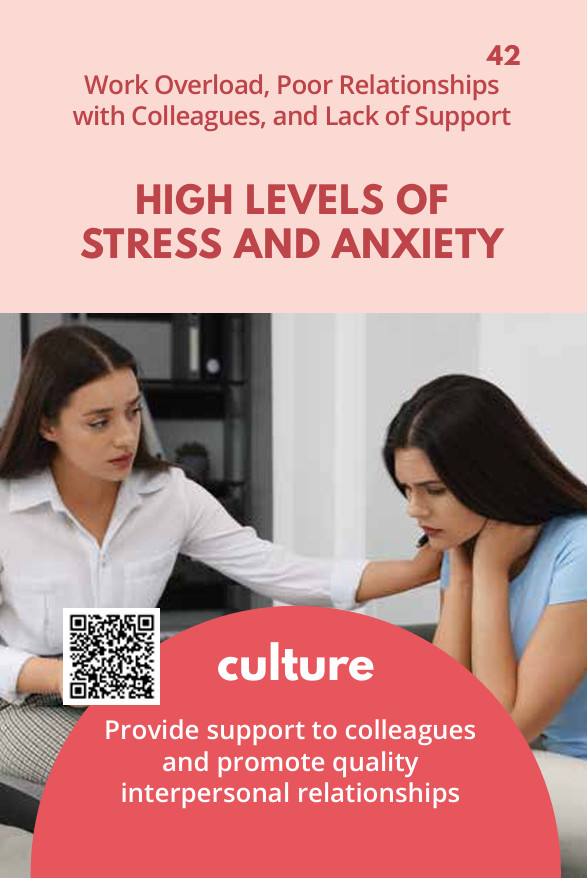
High Levels Of Stress And Anxiety – ORGANISATIONAL CULTURE – 42
When stress and anxiety become a constant background in daily work, teams may still perform on the surface, but focus, motivation, and emotional resilience gradually decline, increasing the risk of burnout, mistakes, and disengagement.
Where you’ll notice this in everyday work
Elevated stress and anxiety often appear gradually and quietly. Teams may look productive from the outside, while individuals internally struggle to keep up.
- Constant urgency: everything feels important and time-critical.
- Difficulty focusing: people jump between tasks without real progress.
- Emotional exhaustion: irritability, frustration, or withdrawal increase.
- Perfectionism or avoidance: fear of mistakes slows decisions.
- Reduced communication: people speak less to avoid additional pressure.
- More sick days or turnover: stress shows up physically.
Over time, stress becomes “normal,” even though performance and wellbeing are quietly deteriorating.
Why it happens
High stress rarely comes from a single cause. It usually results from a combination of workload, uncertainty, and lack of control.
- Unclear priorities: too many competing demands.
- Constant change: people never feel “caught up.”
- Lack of control: decisions are imposed without explanation.
- Poor boundaries: expectations extend beyond working hours.
- Low psychological safety: fear of speaking up or making mistakes.
When recovery time is missing, stress accumulates instead of being released.
How it affects results
Chronic stress directly impacts both performance and long-term organizational health.
- lower concentration and quality of work,
- higher error rates and rework,
- reduced creativity and problem-solving,
- emotional detachment from work,
- higher risk of burnout and absenteeism.
How to reduce and overcome it
Reducing stress is not about “coping better,” but about changing the conditions that create pressure.
- Clarify priorities: make trade-offs explicit.
- Normalize realistic workloads: stop treating overload as normal.
- Increase autonomy: give people more control over how they work.
- Encourage recovery: respect breaks and time off.
- Talk openly about stress: remove stigma and silence.
Practical stress-reduction tools
1) Priority Reset Meetings
Regularly review priorities and explicitly decide what will not be done, reducing hidden pressure.
2) Workload Visualisation
Make individual and team workload visible to identify overload early.
3) Psychological Safety Check-Ins
Short, recurring conversations about what feels stressful and what support is needed.
4) Energy Management Practices
Encourage pacing, breaks, and recovery as part of performance, not weakness.
Recommended links
Improve Your Team Heath and Effectiveness
How can your team overcome hidden obstacles that slow it down?
Take our 3-day Organizational Health Improvement Workshop
- How can you identify specific problems and challenges in teamwork, cooperation, and internal communication among employees?
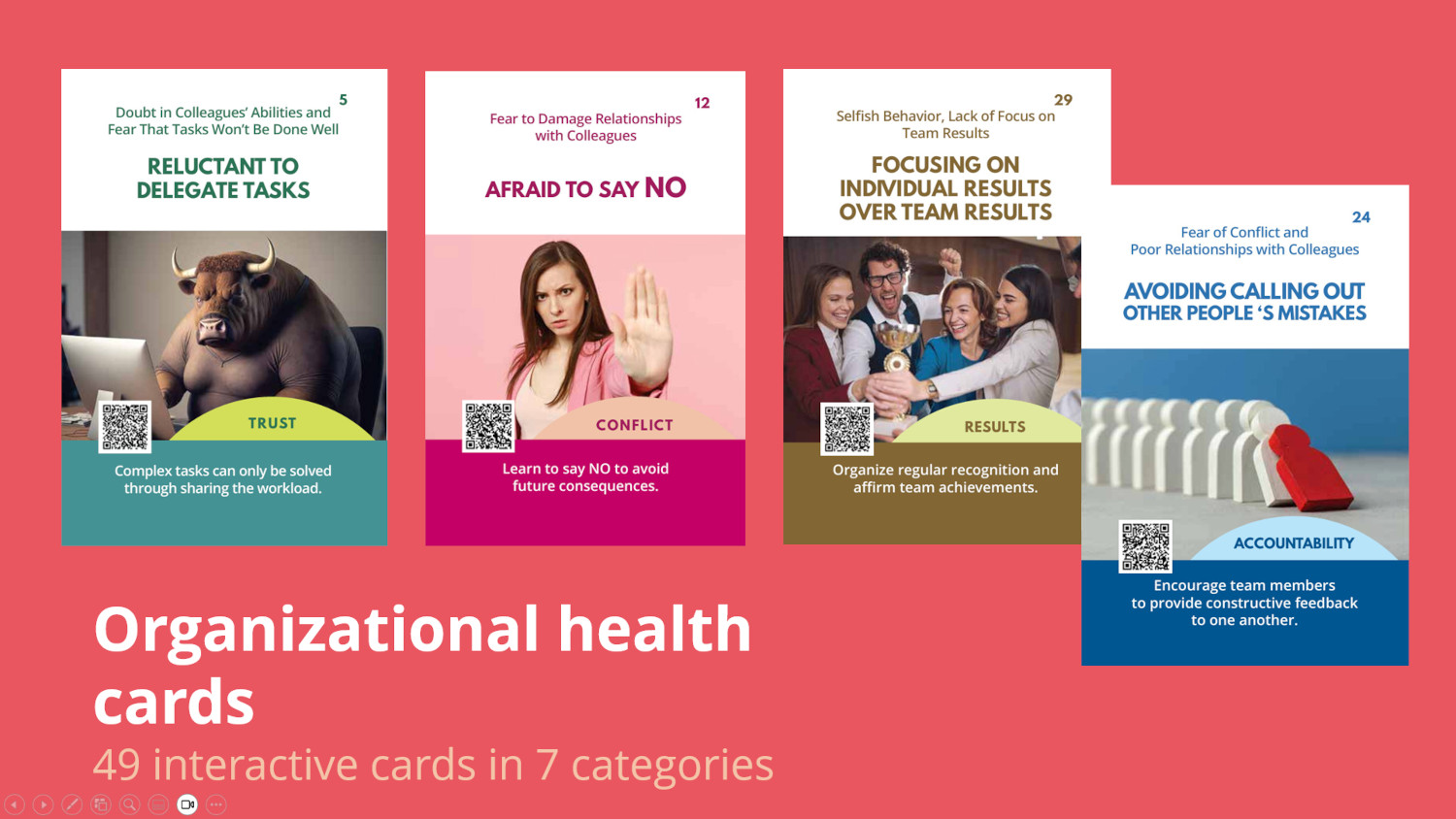
- How can you discover the root causes of these challenges and successfully solve them using our visual interactive “team effectiveness” cards?
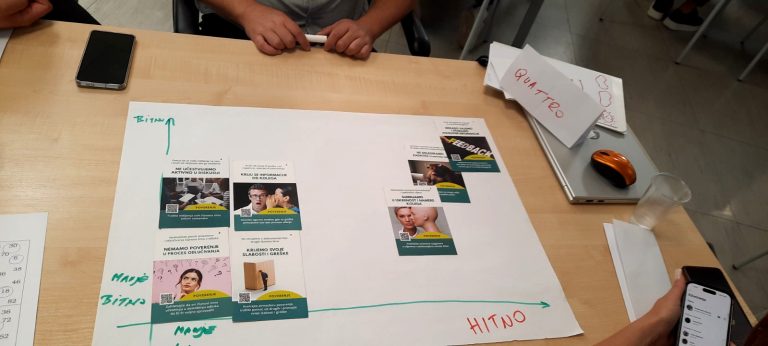
By placing the visual cards on the Urgent–Important matrix, you can quickly and easily set priorities and create an action plan.
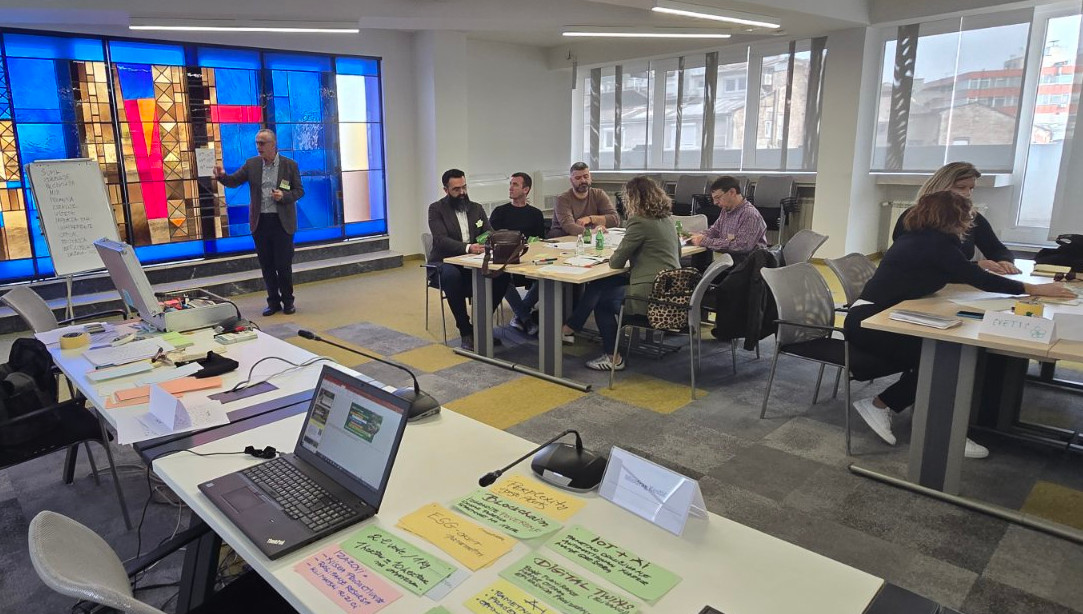
From an interactive workshop in Belgrade
Contact us to schedule a meeting
Tel: + 381 65 26 080 26
Email: poslovnaznanja@gmail.com