Poor Relationships And Unproductive Conflicts – ORGANISATIONAL CULTURE – 41
When relationships inside a team deteriorate and conflicts become unproductive, energy is spent on tension, avoidance, or personal positioning instead of collaboration, learning, and achieving shared results.
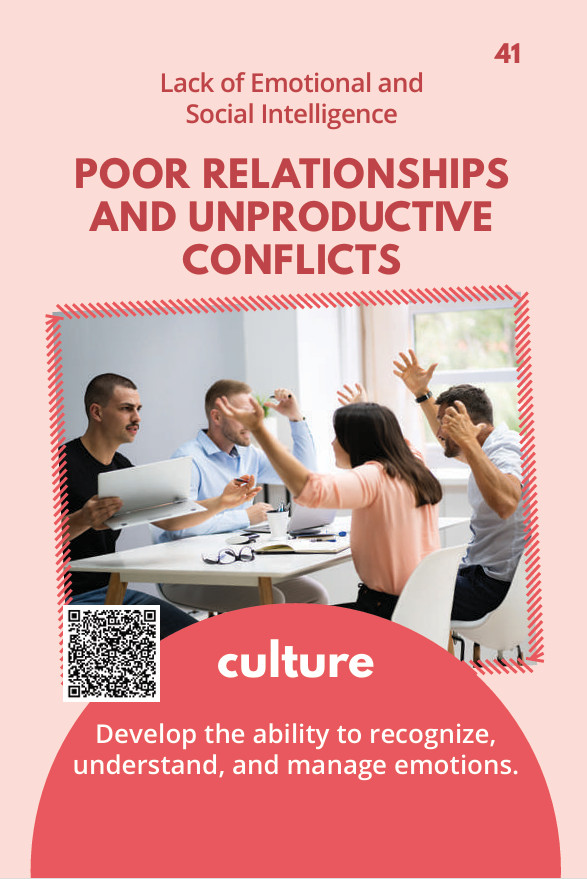
Where you’ll notice this in everyday work
Poor relationships rarely show up as open hostility. More often, they surface through subtle behaviours, unresolved tensions, and recurring conflicts that never lead to improvement.
- Conversations become guarded, formal, or emotionally distant.
- Conflicts repeat themselves without real resolution.
- People avoid certain colleagues or topics altogether.
- Meetings feel tense or filled with passive-aggressive comments.
- Feedback turns personal instead of focusing on work or behaviour.
- Small issues escalate quickly because trust is already low.
Over time, teams stop addressing problems directly and instead work around each other.
Why it happens
Unproductive conflicts usually emerge when teams lack clear communication norms, psychological safety, or skills for handling disagreement constructively.
- Unresolved past conflicts: old issues were never properly addressed.
- Low trust: people assume negative intent.
- Poor communication skills: disagreement feels like attack.
- Role or goal ambiguity: tension grows around unclear expectations.
- Leadership avoidance: conflicts are ignored instead of facilitated.
When conflict is feared or mishandled, it becomes destructive instead of productive.
How it affects results
Poor relationships and unresolved conflicts slowly drain team performance and emotional energy.
- lower collaboration and information sharing,
- increased stress and emotional fatigue,
- slower decision-making,
- higher risk of burnout or turnover,
- focus shifting from results to personal defense.
How to reduce and overcome it
The goal is not to eliminate conflict, but to turn it into a constructive source of learning, clarity, and better decisions.
- Create clear communication rules: focus on behaviour and impact, not personality.
- Address issues early: small tensions are easier to resolve than big ones.
- Normalize disagreement: different opinions are expected and valued.
- Use facilitation: neutral moderation helps when emotions run high.
- Build trust intentionally: through openness, consistency, and follow-through.
Practical conflict-handling tools
1) Conflict Mapping
Visually map the issue, people involved, interests, and assumptions to separate facts from emotions.
2) SBIC Feedback Model
Structure difficult conversations around situation, behaviour, impact, and change, keeping them professional and focused.
3) Facilitated Retrospectives
Regularly reflect on what worked, what didn’t, and what should change, before tensions accumulate.
4) One-on-One Repair Conversations
Encourage direct, respectful conversations to rebuild trust after conflict.
Recommended links
Improve Your Team Heath and Effectiveness
How can your team overcome hidden obstacles that slow it down?
Take our 3-day Organizational Health Improvement Workshop
- How can you identify specific problems and challenges in teamwork, cooperation, and internal communication among employees?
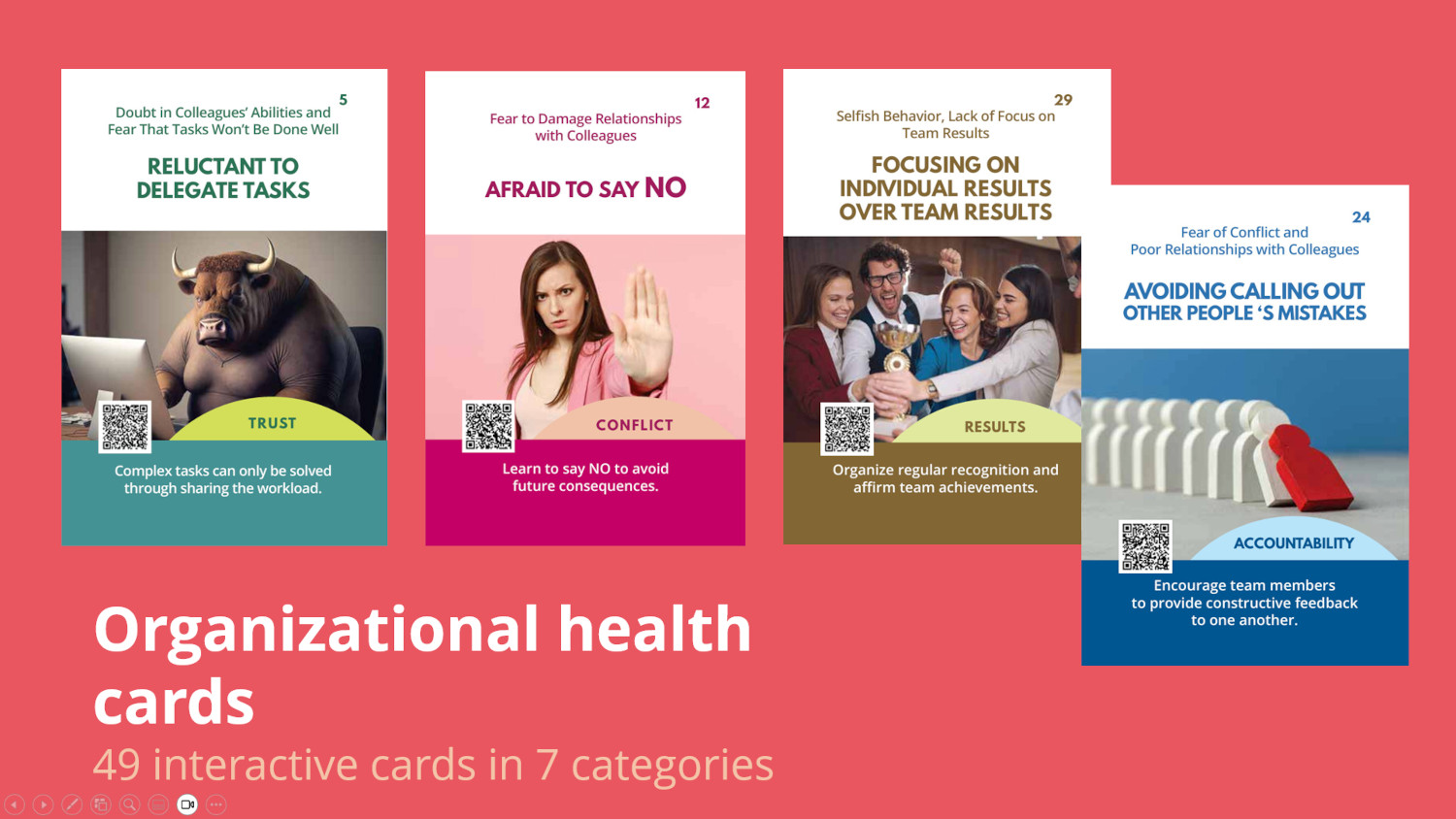
- How can you discover the root causes of these challenges and successfully solve them using our visual interactive “team effectiveness” cards?
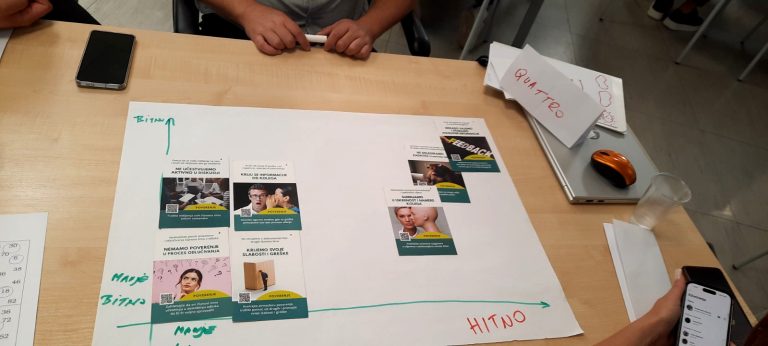
By placing the visual cards on the Urgent–Important matrix, you can quickly and easily set priorities and create an action plan.
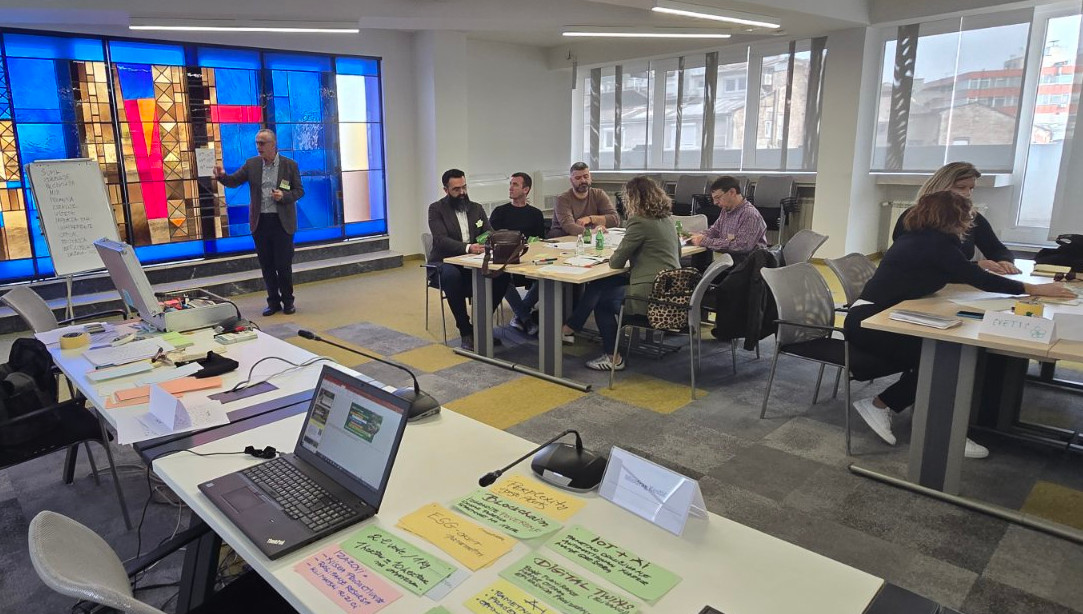
From an interactive workshop in Belgrade
Contact us to schedule a meeting
Tel: + 381 65 26 080 26
Email: poslovnaznanja@gmail.com