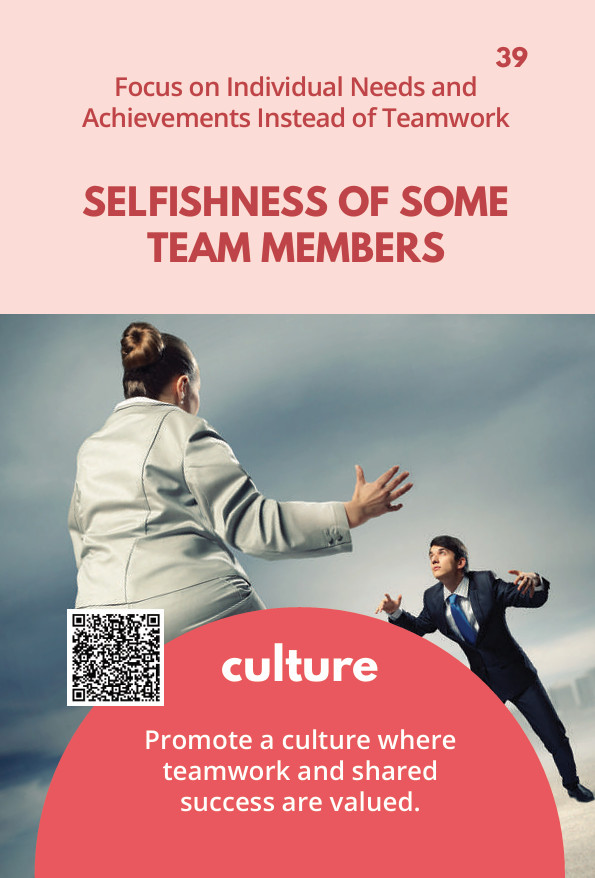
Selfishness Of Some Team Members – ORGANISATIONAL CULTURE – 39
When some team members consistently prioritize their own interests, visibility, or comfort over shared goals, collaboration weakens, trust erodes, and the sense of “we” slowly turns into “me versus them.”
Where you’ll notice this in everyday work
Selfish behaviour in teams is rarely loud or obvious. More often, it shows up through repeated patterns where certain individuals optimize for personal benefit while relying on others to absorb the cost.
- Credit-taking: some people highlight their own contribution while downplaying team effort.
- Selective availability: they are present when visibility is high, absent when work is hard or unglamorous.
- Information hoarding: knowledge is kept as power, not shared for team benefit.
- Avoiding shared responsibility: mistakes are quickly externalized or blamed on others.
- Unequal sacrifice: the same people repeatedly “step in” to save deadlines.
- Silent disengagement: others stop contributing fully because “why should I care more than they do?”
Over time, cooperation becomes transactional, and goodwill disappears from daily interactions.
Why it happens
Selfish behaviour is often a symptom of the system, not just a personal flaw. In many organizations, structures unintentionally reward individual optimisation.
- Individual incentives: bonuses, promotions, or recognition focus on solo performance.
- Low psychological safety: people protect themselves first.
- Unclear goals: team success is vague, individual success is concrete.
- Poor role clarity: boundaries are fuzzy, so people pick what benefits them.
- Leadership tolerance: selfish behaviour is ignored if results are delivered.
When the system rewards “winning alone,” collaboration becomes optional.
How it affects results
Even a small amount of selfish behaviour can significantly damage team performance over time.
- reduced trust and openness,
- lower willingness to help or share,
- burnout among reliable contributors,
- conflicts and resentment,
- decline in overall team results.
How to reduce and overcome it
The goal is not to eliminate individuality, but to rebalance the system so that collaboration becomes the most rational and rewarded choice.
- Make team outcomes visible: define and track success at team level.
- Reward collaboration: explicitly recognize helping behaviour and knowledge sharing.
- Clarify responsibilities: remove grey zones where people can hide.
- Address behaviour early: talk about patterns, not personalities.
- Model from leadership: leaders must demonstrate collective ownership.
Practical collaboration tools
1) Team Contribution Review
Once per month, review how work was shared: who contributed, who supported others, and where imbalance occurred.
2) “Credit Where It’s Due” Practice
In meetings, leaders intentionally name team contributions before individual achievements.
3) Shared Ownership Agreements
Define which outcomes are owned collectively and cannot be “opted out of.”
4) Behavioural Feedback Using Examples
Address selfish behaviour using specific situations and their impact on the team, rather than labels or assumptions.
Recommended links
Improve Your Team Heath and Effectiveness
How can your team overcome hidden obstacles that slow it down?
Take our 3-day Organizational Health Improvement Workshop
- How can you identify specific problems and challenges in teamwork, cooperation, and internal communication among employees?
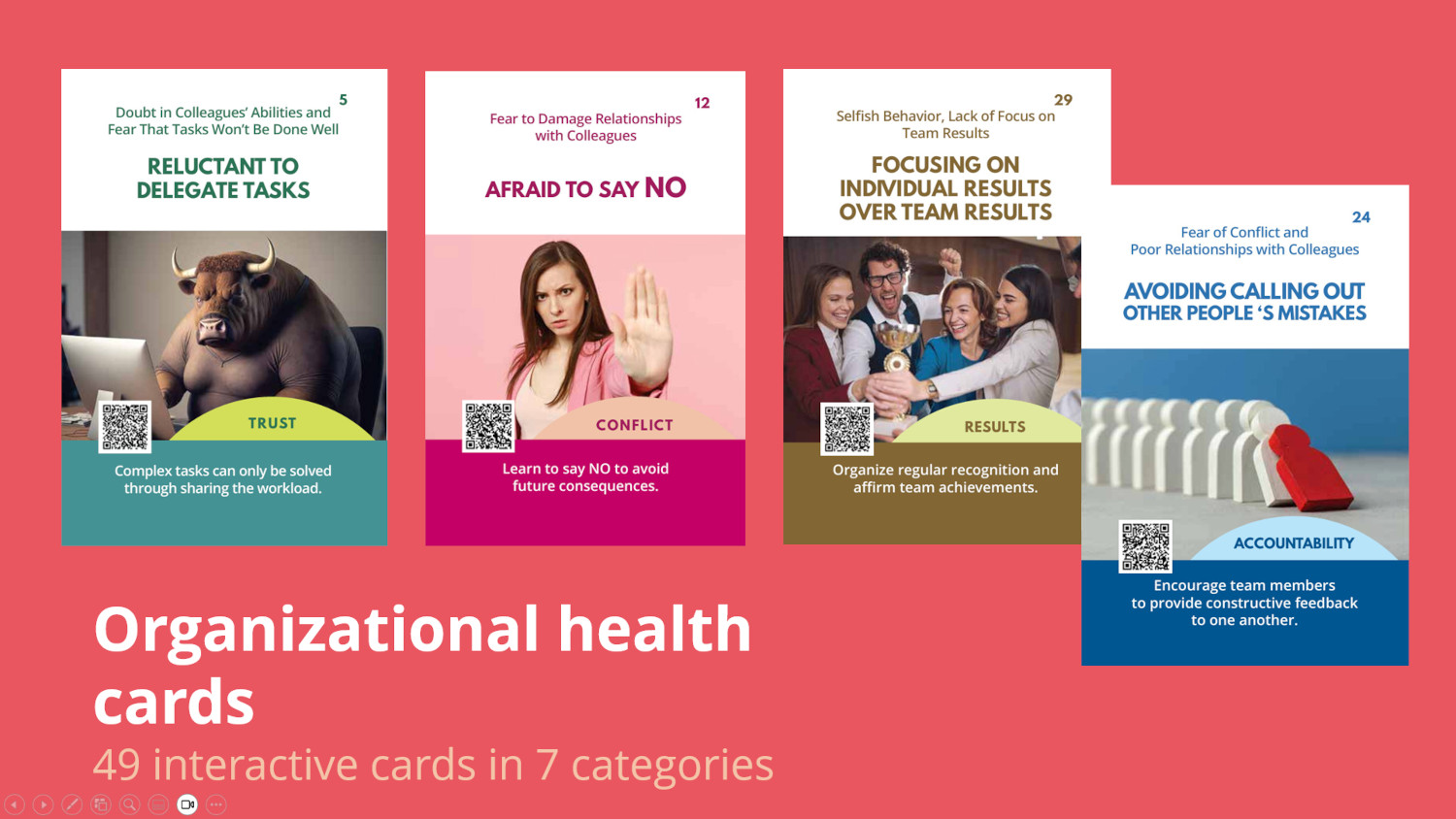
- How can you discover the root causes of these challenges and successfully solve them using our visual interactive “team effectiveness” cards?
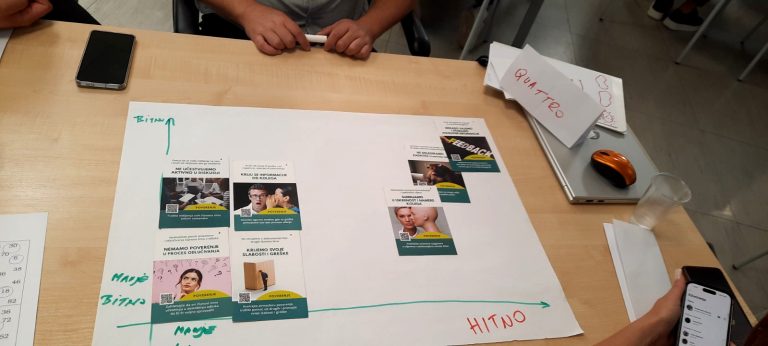
By placing the visual cards on the Urgent–Important matrix, you can quickly and easily set priorities and create an action plan.
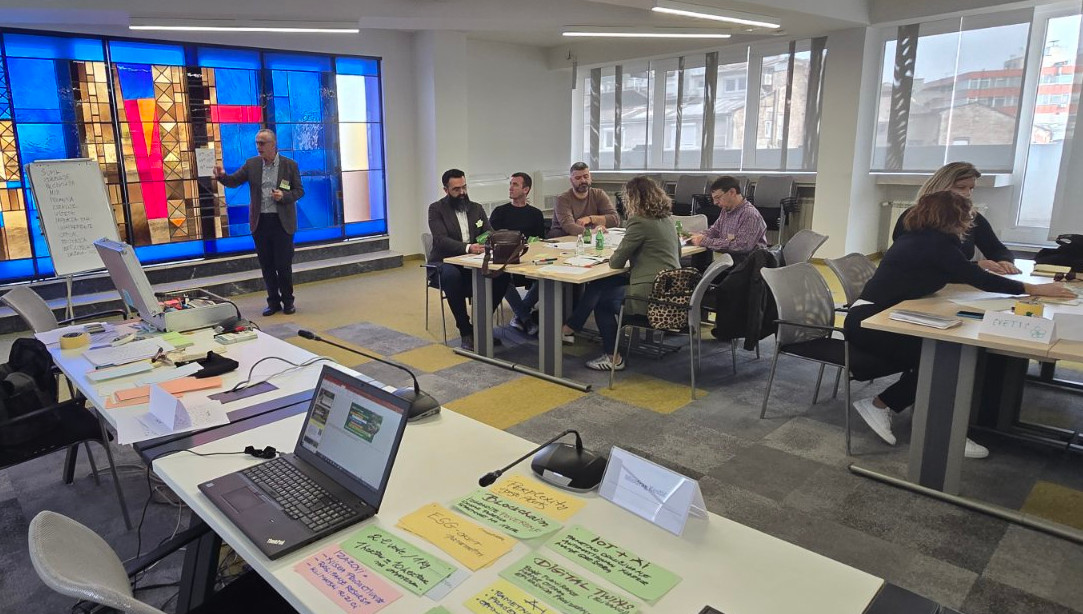
From an interactive workshop in Belgrade
Contact us to schedule a meeting
Tel: + 381 65 26 080 26
Email: poslovnaznanja@gmail.com