Lack Of Inspiring Leadership – ORGANISATIONAL CULTURE – 37
When leadership fails to inspire, teams may still function on a technical level, but motivation, ownership, and long-term commitment slowly fade, leaving people to “do their job” rather than truly engage with their work.
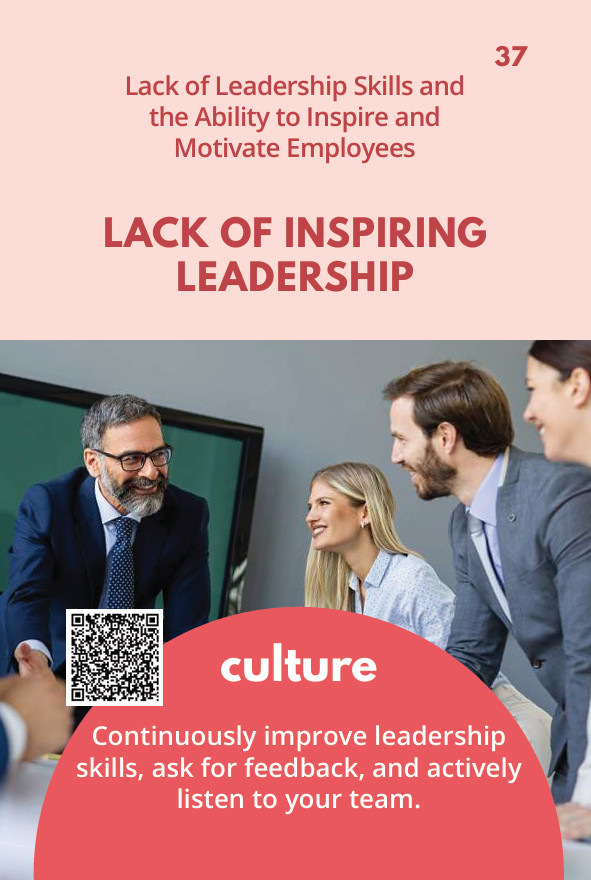
Where you’ll notice this in everyday work
A lack of inspiring leadership is often felt emotionally rather than formally. Work still gets done, but energy, initiative, and belief in direction are missing.
- Leaders focus mainly on tasks and deadlines, rarely on meaning or direction.
- Teams wait for instructions instead of taking initiative.
- Vision feels unclear or distant, disconnected from daily work.
- Meetings feel transactional, not motivating or engaging.
- People stop proposing ideas because they don’t expect support.
- High performers disengage, while others do the bare minimum.
Over time, leadership is seen as administrative, not as a source of guidance or inspiration.
Why it happens
Many leaders are promoted for technical competence, not for their ability to inspire, communicate purpose, and mobilize people around shared goals.
- Pressure and overload: leaders focus on delivery, not people.
- Lack of leadership development: inspiration is never practiced or expected.
- Fear of vulnerability: leaders avoid showing uncertainty or passion.
- Short-term focus: vision is sacrificed for immediate results.
- No feedback: leaders rarely hear how their style affects motivation.
Without support and reflection, leadership slowly becomes purely operational.
How it affects results
Lack of inspiring leadership does not immediately destroy performance, but it steadily erodes engagement, innovation, and long-term sustainability.
- lower motivation and commitment,
- reduced initiative and ownership,
- difficulty retaining talented people,
- weaker innovation and adaptability,
- dependence on control rather than trust.
How to reduce and overcome it
Inspiring leadership is not about charisma, but about clarity, consistency, and genuine connection with people.
- Clarify purpose: connect daily work to a bigger picture.
- Communicate vision regularly: repeat direction, not just tasks.
- Show personal commitment: leaders model energy and belief.
- Empower decision-making: give teams space to own outcomes.
- Seek feedback: ask how leadership style impacts motivation.
Practical leadership tools
1) Purpose Check-In
Start team meetings by briefly linking current priorities to the broader mission or goals.
2) Leadership Storytelling
Share real stories about challenges, lessons learned, and successes to make leadership more human and relatable.
3) One-on-One Meaning Conversations
In regular 1:1s, discuss not only tasks, but what motivates and energizes each team member.
4) Leadership Feedback Loop
Use short, anonymous feedback or facilitated sessions to understand how leadership behaviour is perceived.
Recommended links

Improve Your Team Heath and Effectiveness
How can your team overcome hidden obstacles that slow it down?
Take our 3-day Organizational Health Improvement Workshop
- How can you identify specific problems and challenges in teamwork, cooperation, and internal communication among employees?
- How can you discover the root causes of these challenges and successfully solve them using our visual interactive “team effectiveness” cards?

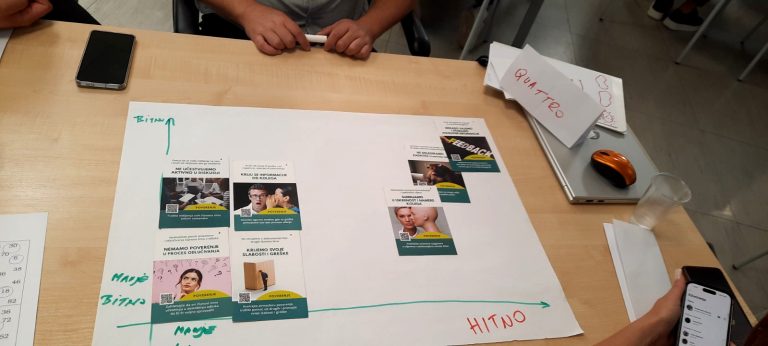
By placing the visual cards on the Urgent–Important matrix, you can quickly and easily set priorities and create an action plan.
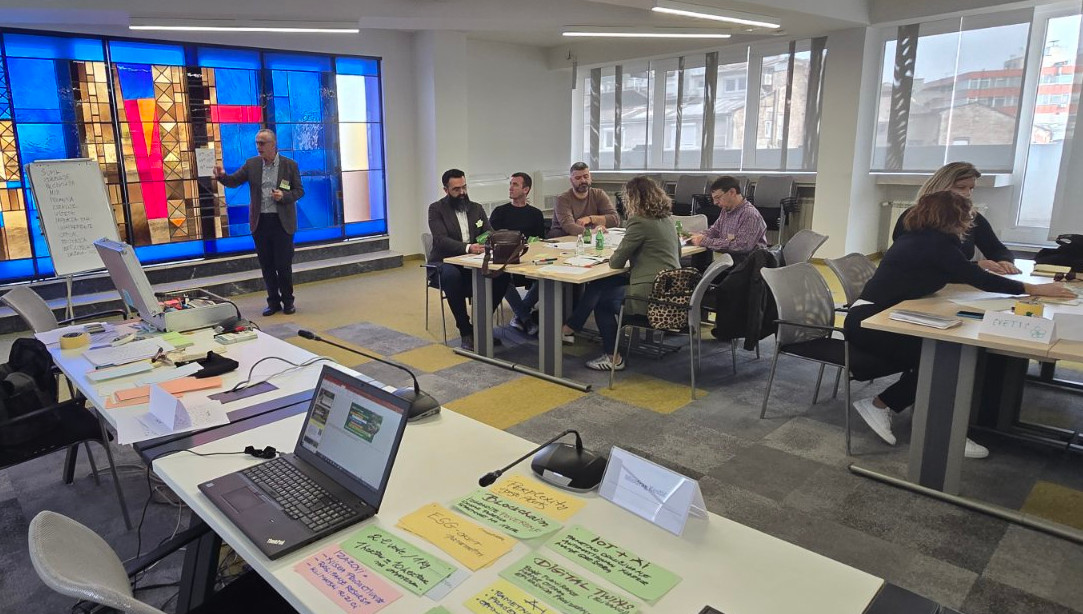
From an interactive workshop in Belgrade
Contact us to schedule a meeting
Tel: + 381 65 26 080 26
Email: poslovnaznanja@gmail.com