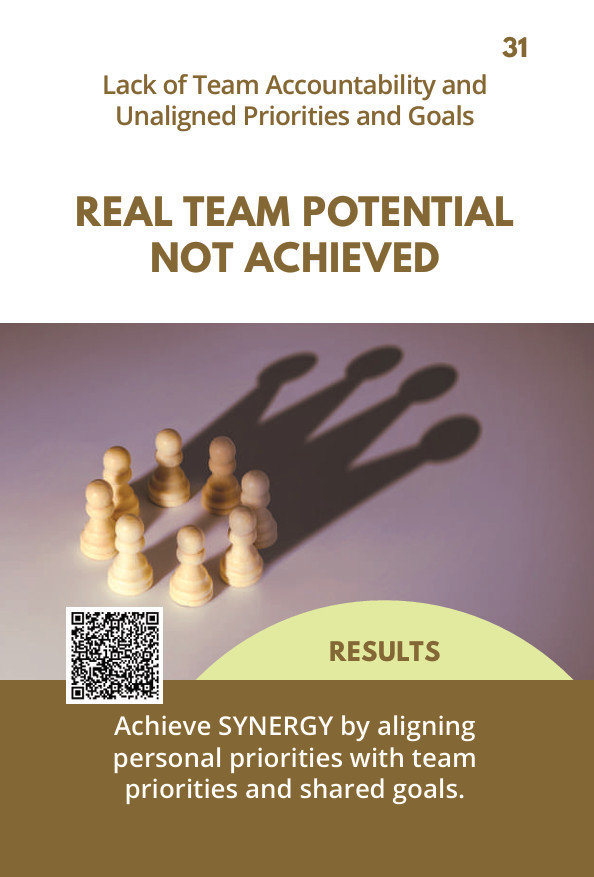
Real Team Potential Not Achieved – RESULTS – 31
When a team consistently delivers acceptable results but never reaches its full potential, hidden barriers in collaboration, trust, and alignment are usually holding it back.
What this looks like in everyday work
Teams that do not reach their full potential often appear functional and productive, yet something feels missing. Results are delivered, but energy, engagement, and impact remain below what the team is capable of.
- Work gets done, but innovation is limited.
- Meetings feel routine, not energizing or creative.
- People contribute, but rarely go beyond their formal roles.
- Opportunities are missed because ideas are not fully explored.
- Performance plateaus instead of improving over time.
The team operates below its true capacity, often without clearly knowing why.
Why it happens
Unused team potential is usually the result of several small but persistent issues rather than one major problem.
- Lack of trust: people hold back ideas or concerns.
- Weak alignment: individual efforts don’t fully connect.
- Unclear goals: teams don’t know what “great” looks like.
- Low psychological safety: risks feel unsafe.
- Comfort zones: acceptable results reduce urgency to improve.
When these barriers remain unaddressed, teams settle for “good enough.”
How it affects results
Failing to unlock full team potential has long-term consequences that go beyond immediate performance.
- missed opportunities for innovation and growth,
- lower engagement and motivation,
- inefficient use of skills and expertise,
- declining competitive advantage,
- frustration among high performers.
How to reduce and overcome it
Unlocking team potential requires intentional effort, honest reflection, and consistent leadership support.
- Clarify shared ambition: define what “great performance” means.
- Encourage open contribution: create space for ideas and debate.
- Strengthen trust: normalize vulnerability and feedback.
- Align roles and goals: connect individual strengths to team needs.
- Challenge comfort: raise expectations gradually.
Practical tools (explained)
1) Team potential assessment
Identify gaps between current performance and potential performance.
How to use it: ask “What are we capable of, but not doing yet?”
2) Strengths mapping
Make individual strengths visible and intentionally use them.
How to use it: map strengths to upcoming challenges.
3) Stretch goals
Set ambitious but realistic goals that push the team forward.
How to use it: review progress frequently and adjust support.
4) Reflection loops
Regularly reflect on what is limiting team performance.
How to use it: dedicate time in retrospectives to growth topics.
Recommended links
Improve Your Team Heath and Effectiveness
How can your team overcome hidden obstacles that slow it down?
Take our 3-day Organizational Health Improvement Workshop
- How can you identify specific problems and challenges in teamwork, cooperation, and internal communication among employees?
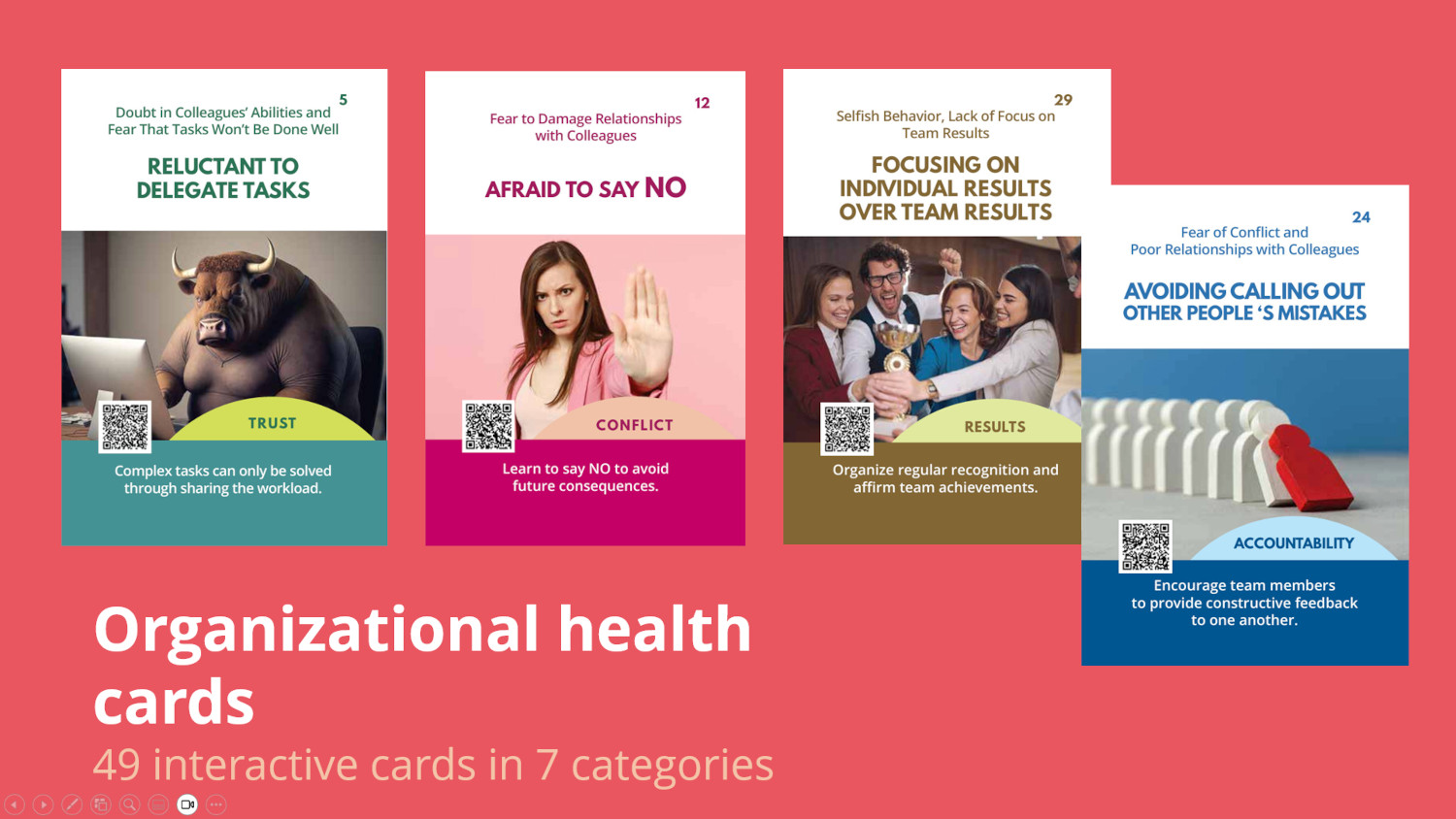
- How can you discover the root causes of these challenges and successfully solve them using our visual interactive “team effectiveness” cards?
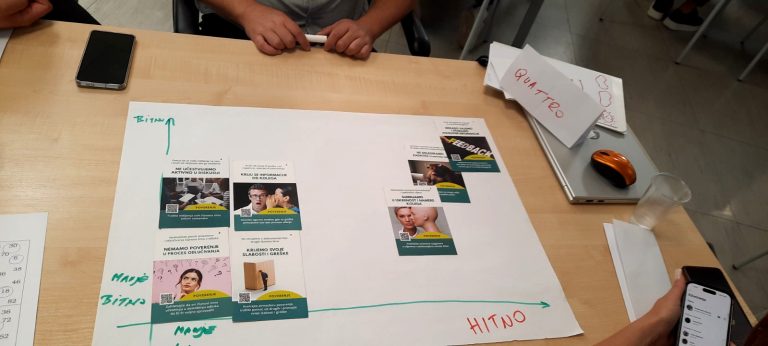
By placing the visual cards on the Urgent–Important matrix, you can quickly and easily set priorities and create an action plan.
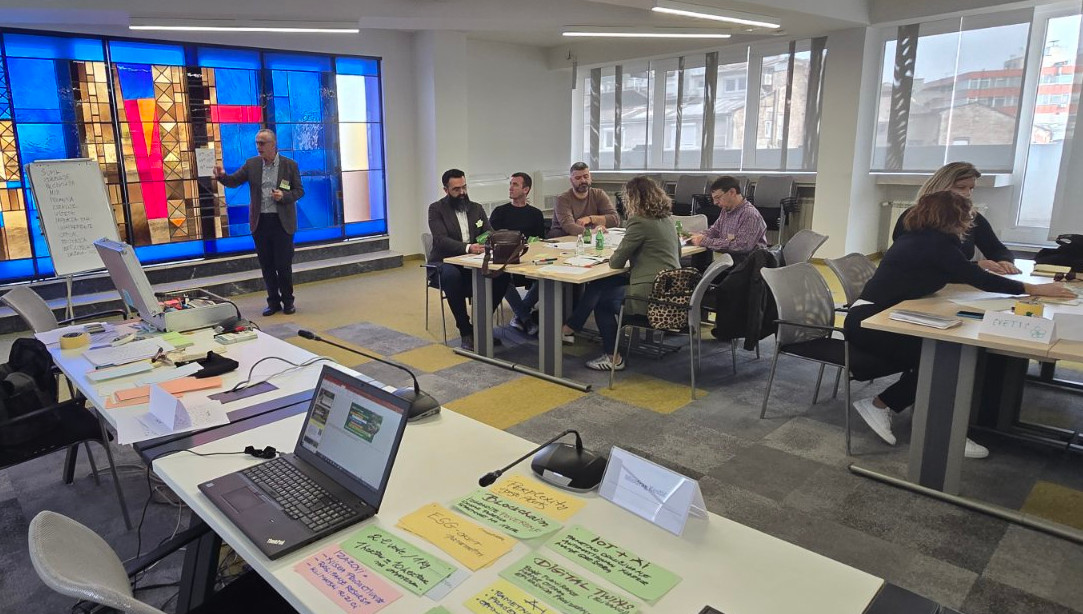
From an interactive workshop in Belgrade
Contact us to schedule a meeting
Tel: + 381 65 26 080 26
Email: poslovnaznanja@gmail.com