Not Admitting Failures To The Team – RESULTS – 30
When failures are hidden instead of shared, teams lose the chance to learn together, improve their ways of working, and prevent the same mistakes from happening again.
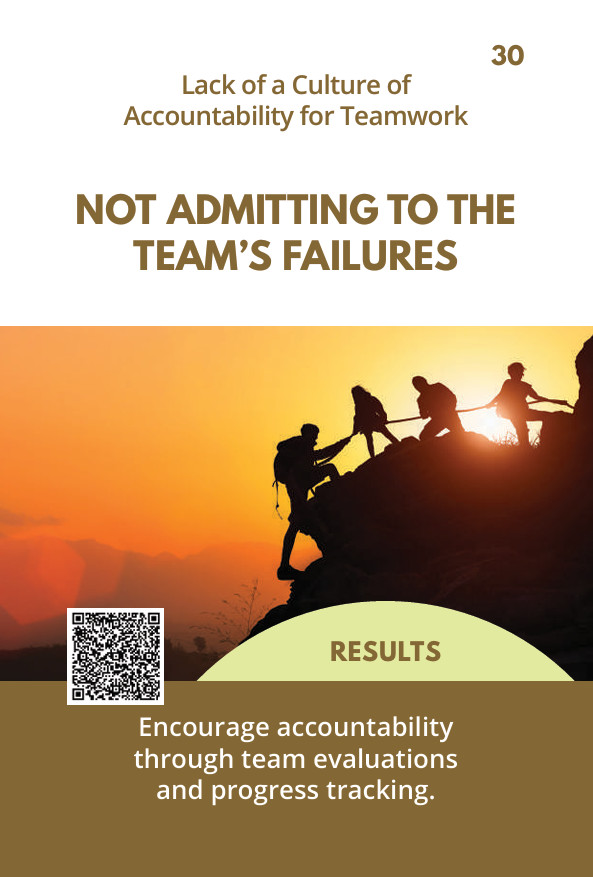
What this looks like in everyday work
In teams where failures are not openly admitted, problems often surface indirectly. Issues are felt, delays occur, or quality drops, but the real reasons remain unspoken.
- Mistakes are quietly fixed without explaining what went wrong.
- Problems are minimized or explained away as external issues.
- Lessons are learned individually, not shared with the team.
- Success is highlighted, while failures are ignored.
- The same errors repeat in slightly different forms.
Over time, the team appears functional on the surface, but learning slows down.
Why it happens
Not admitting failures is usually driven by fear and culture, not by a lack of responsibility.
- Fear of blame: failures are associated with punishment.
- Reputation concerns: people don’t want to appear incompetent.
- Perfection expectations: mistakes are seen as weakness.
- Leadership signals: leaders don’t openly admit their own mistakes.
- Lack of safety: honesty feels risky rather than constructive.
When failure feels unsafe, silence becomes the default response.
How it affects results
Teams that hide failures limit their ability to improve, even when effort and motivation remain high.
- repeated mistakes and inefficiencies,
- slower learning and adaptation,
- reduced trust within the team,
- missed opportunities for improvement,
- lower long-term performance.
How to reduce and overcome it
Admitting failures should be seen as a strength, not a weakness. It enables learning, transparency, and continuous improvement.
- Normalize failure discussions: make them part of regular meetings.
- Separate failure from blame: focus on causes, not people.
- Lead by example: leaders share their own mistakes first.
- Capture lessons learned: document insights for future use.
- Reward honesty: recognize openness and learning behavior.
Practical tools (explained)
1) Failure review sessions
Short, structured discussions focused on understanding what didn’t work.
How to use it: discuss failures shortly after they occur.
2) Learning log
A shared place where teams capture insights from mistakes.
How to use it: write one key lesson per failure.
3) Leader vulnerability practice
Leaders intentionally share failures to set the tone.
How to use it: leaders start reviews with their own examples.
4) Retrospective focus shift
Shift retrospectives from “what went well” to “what we learned.”
How to use it: end meetings with one learning takeaway.
Recommended links
Improve Your Team Heath and Effectiveness
How can your team overcome hidden obstacles that slow it down?
Take our 3-day Organizational Health Improvement Workshop
- How can you identify specific problems and challenges in teamwork, cooperation, and internal communication among employees?
- How can you discover the root causes of these challenges and successfully solve them using our visual interactive “team effectiveness” cards?

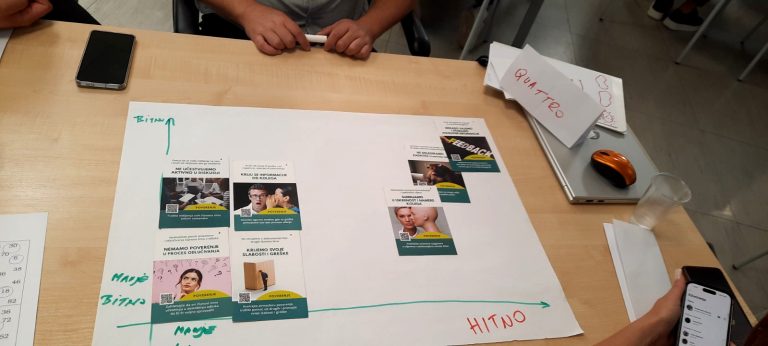
By placing the visual cards on the Urgent–Important matrix, you can quickly and easily set priorities and create an action plan.
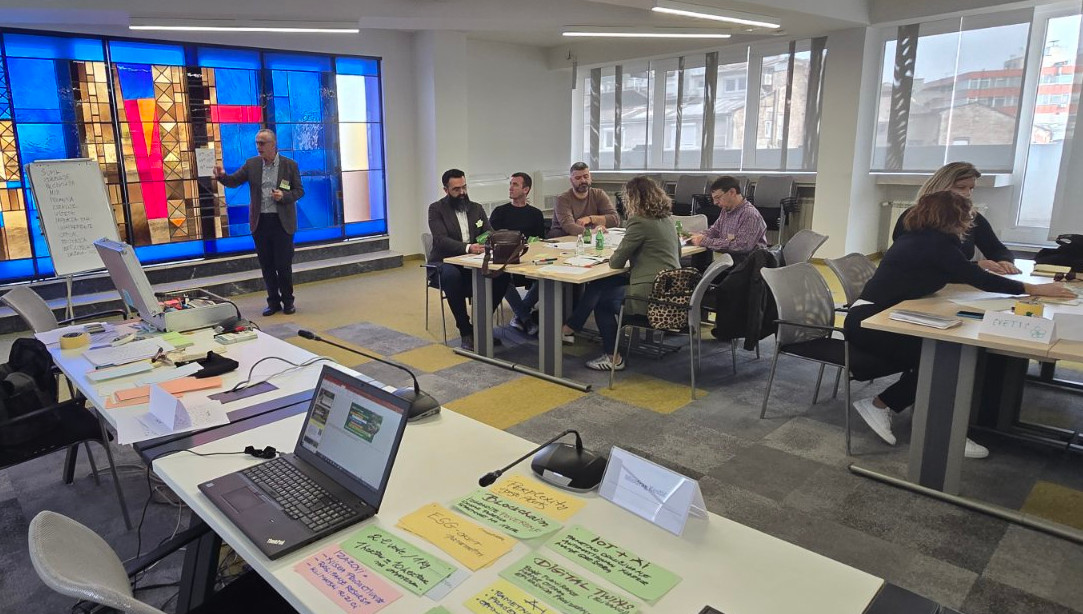
From an interactive workshop in Belgrade
Contact us to schedule a meeting
Tel: + 381 65 26 080 26
Email: poslovnaznanja@gmail.com