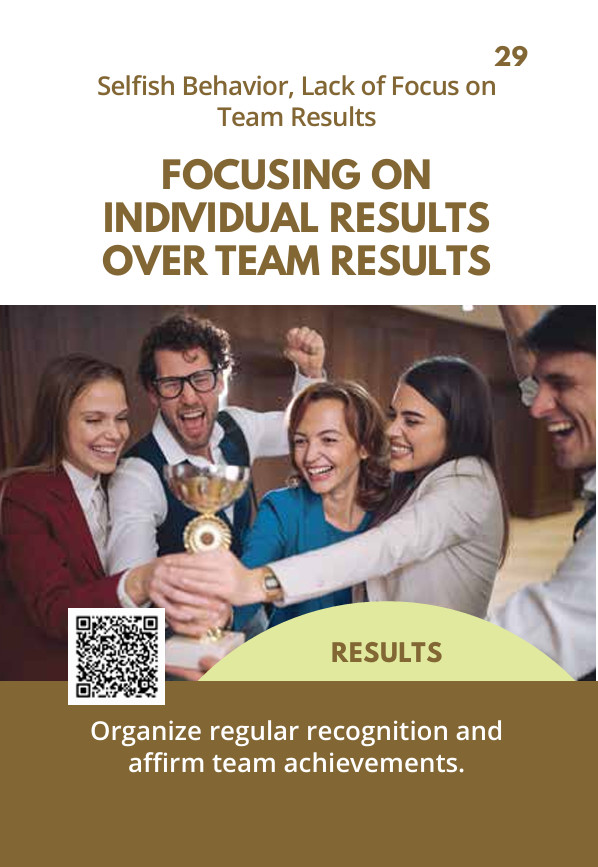
Focusing On Individual Results Over Team Results – RESULTS – 29
When individual success is valued more than team success, cooperation weakens, knowledge is withheld, and overall results rarely reach their full potential.
What this looks like in everyday work
In teams where individual performance is emphasized above team results, people naturally focus on protecting their own tasks, achievements, and visibility rather than contributing to shared success.
- People optimize their own work even when it slows the team.
- Information is shared selectively, only when it benefits personal goals.
- Collaboration feels transactional rather than supportive.
- Success stories focus on individuals, not collective effort.
- Team results suffer, even though some individuals perform well.
Over time, the team becomes a group of high-effort individuals, but not a high-performing unit.
Why it happens
This pattern often emerges from how success is defined, measured, and rewarded within the organization.
- Individual KPIs dominate: team goals are secondary or symbolic.
- Rewards favor visibility: quiet contributors are overlooked.
- Competition is encouraged: collaboration is not explicitly valued.
- Leadership messaging: praises individuals more than teams.
- Unclear shared goals: people don’t see how their work connects.
When systems reward individual success, team behavior follows naturally.
How it affects results
While individual performance may look strong on paper, overall results often fall short of what the team could achieve together.
- reduced collaboration and trust,
- duplication of work and inefficiencies,
- missed opportunities for synergy,
- lower team morale over time,
- weaker long-term performance.
How to reduce and overcome it
Shifting focus from individual to team results does not remove accountability. It aligns personal success with shared outcomes.
- Clarify team goals: make shared outcomes visible and meaningful.
- Balance metrics: combine individual and team-based measures.
- Reward collaboration: recognize behaviors that support others.
- Highlight team wins: talk about collective success consistently.
- Connect roles: show how individual work contributes to the whole.
Practical tools (explained)
1) Team result mapping
Visually map how individual tasks contribute to team outcomes.
How to use it: review this map regularly in team meetings.
2) Shared success metrics
Define a small number of indicators that only improve through collaboration.
How to use it: track and discuss them openly.
3) Team retrospectives
Reflect on what helped or blocked team success, not individual performance.
How to use it: ask “What helped us succeed together?”
4) Recognition reframe
Publicly recognize collaborative behaviors and shared achievements.
How to use it: name team contributions, not just star performers.
Recommended links
Improve Your Team Heath and Effectiveness
How can your team overcome hidden obstacles that slow it down?
Take our 3-day Organizational Health Improvement Workshop
- How can you identify specific problems and challenges in teamwork, cooperation, and internal communication among employees?
- How can you discover the root causes of these challenges and successfully solve them using our visual interactive “team effectiveness” cards?
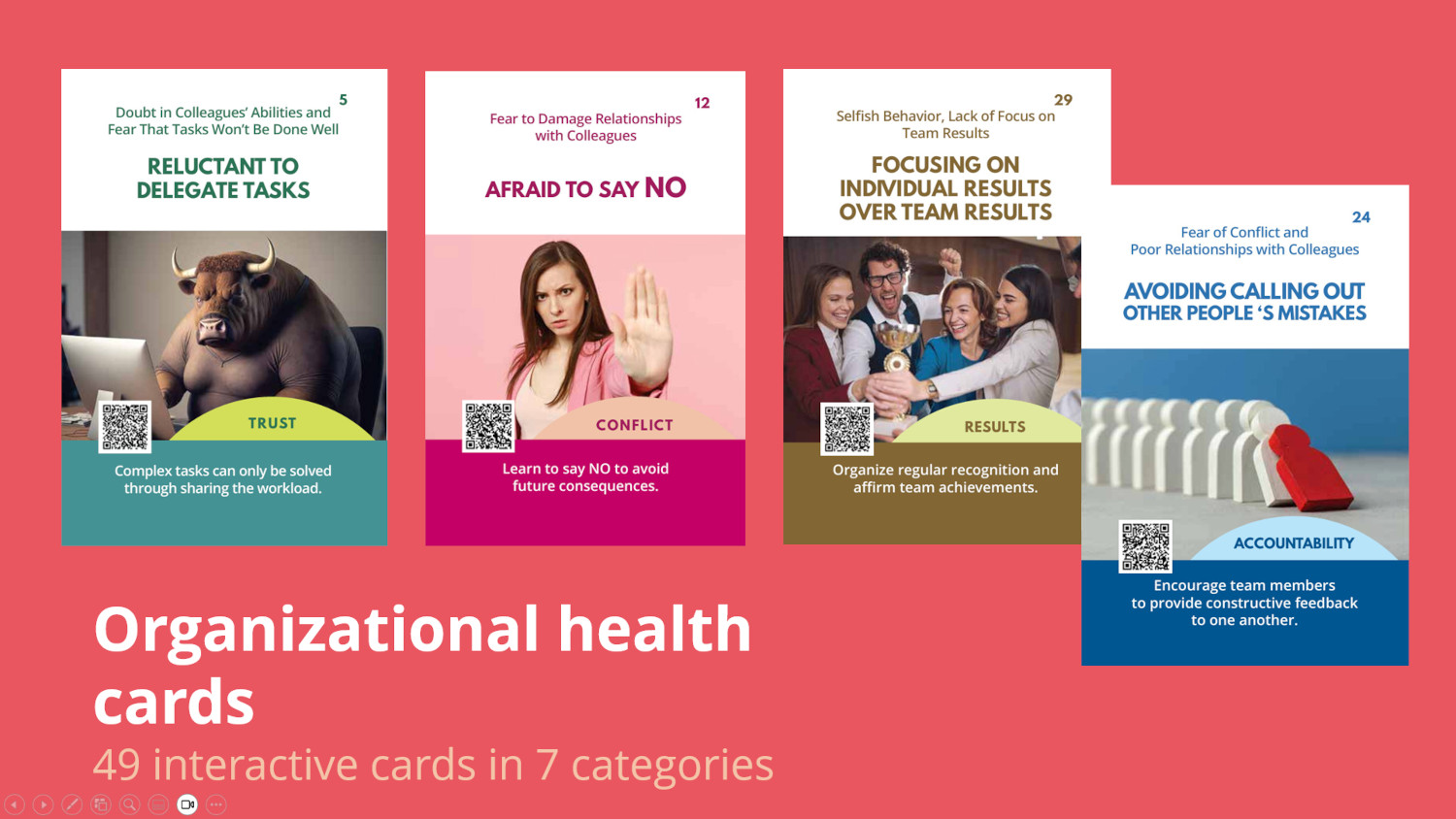
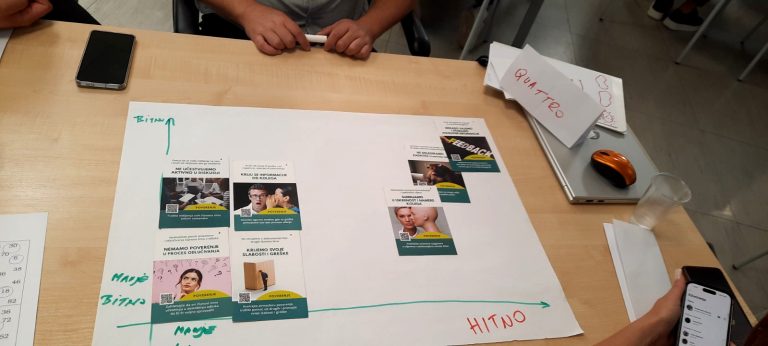
By placing the visual cards on the Urgent–Important matrix, you can quickly and easily set priorities and create an action plan.
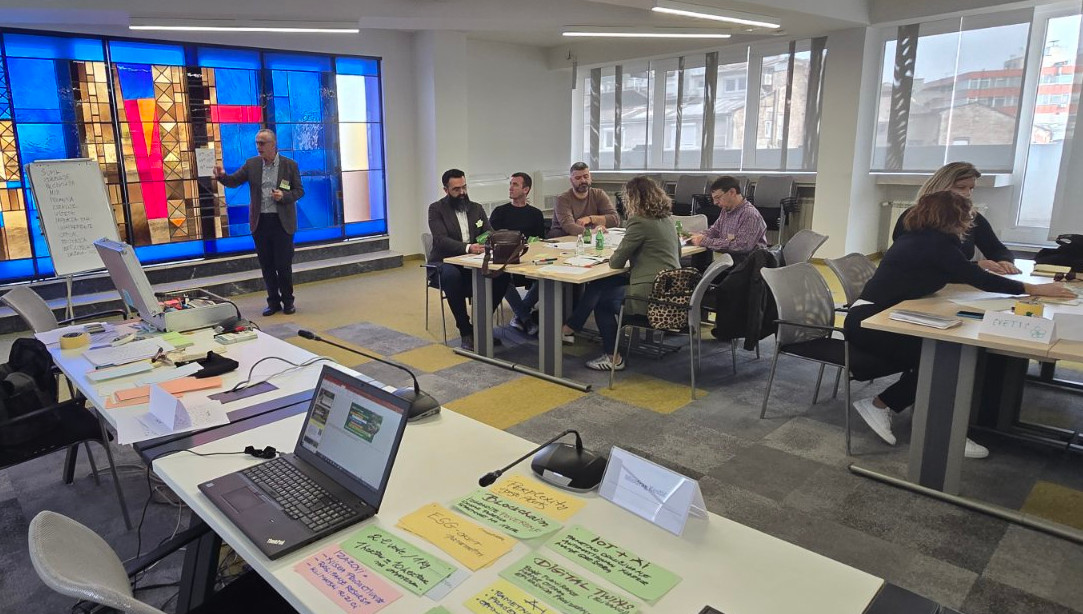
From an interactive workshop in Belgrade
Contact us to schedule a meeting
Tel: + 381 65 26 080 26
Email: poslovnaznanja@gmail.com