Procedures Are Not Followed – ACCOUNTABILITY – 27
When procedures exist but are not followed, accountability weakens, quality becomes inconsistent, and teams rely on individual judgment instead of shared standards.
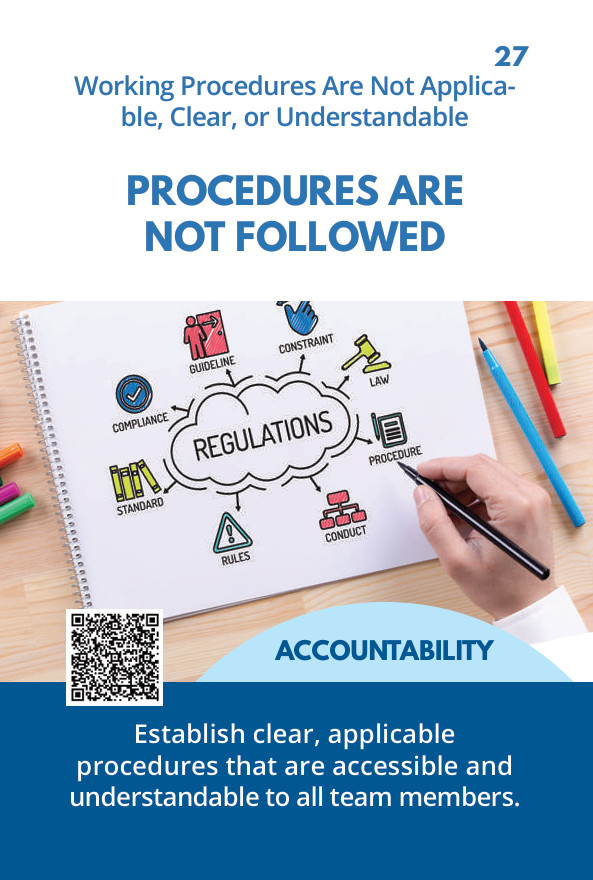
What this looks like in everyday work
In teams where procedures are not followed, rules technically exist, but daily work depends on individual habits and personal judgment. People decide for themselves when procedures matter and when they don’t.
- Processes are skipped when things get busy.
- Everyone works “their own way” despite documented standards.
- New employees get mixed messages about how things are really done.
- Errors and rework increase because steps are missed.
- Responsibility becomes blurred when outcomes differ.
Over time, procedures lose credibility and are seen as optional.
Why it happens
Procedures are often ignored not because people are careless, but because the system around them makes compliance difficult or unclear.
- Procedures are outdated: they don’t reflect real work.
- Too complex: people don’t understand or remember them.
- Lack of ownership: no one enforces or maintains them.
- Time pressure: shortcuts seem faster in the moment.
- No consequences: ignoring procedures has no impact.
When procedures don’t support work, people naturally work around them.
How it affects results
Ignored procedures slowly undermine reliability, quality, and trust.
- inconsistent results and quality variation,
- higher error rates and rework,
- confusion about accountability,
- slower onboarding of new team members,
- loss of confidence in “how we work”.
How to reduce and overcome it
Procedures should make work easier, not harder. When people see value in them, compliance follows naturally.
- Simplify procedures: remove unnecessary steps.
- Involve the team: co-create procedures with users.
- Clarify purpose: explain why each step matters.
- Make them visible: easy access during daily work.
- Reinforce consistently: same rules for everyone.
Practical tools (explained)
1) Procedure reality check
Compare written procedures with how work is actually done.
How to use it: ask teams to walk through real cases step by step.
2) One-page process summaries
Reduce long documents to short, visual guides.
How to use it: focus on critical steps and decision points.
3) Procedure ownership role
Assign clear responsibility for maintaining and updating procedures.
How to use it: one owner per process, not per document.
4) Consistent reinforcement
Apply procedures equally, regardless of seniority or urgency.
How to use it: address deviations immediately and constructively.
Recommended links
Improve Your Team Heath and Effectiveness
How can your team overcome hidden obstacles that slow it down?
Take our 3-day Organizational Health Improvement Workshop
- How can you identify specific problems and challenges in teamwork, cooperation, and internal communication among employees?
- How can you discover the root causes of these challenges and successfully solve them using our visual interactive “team effectiveness” cards?

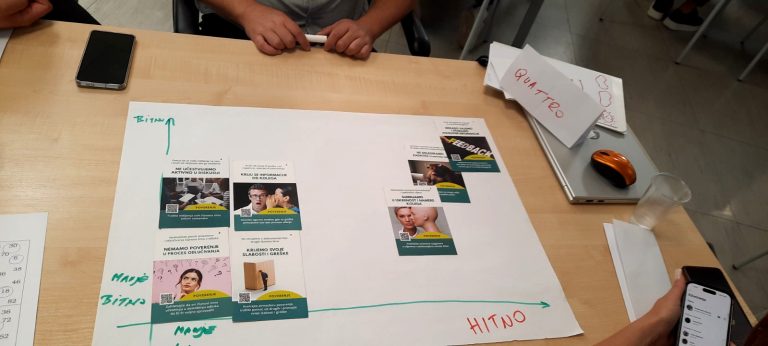
By placing the visual cards on the Urgent–Important matrix, you can quickly and easily set priorities and create an action plan.
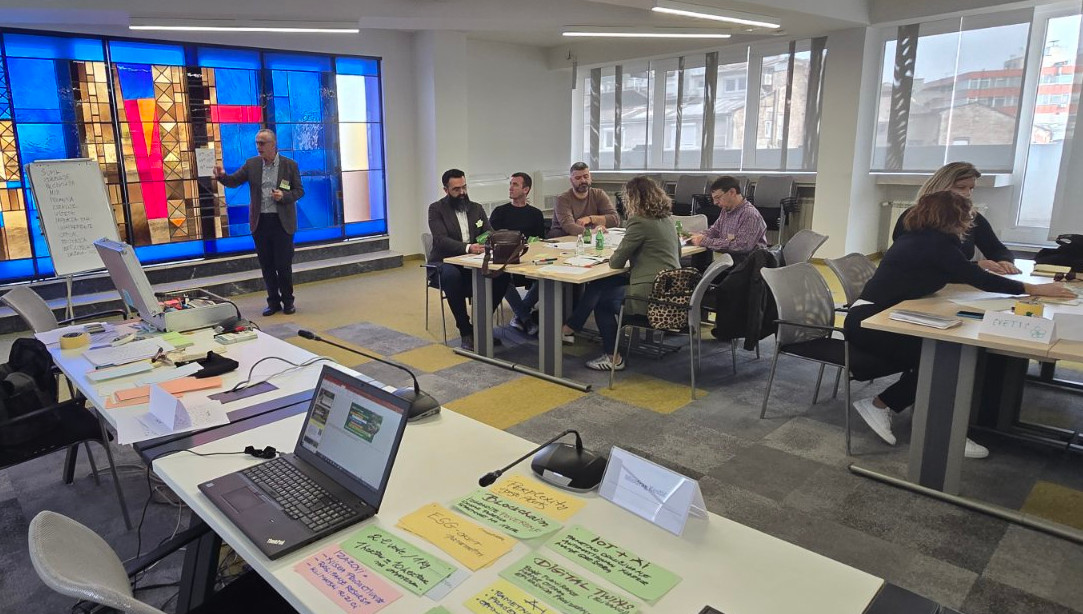
From an interactive workshop in Belgrade
Contact us to schedule a meeting
Tel: + 381 65 26 080 26
Email: poslovnaznanja@gmail.com