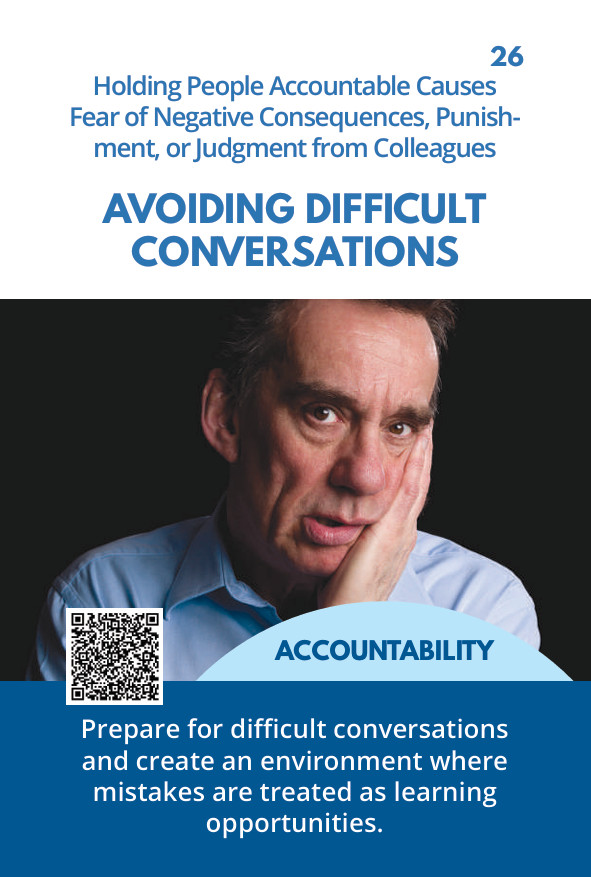
Avoiding Difficult Conversations – ACCOUNTABILITY – 26
When difficult conversations are avoided, problems don’t disappear — they grow, resurface later, and quietly undermine accountability.
What this looks like in everyday work
Avoiding difficult conversations is one of the most common — and costly — behaviors in teams. Issues are noticed, felt, and discussed informally, but rarely addressed directly.
- Performance issues are hinted at, not clearly discussed.
- Tensions remain unresolved and slowly escalate.
- Feedback is delayed until frustration builds up.
- Managers “wait and hope” problems will resolve themselves.
- Colleagues talk around issues instead of addressing them.
Silence creates temporary comfort — but long-term damage.
Why it happens
Difficult conversations trigger emotional discomfort. People avoid them not because they don’t care, but because they fear negative consequences.
- Fear of conflict: concerns about emotional reactions.
- Fear of damaging relationships: especially in close teams.
- Lack of skills: uncertainty about how to start the conversation.
- Hierarchical discomfort: speaking up to senior colleagues feels risky.
- Past bad experiences: conversations that escalated or backfired.
Avoidance feels safer than honesty — until the cost becomes too high.
How it affects results
When difficult conversations are postponed or avoided, accountability weakens and problems persist.
- repeated mistakes and unresolved issues,
- declining performance and unclear expectations,
- passive-aggressive communication,
- loss of trust in leadership,
- higher stress and frustration.
How to reduce and overcome it
Difficult conversations become easier when they are normalized, structured, and focused on improvement.
- Prepare, don’t avoid: clarify the issue before speaking.
- Address issues early: small conversations are easier than big ones.
- Separate facts from emotions: focus on observable behavior.
- Make it about work: not about personal traits.
- Practice regularly: confidence grows with repetition.
Practical tools (explained)
1) Conversation framing
Start difficult conversations by explaining intent: improvement, clarity, or alignment.
How to use it: open with “I want us to work better together…”
2) Facts-impact-future structure
Describe what happened, why it matters, and what should change.
How to use it: keep each part short and factual.
3) Scheduled feedback moments
Regular feedback reduces emotional weight.
How to use it: monthly 1-on-1s focused on improvement.
4) Leader modeling
Leaders openly address issues and invite feedback.
How to use it: leaders speak first in difficult situations.
Recommended links
Improve Your Team Heath and Effectiveness
How can your team overcome hidden obstacles that slow it down?
Take our 3-day Organizational Health Improvement Workshop
- How can you identify specific problems and challenges in teamwork, cooperation, and internal communication among employees?
- How can you discover the root causes of these challenges and successfully solve them using our visual interactive “team effectiveness” cards?
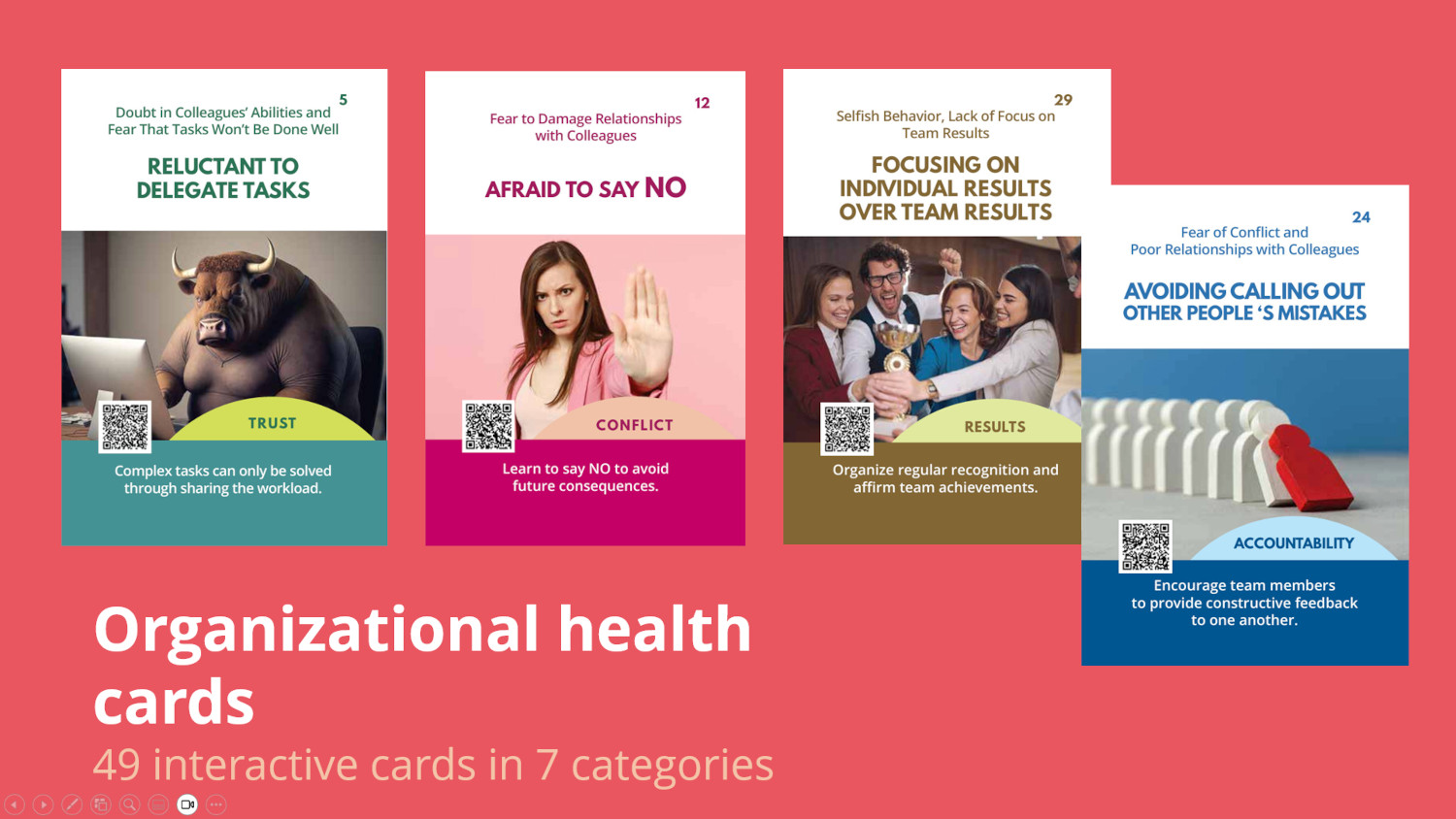
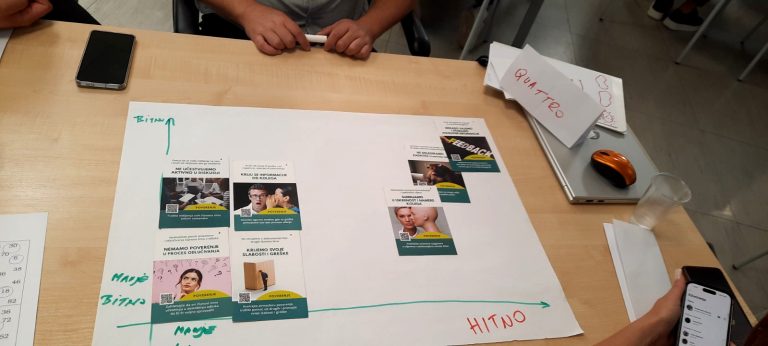
By placing the visual cards on the Urgent–Important matrix, you can quickly and easily set priorities and create an action plan.
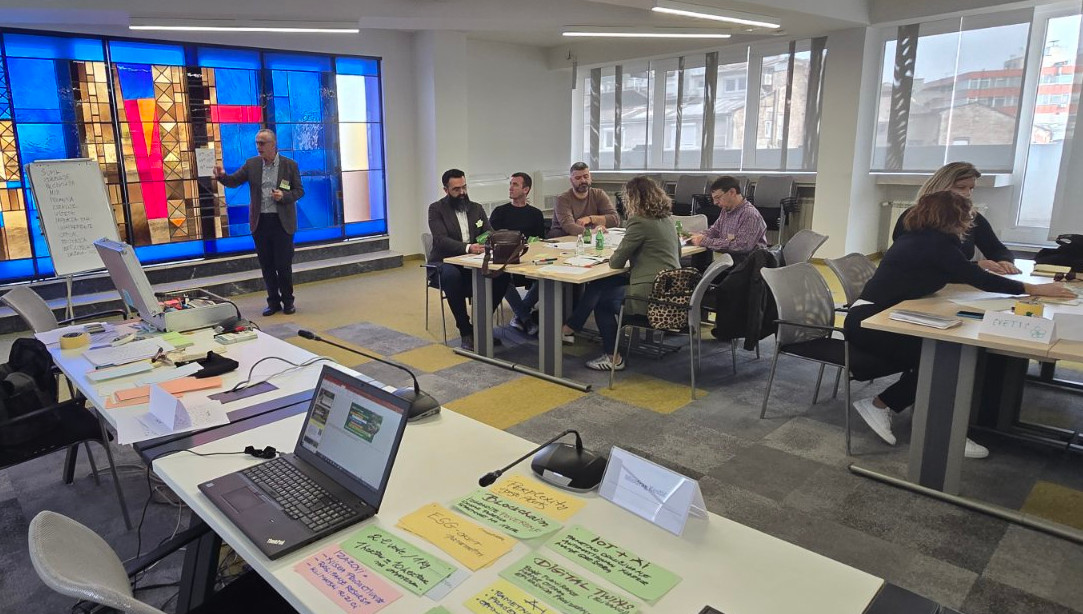
From an interactive workshop in Belgrade
Contact us to schedule a meeting
Tel: + 381 65 26 080 26
Email: poslovnaznanja@gmail.com