We Often Put the Blame on Others – NO ACCOUNTABILITY – 23
When problems arise and the first reaction is to blame others, learning stops, trust erodes, and accountability disappears.

What this looks like in everyday work
Blaming others is one of the fastest ways to destroy accountability. Instead of focusing on what went wrong and how to fix it, attention shifts to who is at fault.
- After mistakes: conversations start with “They didn’t…” or “If only they had…”
- In meetings: energy goes into defending positions instead of solving problems.
- Across teams: departments point fingers at each other.
- In delivery: the same issues repeat, just with new explanations.
- In culture: people become careful, defensive, and less open.
Over time, blaming becomes a reflex. The team reacts emotionally instead of constructively.
Why it happens
Blame is often a self-protection mechanism. When consequences are unclear or harsh, people try to distance themselves from failure.
- Fear of consequences: mistakes are punished, not analyzed.
- Unclear ownership: responsibility is spread, so blame is too.
- Pressure to perform: people protect their reputation.
- Lack of trust: teams don’t feel safe admitting errors.
- Role confusion: it’s unclear who owns which decisions.
When people feel unsafe, blame feels easier than honesty.
How it affects results
A blame culture slows learning and damages collaboration, even if short-term issues appear to be “explained.”
- repeated mistakes and unresolved root causes,
- loss of trust between colleagues and teams,
- defensive communication and silence,
- reduced willingness to take initiative,
- weak accountability and ownership.
How to reduce and overcome it
Reducing blame does not mean lowering standards. It means shifting focus from “who failed” to “what failed and how we improve.”
- Redirect the conversation: from people to processes.
- Clarify ownership: make responsibility explicit upfront.
- Normalize mistakes: treat them as learning opportunities.
- Ask better questions: “What led to this?” instead of “Who caused this?”
- Model behavior: leaders take responsibility first.
When blame disappears, accountability actually increases.
Practical tools (explained)
1) No-blame review rule
Explicitly state that reviews focus on systems and decisions, not on personal failure.
How to use it: open every retrospective by reminding the team: “We are here to learn, not to blame.”
2) Cause-and-effect mapping
Map what happened step by step to identify real causes.
How to use it: write events on a timeline and ask “What made this possible?”
3) Ownership reset question
Replace blame with responsibility using one simple question: “What part of this is ours to fix?”
How to use it: ask it whenever the conversation turns defensive.
4) Leader-first accountability
Leaders openly state what they could have done differently.
How to use it: leaders speak first after failures — it sets the tone.
Recommended links
Improve Your Team Heath and Effectiveness
How can your team overcome hidden obstacles that slow it down?
Take our 3-day Organizational Health Improvement Workshop
- How can you identify specific problems and challenges in teamwork, cooperation, and internal communication among employees?
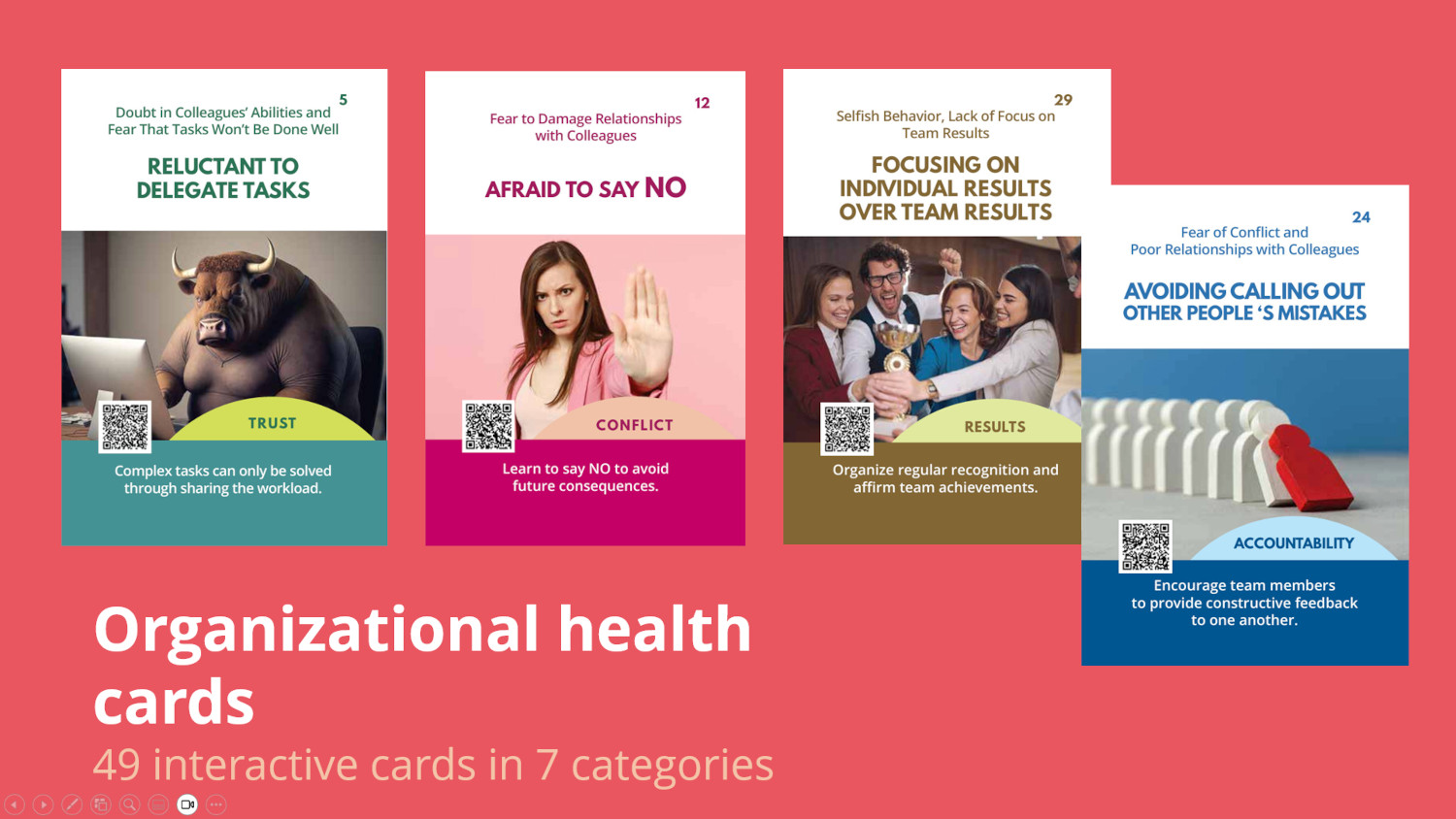
- How can you discover the root causes of these challenges and successfully solve them using our visual interactive “team effectiveness” cards?
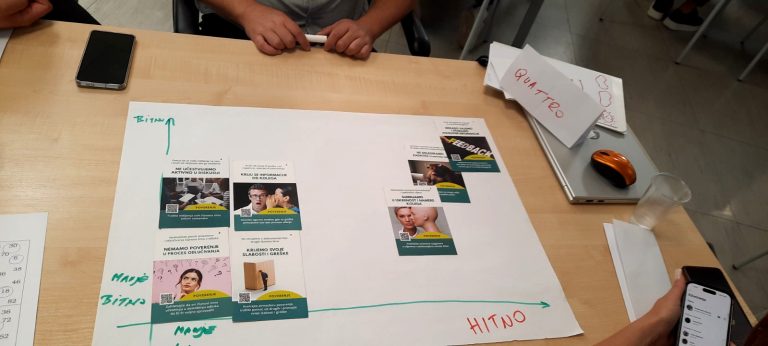
By placing the visual cards on the Urgent–Important matrix, you can quickly and easily set priorities and create an action plan.
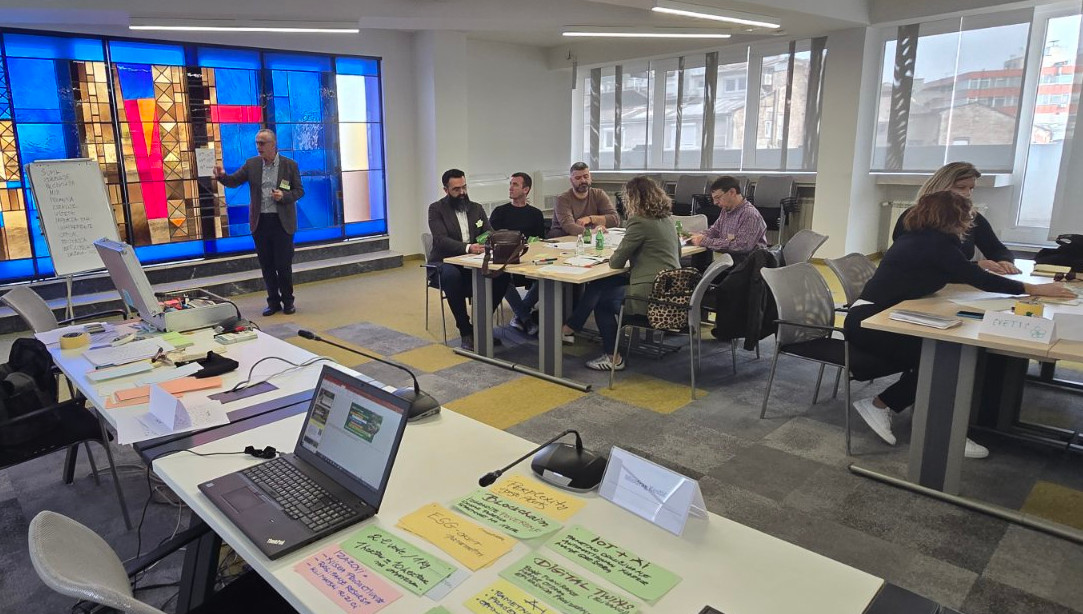
From an interactive workshop in Belgrade
Contact us to schedule a meeting
Tel: + 381 65 26 080 26
Email: poslovnaznanja@gmail.com