Avoiding Personal Accountability – ACCOUNTABILITY – 22
When accountability is avoided, problems remain unresolved, performance stagnates, and responsibility quietly shifts away from everyone.

What this looks like in everyday work
Avoiding personal accountability rarely shows up as open refusal. Instead, it appears in subtle behaviors that slowly weaken responsibility across the team.
- Tasks are described vaguely (“someone should take care of this”).
- Problems are acknowledged but no owner is assigned.
- Mistakes are explained rather than addressed.
- Decisions are postponed until someone else steps in.
- Follow-ups are missing and issues resurface repeatedly.
Over time, responsibility becomes a shared abstraction instead of a personal commitment. Everyone is involved — but no one is accountable.
Why it happens
Avoiding accountability is rarely about bad intentions. In most teams, it develops as a learned survival behavior.
- Fear of blame: mistakes were punished instead of learned from.
- Unclear authority: people don’t know what they are allowed to decide.
- Diffuse ownership: too many people “share” responsibility.
- Past experiences: taking ownership previously led to negative consequences.
- Cultural signals: outcomes matter less than appearances.
When accountability feels risky, people protect themselves by staying vague and passive.
How it affects results
Teams without personal accountability appear busy, but their effectiveness declines steadily.
- repeated errors and unresolved issues,
- slow execution and constant rework,
- frustration among high-ownership individuals,
- erosion of trust in colleagues and leadership,
- a culture of excuses instead of improvement.
How to reduce and overcome it
Accountability grows when responsibility is clear, ownership is supported, and follow-through is visible.
- Assign one clear owner: one task, one accountable person.
- Separate blame from learning: focus on fixing, not punishing.
- Make commitments explicit: who will do what by when.
- Follow up consistently: accountability requires continuity.
- Model ownership: leaders admit mistakes openly.
When ownership is safe and clear, people step forward instead of stepping back.
Practical tools (explained)
1) Explicit ownership statements
End discussions with a clear sentence: “[Name] owns [task] and will update us by [date].”
How to use it: never end a meeting without at least one ownership statement.
2) Accountability check-ins
Short, regular follow-ups focused on progress and blockers — not judgment.
How to use it: weekly 10-minute review: What was promised? What happened? What’s next?
3) Ownership vs. involvement clarity
Distinguish between people who contribute and the person who is accountable.
How to use it: use simple RACI logic without bureaucracy.
4) Learning-focused retrospectives
Review outcomes with the question: “What will we do differently next time?”
How to use it: document actions, not excuses.
Recommended links
Improve Your Team Heath and Effectiveness
How can your team overcome hidden obstacles that slow it down?
Take our 3-day Organizational Health Improvement Workshop
- How can you identify specific problems and challenges in teamwork, cooperation, and internal communication among employees?
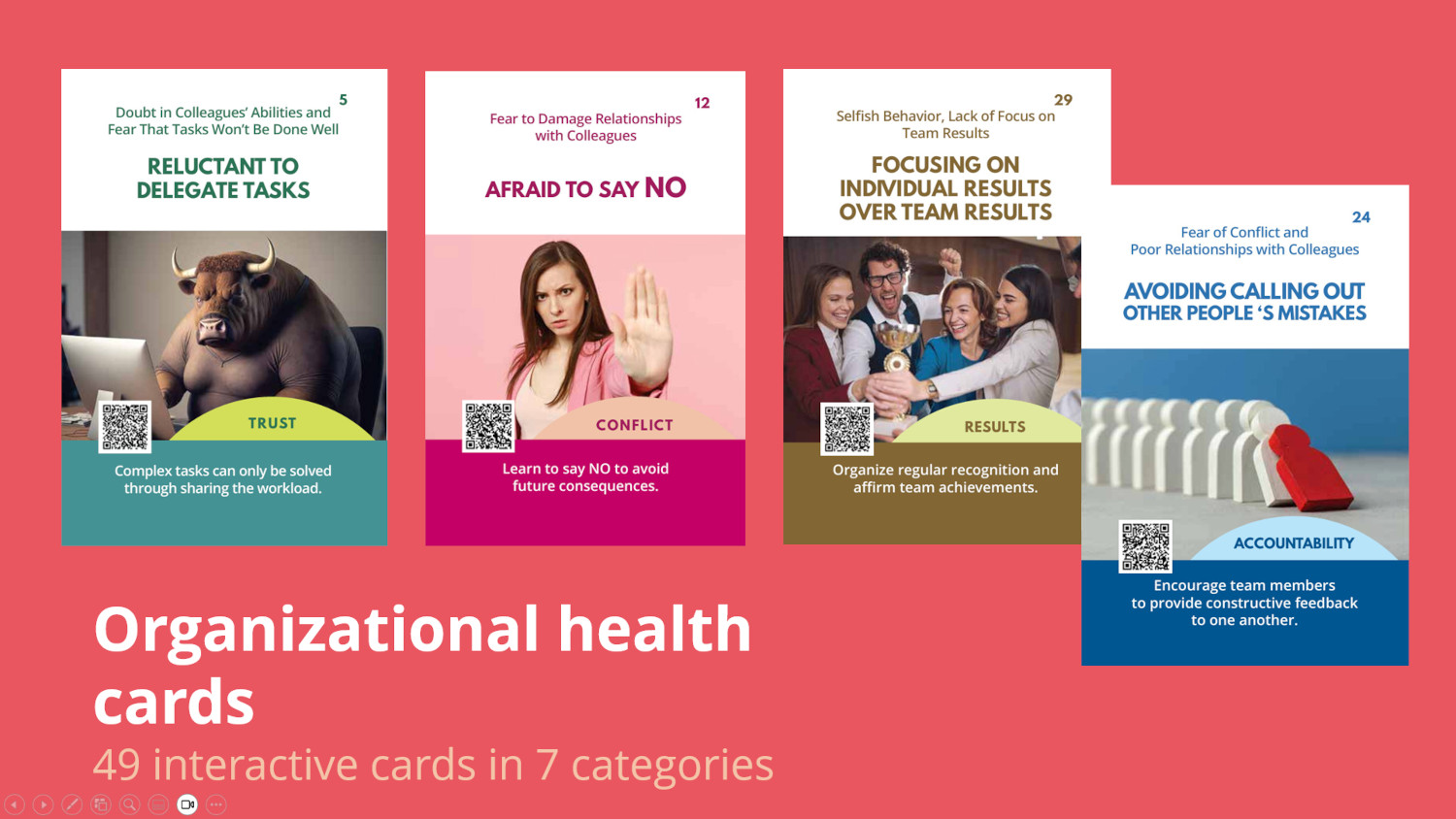
- How can you discover the root causes of these challenges and successfully solve them using our visual interactive “team effectiveness” cards?
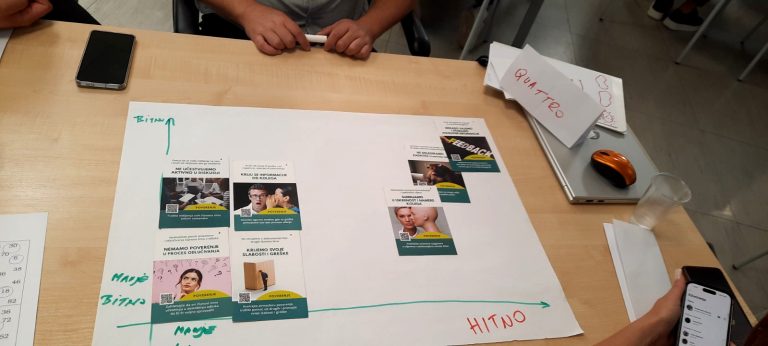
By placing the visual cards on the Urgent–Important matrix, you can quickly and easily set priorities and create an action plan.
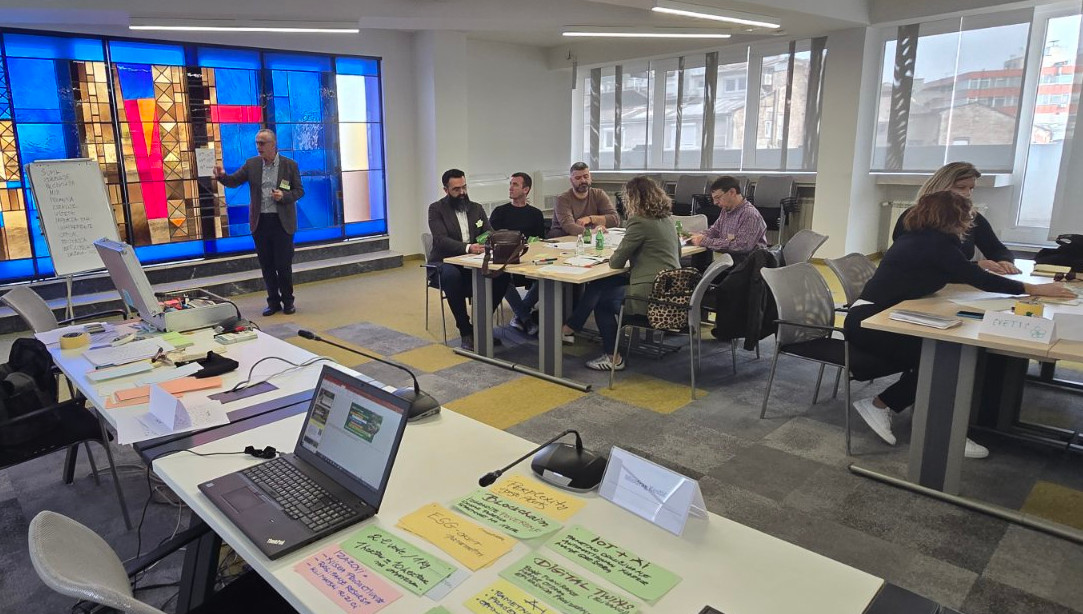
From an interactive workshop in Belgrade
Contact us to schedule a meeting
Tel: + 381 65 26 080 26
Email: poslovnaznanja@gmail.com